
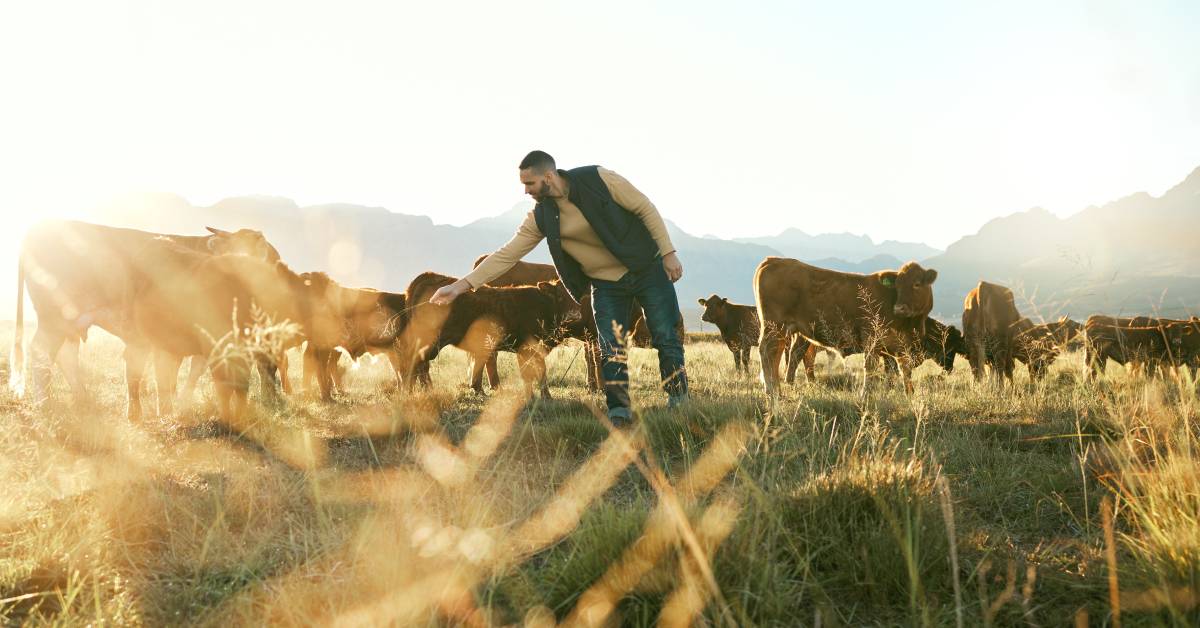

Livestock farming is undergoing a significant transition as producers face growing scrutiny over climate impact, land pressure, and resource use. Nearly 80 percent of all agricultural land worldwide is now dedicated to livestock, including grazing and feed crop production, which makes the sector a central focus in sustainability discussions. This shift is forcing producers to rethink long-term planning, herd health, and resource efficiency under a new production logic: sustainability is no longer a marketing angle but an operational requirement.
Instead of maximizing volume at all costs, the industry is moving toward sustainable livestock farming, where efficiency is tied to land health, forage quality, and better use of ecological resources. The same mindset now shapes sustainable cattle farming, where pasture recovery cycles, stocking density, and soil organic matter become performance metrics just as important as weight gain or feed conversion.
Soil health is the foundation of the entire system. Healthy pasture ecosystems support stronger forage nutrition, which leads to better rumen efficiency, improved immunity, and higher lifetime productivity in the herd. When grazing is managed strategically, animal outcomes and land outcomes reinforce each other rather than compete.
This blog outlines the best practices that help livestock producers build long-term viability while protecting land productivity, reducing operating stress, and improving herd performance under modern sustainability standards.
The Need for Sustainability in Livestock Farming
The pressure to adopt livestock farming models that protect both land and herd health is a structural requirement for long-term viability. Overgrazing, unmanaged stocking density, and degraded rangelands weaken forage quality, which forces higher feed inputs and leads to a negative production spiral. The more land becomes exhausted, the more expensive the herd is to maintain. This is why modern operations are shifting toward sustainable livestock production, where grazing plans are built around soil regeneration instead of pasture exhaustion.
Sustainability also sits at the center of the feed-water-energy equation. Poor forage requires additional irrigation, which increases pumping and energy use. Conversely, well-managed ground cover improves water retention and keeps pastures productive for extended periods. This reduces recurring costs and lowers risk during dry seasons.
Animal welfare is equally linked to land conditions. Stress from poor forage, heat exposure, or nutritional inconsistency weakens immunity and reproductive performance. Healthier land means healthier animals and better reproduction cycles. Understanding the cattle gestation period also helps ranchers plan stocking rates that align with pasture recovery windows, reinforcing ecological balance instead of working against it.
The economics also point in the same direction. Long-term profitability in livestock farming depends on stable pastures and predictable forage cycles. Adoption of traceability tools, including EID tags for cattle, gives producers more accurate performance data, which makes it easier to plan land use and rotational grazing strategies. These solutions address common ranching challenges, where productivity rises not from more output per acre, but from preserving the land that sustains the herd.
Environmental Impact of Conventional Livestock Farming
Conventional livestock farming systems often prioritize short-term output, but this approach quietly depletes the very resources herds depend on. One of the most visible consequences is overgrazing. When pasture is grazed below its recovery threshold, the soil surface becomes exposed, leading to erosion, compaction, and a decline in organic matter. Once pastures weaken, ranchers must rely on external feed sources, which raises operating costs and reduces land resilience. Sustainable grazing models prevent this cycle by allowing grassland recovery and restoring ecological function.
Inefficient production systems also depend heavily on synthetic fertilizers and high-input feed without translating those investments into healthier soil or herd outcomes. These models resemble an extraction cycle, where more capital is deployed each year for less productive land. Improving land biology allows producers to improve soil fertility, which directly enhances forage quality and reduces reliance on purchased feed.
Environmental pressure is also tied to emissions and runoff. Poorly managed manure increases methane concentration around confinement areas and contaminates nearby waterways with nitrogen and phosphorus. Once soil health collapses, pathogens spread more easily, increasing the frequency of cow diseases that stress the herd and undermine stability.
Productivity losses are not only ecological but operational. If grazing land becomes depleted, reproductive cycles and milk yield also fall. Strong forage availability supports healthier metabolism and consistency in dairy cow milk production, which is why regenerative principles are now treated as a performance strategy rather than a niche practice.
This is where sustainability shifts from a moral argument to a risk management decision. A land base that cannot regenerate cannot support herd growth. In contrast, sustainable livestock farming and pasture rotation strategies improve carrying capacity, buffer climate volatility, and maintain the resource foundation needed for long-term profitability. For the modern producer, rebuilding land function is not branding. It is the protection of the core operating asset: the pasture itself.
Best Practices for Sustainable Livestock Farming and Healthier Herds
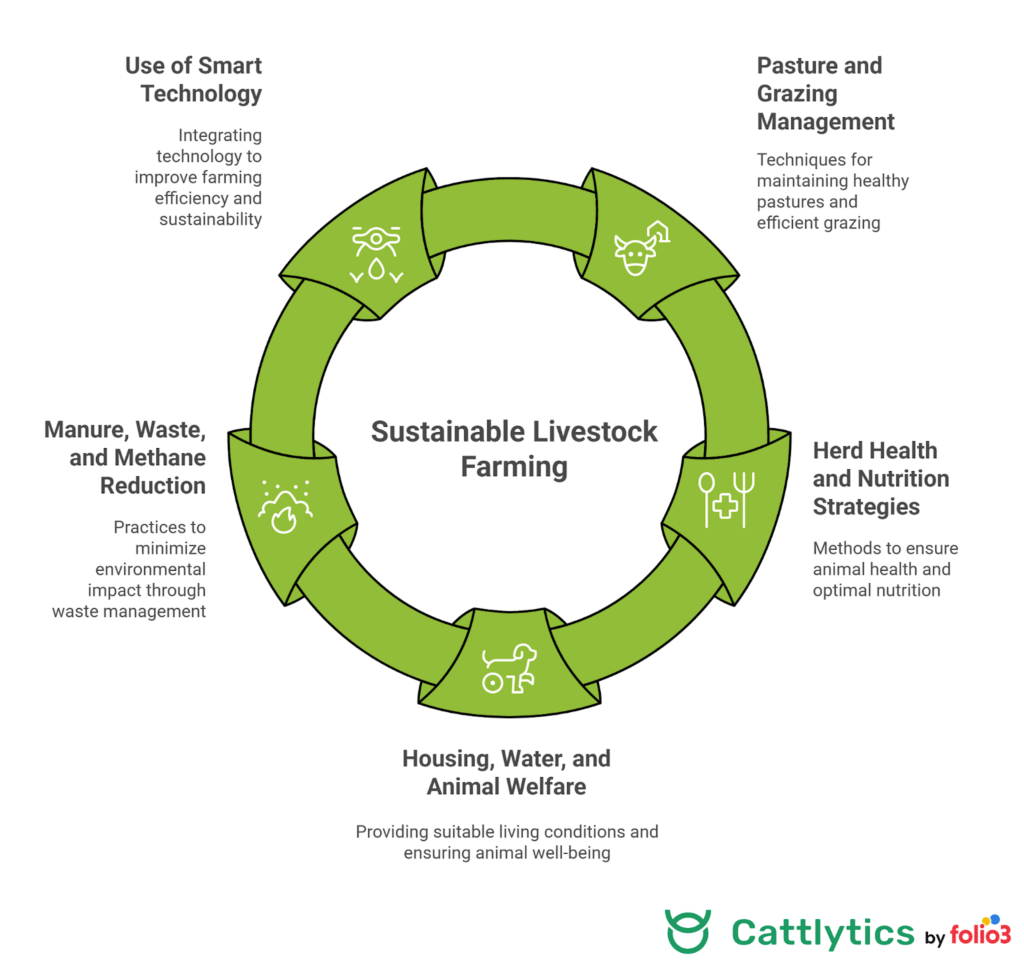
Sustainability in livestock farming is not achieved through one intervention but through a combination of land care, herd management, feed efficiency, and long-term planning. The goal is to maintain productivity without degrading the natural resources that support the herd. Producers who integrate soil stewardship, responsible grazing, and health monitoring build resilience into their operations. In the following sections, we will look at how each of these areas can be strengthened to improve the overall sustainability of livestock farming.
Pasture and Grazing Management
Effective grazing management is one of the most important foundations of livestock farming because the pasture determines both herd health and long-term land productivity. Poorly managed grazing systems strip vegetation, weaken root structure, and reduce moisture retention, which creates stress for both land and livestock. Well-managed systems, on the other hand, support soil biology, replenish organic matter, and give animals access to nutrient-rich forage that strengthens performance and immunity. Modern grazing plans often include simple pasture scoring tools like rising-plate meters or NDVI satellite assessments, measured weekly during active growth, to ensure carrying capacity stays aligned with forage recovery.
Key practices include:
- Rotational grazing with rest cycles
Moving herds frequently and allowing pastures time to recover improves regrowth, water infiltration, and forage resilience. It also breaks parasite lifecycles and prevents overuse of a single area. - Stocking density aligned with carrying capacity
Matching herd size to the land’s regenerative pace prevents forage depletion. Overstocking is one of the fastest paths to land degradation, while adaptive stocking builds long-term balance in sustainable grazing systems. - Forage diversity instead of monoculture grass
Multi-species pastures provide a broader mineral profile, deeper roots, and improved drought tolerance. Legumes also fix nitrogen naturally, reducing input dependence. - Better animal outcomes through pasture nutrition
High-quality forage improves milk yield, fertility, weight gain, and immunity. When nutrition comes directly from the land, feed costs drop and wellness improves. Tools like cattle genetic testing help match herd traits to forage type for higher performance. - Pasture hygiene and seasonal adjustments
Shifting grazing patterns during wet seasons protects soil structure, while dry periods call for longer rest intervals to maintain root strength and reduce erosion.
By combining adaptive movement, botanical diversity, and responsible stocking decisions, producers protect land integrity while supporting sustainable livestock farming. These grazing strategies also reinforce better animal oversight, allowing more targeted cattle care based on pasture conditions and recovery cycles.
Herd Health and Nutrition Strategies
Herd performance begins with prevention rather than treatment. In modern livestock farming, a strong health program protects productivity, stabilizes costs, and reduces the need for emergency interventions that typically create higher losses. Preventive routines such as early symptom monitoring, nutritional planning, and wellness scheduling lessen the pressure that disease places on growth, fertility, and milk performance. When animals stay healthy, consistency improves across both output and labor efficiency, which directly supports sustainable livestock production long term.
Nutrition is the second central pillar of herd health. A balanced ration is not just feed but an investment in immune strength, reproductive outcomes, and feed conversion efficiency. Forage tests help determine whether the existing pasture meets mineral and protein needs or whether supplementation is required. High-fiber, low-quality feed reduces performance and increases stress load, while precise ration formulation maintains rumen stability and improves daily gains. A strong mineral program should at minimum cover the “big five” essentials, copper, zinc, selenium, cobalt, and manganese, since deficiencies often appear as slow growth, poor coat quality, or weak immunity, and forage tests should be repeated seasonally to confirm adequacy.
Health management planning must be seasonal. Sudden weather changes, calving periods, and feed transitions tend to expose weaknesses in nutrition and immunity. Structured wellness programs, including scheduled beef cattle vaccination, parasite control, and mineral supplementation, prevent costly outbreaks before they spread.
Another health driver often overlooked is grazing behavior. When cattle remain too long on a single pasture, parasite exposure increases and regrowth slows, creating nutritional gaps. Consistent pasture rotation for cattle spreads grazing pressure and maintains clean forage, reducing both infection risk and soil compaction.
Finally, biosecurity must be treated as part of nutrition and not just disease control. Clean handling areas, controlled farm access, and proper quarantine on new arrivals protect the herd from external pathogens that can undo years of careful planning. Together, these strategies create healthier animals, more resilient land, and higher output efficiency, which makes sustainable livestock production both profitable and biologically stable.
Housing, Water, and Animal Welfare
Proper housing is a core component of effective livestock farming, because animal comfort directly affects feed intake, fertility, immunity, and daily weight gain. Welfare-focused design prevents performance losses that come from stress, dehydration, or overcrowding. A well-managed facility becomes a productivity tool rather than only a shelter, which aligns strongly with sustainable livestock principles.
Key practices include:
Ventilation and shade
- Reduces heat stress and respiratory irritation.
- Encourages normal feeding behavior.
- Helps cattle maintain energy for growth rather than cooling.
Ease of movement
- Curved alleys and open sightlines support low-stress handling.
- Animals move willingly without force or shouting.
- Reduces bruising and injury during daily routines.
Clean and consistent water access
- High-flow troughs prevent crowding.
- Elevated placement keeps mud contamination low.
- Cool, palatable water improves rumen function and recovery in hot months.
Resting space and flooring
- Comfortable, dry bedding reduces hoof stress.
- Firm but cushioned surfaces prevent lameness.
- Proper drainage stops bacterial buildup.
Shade and weather protection
- Simple roof structures stabilize the microclimate.
- Shade availability protects pregnant and young animals.
- Reduces the risk of dehydration and feed refusal.
In healthy livestock farming systems, housing is not merely a structural need but a welfare strategy that safeguards productivity. When shelter, hydration, and comfort are optimized together, animals show better resilience, predictable performance, and stronger lifetime output, a foundation that makes sustainable livestock practices financially and biologically reliable.
Manure, Waste, and Methane Reduction
Manure management is one of the most strategic levers in livestock farming, because waste can either become a pollution risk or a productivity resource. Systems designed for recovery, reuse, and nutrient planning help farmers turn liabilities into soil assets, which supports sustainable cattle farming long term.
Key practices include:
Composting for soil nutrition
- Stabilizes nitrogen and organic matter.
- Reduces odor and pathogen load.
- Creates a slow-release fertilizer for pastures.
Anaerobic digestion
- Converts manure into usable biogas.
- Generates on-farm energy or heating fuel.
- Reduces methane emissions at the source.
Nutrient cycling
- Returns carbon and minerals back to the land.
- Cuts reliance on synthetic fertilizers.
- Improves soil structure and water retention.
Pasture-based vs confinement emissions
- Well-managed pasture spreads waste evenly.
- Lower methane concentration compared to lagoons.
- Forage quality influences enteric emissions.
Turning waste into an asset
- Compost and digestate improve forage yields.
- Supports regenerative grazing loops.
- Boosts overall land profitability under sustainable ranching models.
By treating manure as a valuable input rather than a disposal challenge, modern livestock farming reduces greenhouse gases and builds healthier pastures. This is not only about emissions control but long-term ecosystem function, efficiency, and circular resource use.
Technology in Sustainable Livestock Farming
Technology is reshaping how livestock farming is managed by giving farmers real-time visibility into land use, herd behavior, and feed efficiency. Instead of reacting to problems after they appear, digital tools make it possible to predict risks and improve planning. This is where sustainable livestock farming becomes data-driven rather than guess-based.
Precision monitoring tools such as GPS collars and satellite-based pasture mapping help track grazing intensity, animal movement, and pasture recovery. By identifying stress zones and overgrazed areas early, farmers can rotate pastures before soil health declines. In herd nutrition, smart analytics measure feed conversion and weight gain patterns to show whether cattle are utilizing forage effectively. When performance drops, these systems can flag stress or illness earlier than manual observation. This improves welfare and reduces unnecessary feed cost.
Pasture biomass measurement is another breakthrough. Remote sensing tools estimate forage density and regrowth so stocking rates match carrying capacity. This prevents overstocking while protecting ground cover and water retention.
Modern cattle management platforms like Cattlytics tie all this information together. Instead of relying on scattered logs or field notes, farmers get a single interface that integrates grazing plans, health monitoring, and land-use data. This creates a predictive workflow where problems are managed before they escalate. By embedding technology into daily decision-making, livestock farming becomes more sustainable, more profitable, and better aligned with long-term ecological stability.
How Cattlytics Supports Sustainable Livestock Farming
Cattlytics is a modern cattle management platform designed to help farmers optimize herd performance while protecting land health. By combining animal monitoring, pasture analytics, and performance insights in one place, it strengthens the foundation of livestock farming and makes daily decision-making more strategic. This kind of digital planning is a key driver behind sustainable livestock farming because it ties productivity directly to ecological balance.
Cattlytics supports sustainable livestock production through features such as:
- Real-time herd behavior insights
- Grazing pressure and pasture recovery tracking
- Smart health flagging for early intervention
- Performance scoring and feed efficiency metrics
- Land-use planning tied to stocking capacity
Instead of reactive corrections after a problem occurs, Cattlytics gives producers forward visibility. It helps allocate grazing more efficiently, prevents nutritional decline, and maintains healthy pastures that continue supporting the herd season after season. By giving farmers measurable performance data, the platform makes sustainability easier to prove, not just claim. In the long run, Cattlytics enables land-first herd management where productivity and stewardship move in the same direction.
Conclusion
Sustainability is no longer a side conversation in livestock farming but a direct driver of long-term performance. Healthy pastures, balanced stocking rates, and early health intervention all translate into higher output over time because the land remains productive instead of depleted. When producers shift from short-term yield thinking toward sustainable livestock farming, they protect both their soil base and herd resilience at the same time.
Early adoption is increasingly important since land stress, climate volatility, and input costs continue to rise. Operations implementing grazing discipline, health monitoring, and nutrient cycling will remain profitable while others struggle with declining carrying capacity. Technology-supported planning makes this transition approachable and measurable.
In the long run, livestock farming that prioritizes ecological balance becomes more stable, cost-efficient, and market competitive. Sustainability is not a compromise but a multiplier for productivity and long-term viability.
FAQs
What Type of Livestock Farming Is Most Profitable?
Profitability depends on land resources, climate, and input costs, but operations that combine grazing-based systems with value-added products typically perform best. Grass-fed beef, organic dairy, and integrated beef-calf systems often rank higher because they reduce feed costs and market volatility while improving land performance.
How Can We Raise Livestock More Sustainably?
Sustainability comes from aligning herd size with land capacity, rotating pastures for regrowth, improving soil biology, and preventing disease before it spreads. Water access, nutrition planning, and technology-supported monitoring also protect productivity while reducing stress on the landscape.
What Is the Most Sustainable Animal to Farm?
The most sustainable animal is the one suited to its environment and forage base. In grassland regions, ruminants like cattle and sheep can be highly sustainable because they convert low-quality forage into protein while improving soil carbon. On limited acreage, poultry may be more resource efficient.
What Are the Examples of Sustainable Livestock Management?
Examples include rotational grazing, composting manure for soil fertility, pasture-based nutrition planning, low-stress handling, and predictive health monitoring. These approaches maintain grass cover, reduce methane intensity per production unit, and support long-term land resilience.