
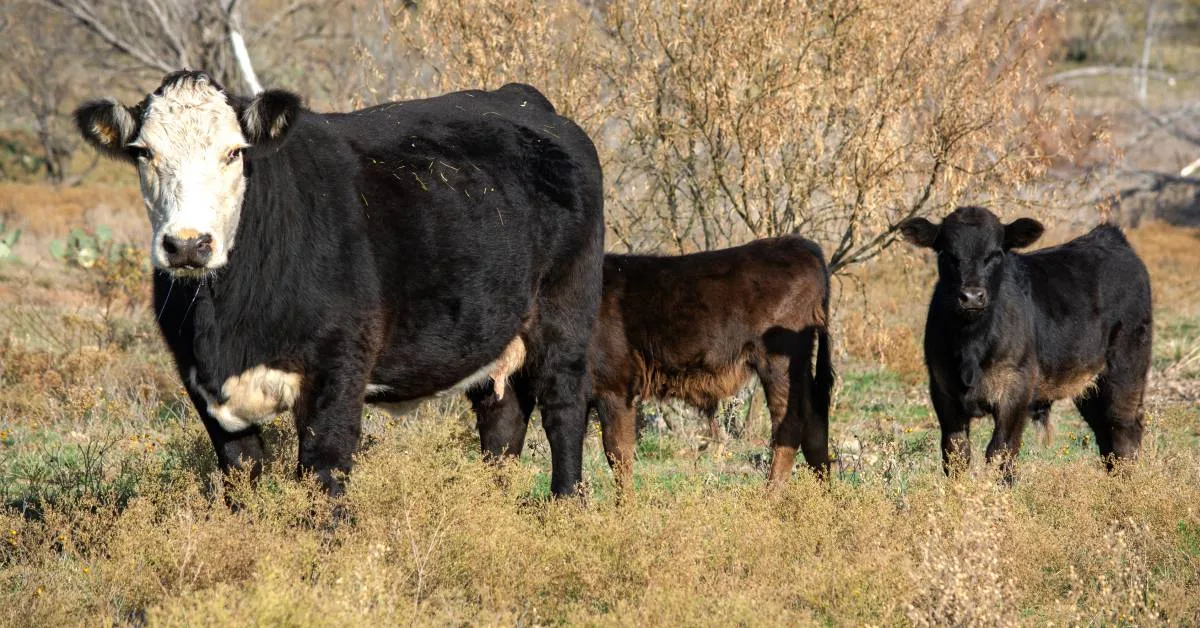

Coccidiosis in cattle is a sneaky threat that can quietly undercut your herd’s health and profits. It’s considered one of the most economically significant cattle diseases, costing U.S. producers well over $100 million annually. Outbreaks can kill calves outright, but even milder cases quietly drag down herd profits. Mortality directly removes value, and survivors often sell for less due to lost growth.
One study found that moderately infested calves 10 months after the disease were still 8–27 kg lighter than healthy peers. That gap doesn’t disappear, and reduced weight gain can persist through the first grazing season. In addition, you spend more time and money on treatment and care for sick calves, and you may see higher costs fighting secondary diseases.
Ongoing infections also erode future productivity. If a calf experiences coccidiosis once, its immune system may be taxed, making it more vulnerable to other diseases. Given these facts, even a small outbreak can ripple through your operation’s finances.
In this guide, you’ll get plain-language vet advice for busy cattle producers on spotting coccidiosis in its tracks, treating sick calves effectively, and putting a strong prevention plan in place.
How Common Is Coccidiosis in Calves and Young Stock?
Coccidia are everywhere in cattle environments; virtually all herds have them. Studies reveal that the prevalence of Eimeria infection can reach nearly 100% in calves. In practice, almost every calf is exposed at some point. Most handle small doses without illness, building immunity, but calves will get sick when they ingest high oocyst loads or undergo stress.
Everyday stressors like weaning, shipping, or weather changes often trigger outbreaks. Older cattle are usually immune, but they still contaminate pens and pastures with coccidia. Coccidiosis shows up most in calves, especially in feedlot or crowded conditions. Outbreaks can occur any season, as summer and fall are typical, but even winter storms (crowding around barns) can spark disease.
What is Coccidiosis in Cattle?
Coccidiosis is an intestinal disease caused by single-celled parasites (protozoa) of the genus Eimeria (coccidia). These parasites invade and multiply in the cells lining a calf’s gut. Infected cattle shed microscopic eggs (oocysts) in their manure, which contaminate the environment. When calves ingest oocysts from feces, the oocysts hatch and restart the life cycle inside the calf’s intestines. It damages gut cells, causing diarrhea and poor nutrient absorption.
Because coccidia are long-lived (oocysts can remain infective for months in damp conditions), breaking this fecal–oral cycle is crucial. Clean, dry pens and reducing stress are as important as any treatment. With that in mind, let’s look at key differences between calves and adults, and when the infection becomes an obvious problem.
Coccidia in Calves vs Adult Cattle: The Basics
Coccidiosis mainly hits calves and youngstock. Calves typically get sick from about 3–4 weeks old up to 12 months of age. Very young calves rarely show disease because they’re protected by maternal antibodies. In contrast, adult cattle usually have immunity. Your older cows and bulls often carry coccidia in their gut without illness, shedding oocysts that contaminate pens and pastures. In practice, this means your herd’s adults seed the environment but remain symptom-free, while your calves are much more likely to develop illness. Managing this means keeping calving and rearing areas clean and avoiding mixing very young calves with manure from older animals.
When Does an Infection Become a Problem?
Many infected calves show no obvious signs. They stay alert and will eat, but they just don’t grow as well. Under the hood, their intestinal lining is damaged, quietly costing you weight gain.
Only when parasite levels get very high, usually after a stress event, do you see clinical coccidiosis. That usually happens about 2–3 weeks after heavy exposure: calves stop eating, become dull, and develop diarrhea, often mucoid or bloody. They may strain and show abdominal pain. In severe cases, calves can dehydrate and even die. In short, subclinical infections sneak up on performance, while clinical cases require immediate intervention.
Early Signs of Coccidiosis in Cattle You Should Never Ignore
Coccidiosis often starts subtly, so spotting the earliest changes in your calves can save you time, money, and stress. Let’s see how you can recognize warning signs before they escalate:
Clinical Signs of Coccidiosis in Calves and Young Cattle
Watch calves closely using systematic cattle health monitoring to catch early warning signs before they escalate. The classic clinical signs of coccidiosis include scours that often contain mucus or fresh blood. Affected calves usually appear depressed and strain to defecate. Their hair coat can become rough, and they may kick at their bellies. As the disease progresses, feed intake drops off dramatically, and calves may lose significant weight quickly.
By late stages, dehydration is severe; mucous membranes (gums, eyes) appear sunken or pale, and calves hunch up from abdominal pain. Calves in this state need urgent veterinary care. In practice, any group of calves with bloody scours, straining, and rapid weight loss should raise immediate alarm for coccidiosis.
Subclinical Coccidiosis: When Calves Don’t Scour but Still Lose Money
Even without diarrhea, coccidiosis still steals your profits. In subclinical cases, calves look normal but quietly eat less and grow more slowly. Many infected calves show no apparent signs, yet they suffer irreversible weight deficits.
On a farm, subclinical coccidiosis shows up as below-average weight gains, poor coat quality, or scattered runts in the group. You might only detect it by unexpectedly flat weaning weights or by fecal exams showing oocysts despite no scouring. These unseen infections mean heavier calves you expected may come up short at sale time. That’s why tracking growth and doing routine fecal is essential, as it reveals hidden infections before they wreck your returns.
Nervous Coccidiosis in Cattle: Rare but Life-Threatening
Nervous coccidiosis, also called “cerebral” coccidiosis, is a rare, often fatal form. It usually appears midwinter. Affected calves show dramatic neurologic signs: muscle tremors, rigid legs, and severe convulsions or abnormal head posture. In North American herds, 80–90% of calves with nervous coccidiosis die within 24–48 hours. Unfortunately, by the time these CNS signs occur, there is no reliably effective cure.
If you ever see a calf in convulsions or with extreme rigidity, isolate it gently and call your vet immediately. Veterinarians may try IV fluids, anticonvulsants like diazepam, or even thiamine supplementation, but outcomes are usually poor. Because nervous cases have such a grave prognosis, the best “treatment” is prevention. It minimizes cold stress and keeps overall coccidia levels low to avoid ever reaching this stage.
How to Diagnose Coccidiosis in Cattle Step by Step
A proper diagnosis is the difference between guessing and solving the problem quickly. Here’s a practical workflow to confirm coccidiosis with confidence:
When to Suspect Coccidiosis vs Other Causes of Calf Scours
Think coccidiosis when calves over a few weeks old develop chronic or bloody scours, especially after a recent stress from weaning, weather change, and crowding. Unlike neonatal scours (rotavirus, E. coli) in very young calves, coccidiosis often hits slightly older calves and tends to begin about 2–3 weeks after exposure. Key clues: diarrhea streaked with blood and multiple calves affected at once.
Be careful, other common cow diseases like salmonellosis, BVD, and toxins can also cause bloody stools, so laboratory tests are needed to confirm. In practice, when you see older calves in one group straining with bloody diarrhea after a stressor, suspect coccidiosis as the most likely cause and move to confirm it.
On-Farm Assessment Checklist for Ranch Managers
Use this on-farm checklist leveraging a cattle monitoring software to systematically narrow down coccidiosis and track assessment results across your herd. If several of these boxes are checked, coccidiosis is likely on your farm:
Age & stress: Are calves older than 3 weeks, and have they recently experienced a stressor? Clinical signs often lag exposure by 2–3 weeks.
Multiple cases: Is there more than one calf scouring in the same group? Coccidiosis tends to hit various animals rather than isolated cases.
Manure: Check feces. Is blood or mucus present? Bloody scours strongly suggest coccidiosis.
Environment: Inspect pens. Are they muddy or overcrowded? Dirty, wet bedding and manure in feed/water troughs allow oocysts to thrive. Good drainage and dry bedding go a long way.
Fecal Sampling, Oocyst Counts, and Lab Diagnosis
For confirmation, collect fresh fecal samples from several calves, even those without diarrhea, and submit them for parasite analysis. A fecal flotation or McMaster count will reveal Eimeria oocysts. Very high oocyst counts in sick calves, often thousands per gram, support coccidiosis as the cause.
Labs will also rule out other parasites or pathogens at this time. Keep in mind that healthy animals can shed low numbers of oocysts, too. That’s why lab results must be interpreted along with clinical signs: a heavy oocyst load plus diarrhea in the group is diagnostic of coccidiosis.
When to Involve Your Veterinarian
Involving your veterinarian early is key. Call them if you see any calf with bloody diarrhea, if you’re losing multiple calves, or if you’re simply unsure of the cause. A vet can quickly perform tests to confirm coccidiosis and rule out other diseases. They’ll guide you on the best approved drugs and dosages. Remember: treating coccidiosis often requires prescription medications, so work closely with your vet to set a treatment plan.
How to Treat Coccidiosis in Cattle: From Sick Calf to Stable Herd
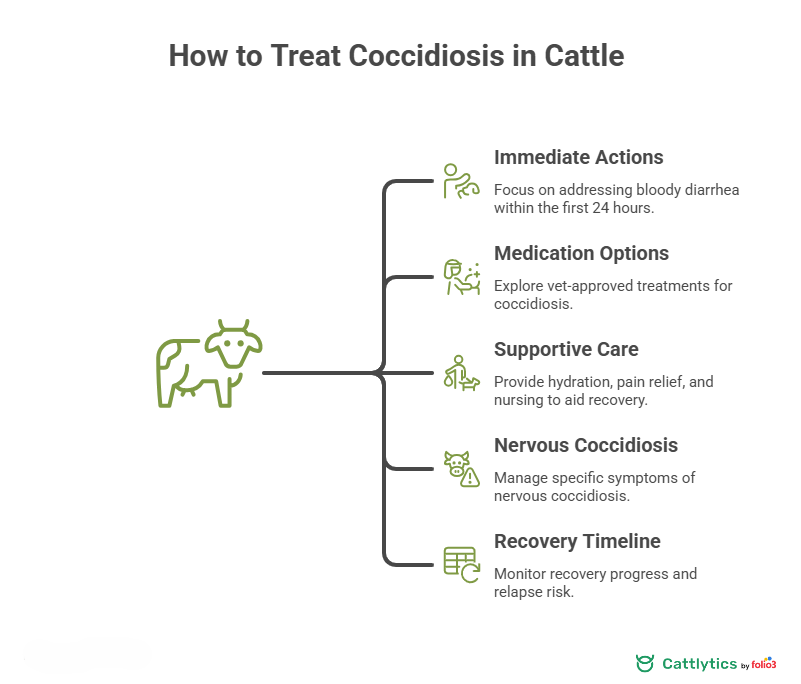
When calves get sick, fast and focused action can turn things around. Adhere to the following actions, medications, and care routines to get calves back on track:
First 24 Hours: Immediate Actions When You See Bloody Diarrhea
In the first 24 hours of bloody scours, act fast. Immediately isolate the sick calf in a clean, dry stall. Ensure it has constant access to fresh water and give an oral electrolyte solution to combat dehydration. If the calf is too weak to drink, seek veterinary help for subcutaneous or IV fluids. Keep the calf warm and well-bedded so it can rest comfortably. Essentially, isolate, hydrate, and stabilize the calf immediately while arranging veterinary care. Each hour counts, so keep a close eye on the calf and don’t delay further action.
Medication Options: Vet-Approved Coccidiosis Treatment in Cattle
Several drugs are approved or commonly used for treating coccidiosis in cattle. The oldest standby is amprolium (Corid), a thiamine analog given in water or feed. It’s typically dosed at 10 mg/kg once daily for 5 days. Sulfonamide antibiotics are another option: these can be added to drinking water to inhibit coccidia growth. More recently, triazine drugs have become popular. Diclazuril (Clincox) or toltrazuril (Baycox) may be given as a single oral dose; they act directly on the protozoa inside the gut.
Ionophore coccidiostats like monensin (Rumensin) and lasalocid (Bovatec) are fed to cattle mainly as preventive measures, not for acute outbreaks. These feed additives disrupt coccidia development when used continuously. Below is a quick reference table of common coccidiosis drugs:
| Active ingredient | Drug class | Typical use | Route |
|---|---|---|---|
| Amprolium | Thiamine analog (coccidiostat) | Treatment (5-day course) | Oral (water/feed) |
| Sulfadimethoxine | Sulfonamide antibiotic | Treatment | Oral (water/feed) |
| Decoquinate | Quinoline coccidiostat | Prevention | Feed |
| Monensin (Rumensin) | Ionophore coccidiostat | Prevention | Feed |
| Lasalocid (Bovatec) | Ionophore coccidiostat | Prevention | Feed |
| Diclazuril (Clincox) | Triazine coccidiostat | Treatment (single dose) | Oral (water/feed) |
| Toltrazuril (Baycox) | Triazine coccidiostat | Treatment (single oral dose) | Oral drench |
| Ponazuril (Marquis) | Triazine coccidiostat | Treatment (off-label) | Oral drench |
Always use these medications under veterinary guidance, and follow all label directions (especially meat/milk withdrawal times).
Supportive Care: Hydration, Pain Relief, and Nursing Back to Health
Supportive care is crucial. Keep affected calves well-hydrated with free-choice water and oral electrolyte solutions to replace lost fluids. Offer high-quality forage or calf starter so they can eat easily. If a calf won’t eat, consider feeding a milk replacer. Adding B-complex vitamins or niacin can help with gut healing. Use a non-steroidal anti-inflammatory like flunixin for pain relief and to reduce gut inflammation.
Ensure sick calves have extra bedding and are kept clean. Remove manure from their udders and environment to prevent reinfection. Moreover, provide diligent nursing like fluids, nutrition, and comfort as your calf recovers.
Special Case: Managing Nervous Coccidiosis
Nervous coccidiosis is a veterinary emergency with no guaranteed cure. If a calf shows neurologic signs, isolate it gently and keep it warm in a quiet, dimly lit area. Immediately contact your veterinarian. Your vet may try IV fluids and anticonvulsants (like diazepam) to ease convulsions. Some veterinarians also administer thiamine or B vitamins, though evidence is anecdotal. Pain management (flunixin) can reduce gut inflammation. Despite these efforts, the prognosis is usually poor. The focus in such cases is intensive care, but the best strategy is prevention to avoid cold stress and to keep overall coccidia levels low.
Recovery Timeline, Relapse Risk, and Monitoring Response
Calves typically begin improving within 3–5 days after treatment, but full recovery can take weeks. Animals that survive 10–14 days may recover, yet often have permanent intestinal damage. In other words, recovering calves frequently remain slightly behind on weight gain for months. Continue to isolate recovering calves until all symptoms stop, as they may shed oocysts for some time. See how smarter cattle monitoring alerts work to get notified immediately when calves show signs of relapse or new infections.
Also, monitor your herd’s fecal and performance closely after an outbreak to track recovery progress and detect any relapse early. If new cases appear, re-isolate and retreat as advised by your vet. Keep detailed records of which treatments worked using cattle lifecycle records management to refine your strategy for next time and track health outcomes across generations.
Long-Term Strategy: How to Prevent Coccidiosis in Cattle
Preventing coccidiosis is easier and cheaper than treating an outbreak, and avoiding common herd health management mistakes is the first step to building a disease-resistant operation. The following are the year-round strategies to reduce infection pressure and build a healthier, more resilient herd:
Barn and Pen Hygiene: Breaking the Manure–Mouth Cycle
Good facility hygiene is your first line of defense. Scrape or flush stalls daily to remove manure and spilled feed, since oocysts can survive in wet waste. Whenever possible, let pens dry and be exposed to sunlight, or remove wet bedding promptly. Clean and disinfect feed bunks and waterers between groups; a strong ammonia or oxidizing cleaner can reduce oocysts.
Also think of separation: do not allow young calves to bed where mature cows have rested, and ideally start each calving season on clean ground with properly managed calf nurseries designed to minimize disease transmission. Avoid overcrowding: spread cattle out in pens or pastures, as lower density means less parasite buildup. In short, break the manure–mouth cycle with routine cleaning and good pen design.
Using Coccidiostats in Feed, Water, or Minerals
Preventive medications, or coccidiostats, are a key long-term tool. Talk to your vet about adding an FDA-approved coccidiostat to your calves’ feed or mineral mix. Common options include ionophores (Rumensin, Bovatec) and decoquinate (Deccox). These are given continuously in feed over the risk period. For example, monensin or lasalocid at label doses in feed helps stop coccidia from multiplying. Other products, like amprolium or sulfa drugs, can be medicated in water as needed.
Pasture and Turnout Management
Pasture management can significantly reduce risk. Avoid grazing calves on pastures heavily contaminated with cattle manure. Rotate pastures and do “clean-up grazing” with older, less susceptible stock first. Provide clean, dry feeding areas by raising bunks off the ground or moving troughs regularly. Also, avoid turning out many young calves in muddy lots or at the same spot year after year. Essentially, give oocysts a break by resting high-risk pastures and spreading out your herd to lower infection pressure.
Managing Stress at Weaning, Transport, and Weather Extremes
Stress makes calves vulnerable, so plan management to minimize stress at key times. Avoid abruptly weaning or transporting young calves; if possible, wean stepwise or in small groups. Provide shelter and dry bedding during weather extremes, as storms and temperature swings can precipitate outbreaks. Ensure good nutrition around weaning and shipping so calves aren’t immunocompromised. Remember, coccidiosis is opportunistic; it often flares up when calves are stressed. For example, don’t force newly-weaned calves into a muddy lot during a downpour.
Designing a Coccidiosis “Season Calendar” for Your Operation
Use a yearly calendar to identify high-risk periods and prevention steps.Mark events like calving, branding, weaning, or extreme weather when calves face stress. Use cattle task management tools to schedule actions for each event: e.g., start feeding a coccidiostat 2–4 weeks prior, scrub and rotate facilities, and minimize handling stress.
Keep records of any coccidiosis cases, like dates, calf ages, and severity, using digital cattle records book management instead of notebooks or spreadsheets that can be lost or damaged. Over time, this “coccidiosis season calendar” will help you anticipate when and how to intervene early and refine it each year. This proactive schedule ensures you’re always prepared for the usual coccidiosis season on your farm.
7-Step Coccidiosis Action Plan for Cattle Owners
You need a simple, repeatable plan to control coccidiosis on your operation. This step-by-step guide gives you a clear roadmap you can implement immediately.
- Recognize early: Watch your calves for risk factors like age, stress events, weather, and the earliest signs, so you can act before illness spreads.
- Isolate and support sick calves: Quickly move any scouring calf to a clean pen and provide water, electrolytes, and warmth to stabilize it.
- Call your veterinarian: Don’t guess. Have the vet confirm coccidiosis and prescribe an effective treatment protocol including medication, dosage, and withdrawal times.
- Treat the group strategically: Remember that if one calf is sick, others are likely infected. Treat exposed penmates as recommended, not just the visibly ill animals.
- Deep-clean and rest: After the outbreak, thoroughly clean and disinfect all pens and feeding areas, then rest contaminated stalls/pastures.
- Prevention protocols: Implement long-term prevention now: keep pens dry and manure-free, use coccidiostat feed supplements or drenches as advised, rotate pastures, and reduce stress at weaning or shipping.
- Monitor and refine: Track calf growth and health throughout the season using cattle management software to maintain your ‘coccidiosis calendar’ and record what worked or failed.
Conclusion
Coccidiosis doesn’t have to catch you by surprise. Armed with this information, you can act decisively to protect your calves and your bottom line. Review these steps with your veterinarian and ranch team: implement better sanitation, strategic treatments, and careful monitoring. Make the coccidiosis action plan part of your herd health routine. By staying alert and proactive, you’ll minimize outbreaks and keep your cattle growing strong. Remember: consistent prevention and monitoring build healthier, more profitable herds in the long run. Don’t wait for an outbreak and start today.
FAQs
At what age are cattle at risk of coccidiosis?
Young calves are the primary targets. Disease usually hits animals older than about 3–4 weeks up to 1 year old. Newborns get maternal immunity, and healthy adults rarely get sick.
Can adult cattle get or spread coccidiosis?
Adults rarely show disease, but they can still shed oocysts in manure. This silent shedding means adults serve as a source of infection for calves.
Is coccidiosis contagious to people or other species?
No. Coccidia are host-specific. The Eimeria that infects cattle only infects cattle. You won’t catch it, and it won’t pass to sheep, goats, or other livestock.
How long do coccidia oocysts survive in the environment?
Extremely long: in cool, moist manure, they can last many months or even a year. Ordinary cleaning and disinfectants often fail to kill them. Instead, prompt manure removal, drying out pens, and sunlight are the best ways to reduce oocysts.
Do calves become immune after an outbreak?
Calves develop immunity to the specific Eimeria they’ve had. A calf that recovers is much less likely to fall sick from that same parasite again, but immunity is not absolute. A heavily challenged or stressed calf, or exposure to a new Eimeria species, can still cause disease.