

Cattle handling is a critical aspect of livestock management, ensuring the safety of both animals and farm workers. Proper techniques reduce stress on the herd, promote better animal welfare, and improve overall productivity. Safe handling practices also minimize risks to humans, as poor handling can lead to injuries, bruising, or behavioral problems in cattle that compromise farm operations.
Research shows that about 25–30% of cattle‑handling injuries involve cattle pushing workers into structures such as fences, gates, and pens, or striking gates and walls, propelling objects at handlers, highlighting the importance of facility design and safe handling methods. These statistics underscore the need for knowledge, preparation, and controlled movement when working with cattle to prevent costly accidents.
This guide covers 10 proven ways to work your herd safely, including practical cattle handling techniques, facility considerations, and strategies for reducing stress and injuries. By following these best practices, handlers can create a safer environment for both themselves and the animals, ensuring efficient herd management while promoting animal welfare.
Understanding Cattle Behavior
Understanding how cattle behave is the foundation of safe and effective herd management. Herd instincts, such as their natural tendency to move together, influence how animals respond to handlers and obstacles. Two critical concepts are the flight zone, which defines the animal’s personal space, and the point of balance, usually located at the shoulder. Handlers can use these principles to guide movement smoothly without causing stress.
Recognizing signs of stress or agitation is equally important. Indicators include tail swishing, raised heads, vocalization, pawing at the ground, or rapid movement. Responding appropriately to these cues reduces the risk of injuries for both the handler and the animal.
By learning to read cattle behavior and applying knowledge of their natural instincts, handlers can move animals more efficiently, reduce stress, and prevent accidents. Integrating these behavioral insights into daily routines is also critical for overall herd health management, as calmer, less stressed animals are less likely to suffer injuries or health issues, leading to better productivity and welfare.
Preparing the Environment
A well-prepared environment is essential for safe and efficient cattle handling. The design of chutes, pens, and alleys plays a major role in minimizing stress and preventing injuries. Chutes should be the right width to allow one animal at a time, with non-slip flooring to reduce slipping, and solid sides to prevent distractions and balking.
Removing obstacles and hazards is another critical step. Items like equipment, debris, or uneven surfaces can cause cattle to stumble or become agitated, increasing the risk of injury to both the animal and handler. Regular inspection of the handling area ensures that potential hazards are addressed before moving cattle.
Maintaining clear pathways helps ensure smooth movement through pens and chutes. Avoid abrupt turns, sharp corners, or narrow passages that may trigger balking. Proper lighting and minimizing noise also contribute to calm movement. By carefully preparing the environment, handlers can reduce stress on cattle, lower the chance of accidents, and create a workflow that supports both productivity and animal welfare.
10 Proven Cattle Handling Techniques
Effective cattle handling requires a disciplined approach that prioritizes safety, calm movement, and a working understanding of animal behavior. When handlers apply structured methods consistently, they reduce stress in the herd and create a safer environment for both animals and people. This section outlines ten proven strategies that reflect real field experience and provide practical guidance on how to work cattle safely and with purpose.
1. Move Calmly and Predictably
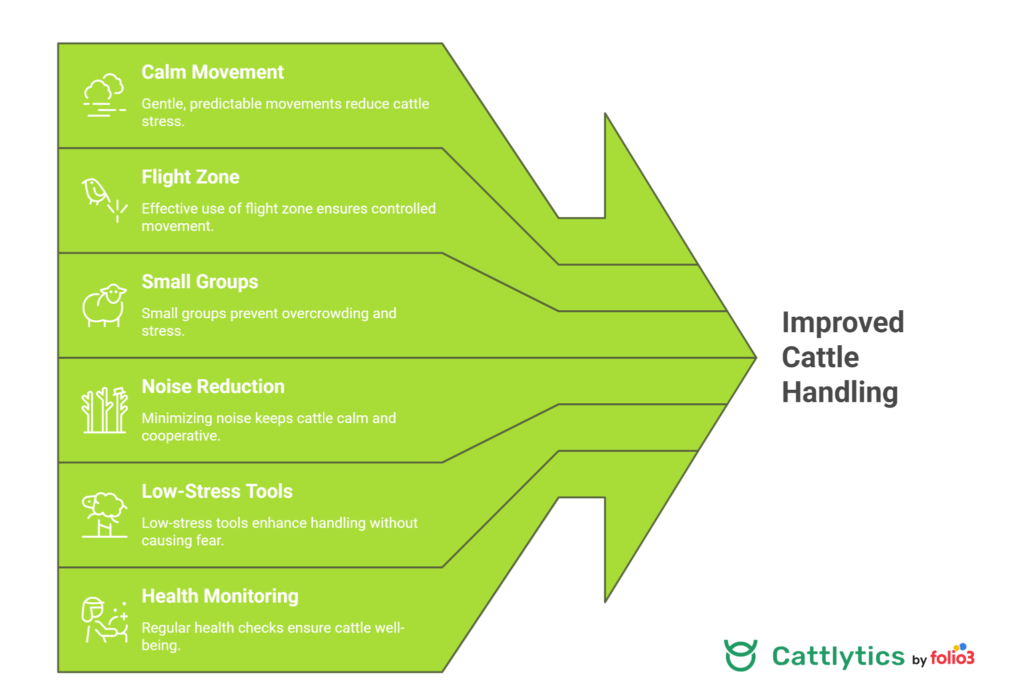
Cattle respond best to slow, controlled movement. Sudden gestures or fast steps can elevate stress and cause animals to crowd or attempt escape. Calm movement supports smoother cattle handling and keeps the herd focused. This also creates opportunities to observe early signs of issues such as lameness or emerging cow diseases before they escalate.
2. Use the Flight Zone and Point of Balance Effectively
Much of modern cattle handling revolves around positioning. Handlers who step toward the shoulder increase forward movement, while stepping back eases pressure. Reading the flight zone correctly prevents cattle from turning unexpectedly or hitting obstacles. This method works especially well when combined with proactive cattle gestation period planning, since pregnant cattle require even gentler directional support.
3. Work in Small Groups to Prevent Crowding
Moving cattle in small, organized groups prevents panic and reduces the force animals may exert on gates, fences, or chutes. Smaller groups also allow for more accurate observation of dominant animals and those recovering from conditions like blackleg in cattle. This approach remains one of the most reliable cattle handling techniques for maintaining stability and herd flow.
4. Minimize Noise and Sudden Movements
Noise is one of the biggest disruptors during cattle handling. Banging gates, shouting, or sudden mechanical sounds can cause cattle to pivot or crowd into corners. A quiet environment keeps animals responsive to body language. This directly supports long term productivity, including areas such as cow milk production, since low stress environments contribute to better health and performance.
5. Use Low-Stress Handling Tools
Flags, paddles, and boards extend a handler’s presence without physical force. These tools guide cattle safely and align with recognized cattle handling techniques used across professional operations. When paired with precise records and movement monitoring, especially through EID tags for cattle, handlers create a more predictable and humane working system.
6. Understand and Respect Dominant or Aggressive Animals
Dominant cattle often control the pace of movement. Aggressive animals may challenge handlers or test boundaries. Recognizing these individuals early helps prevent injuries and structural damage. Adjusting the strategy for such animals is critical to safe cattle handling and ensures the entire group moves efficiently.
7. Monitor Cattle Health During Handling
Handling sessions are ideal for spotting changes in gait, posture, or overall condition. Early detection reduces the risk of widespread illness and supports long term herd performance. Integrating health checks with a structured cattle vaccine planning protocol ensures more accurate decision-making and better disease prevention. This practice strengthens your entire approach to working cattle safely.
8. Train Staff Thoroughly on Handling Techniques
Untrained or inconsistent staff create unnecessary stress for cattle. Every handler should understand flight zone principles, facility flow, and proper tool use. Regular training builds confidence and ensures high standards of cattle handling across the operation.
9. Rotate Handling Routines to Prevent Anticipation
Cattle quickly learn patterns. If the same route or method is used repeatedly, animals may become anxious or resistant. Rotating routes, adjusting pen sequences, or altering pressure points can reduce anticipation. Incorporating planned pasture rotation in cattle also helps break predictable movement patterns and keeps the herd responsive. This improves safety and supports more stable group movement.
10. Record Observations to Improve Future Strategies
Collecting observations on movement patterns, bottlenecks, animal behavior, or facility pressure points helps refine your overall handling system. These records support long-term improvement, consistent safety, and more accurate herd management. Data also integrates well with digital tools, strengthening both operational planning and long-term cattle handling outcomes.
Common Mistakes to Avoid in Cattle Handling
Effective cattle handling requires structure, awareness, and consistency. Many incidents occur not because animals are challenging to manage but because minor operational errors compound into safety risks. By recognizing the most frequent mistakes, producers can refine their cattle handling approach and improve both animal welfare and worker safety. This section outlines key issues and how to prevent them, drawing on principles central to high-quality cattle handling techniques.
1. Overcrowding and Rushing
One of the most common errors in handling cattle is pushing too many animals into a confined area. Overcrowding increases stress, elevates flight responses, and causes piling or slipping. When handlers rush the process, animals become agitated, which creates unpredictable movement. Working smaller groups at a steady pace reduces pressure and encourages smooth flow through alleys, chutes, and holding pens.
2. Ignoring Flight Zones and Behavior Cues
Cattle communicate discomfort through subtle signals such as tail flicking, head tossing, or rapid breathing. Ignoring these cues leads to escalation, including balking, kicking, or charging. Misjudging the flight zone also disrupts movement, forcing handlers to apply unnecessary pressure. Using proper cattle handling techniques and staying attentive to behavioral cues ensures safer, more efficient movement.
3. Improper Chute or Pen Use
Poor chute management is another major contributor to accidents. Slamming gates, inconsistent pressure, or incorrect restraint levels can injure animals and workers. Pens and alleys that are too narrow, too slippery, or poorly lit further complicate handling cattle. Proper equipment setup, thoughtful gate operation, and routine facility inspections significantly reduce preventable issues.
4. Lack of Staff Training and Observation
A workforce that lacks training in modern cattle handling techniques is more likely to make mistakes that increase animal stress. Without clear protocols, handlers may apply excessive pressure, stand in unsafe positions, or respond incorrectly to animal behavior. Ongoing staff development, paired with regular observation and feedback, fosters safer habits and more consistent results across the operation.
How Cattlytics Helps With Safe Cattle Handling
Cattlytics is a comprehensive cattle management software designed to support safe and efficient herd handling. By providing real-time insights into cow activity and movement, it helps ranchers reduce stress on animals and improve overall handling practices. With Cattlytics, staff can monitor herd behavior closely, identify potential problem areas, and make informed decisions that enhance both animal welfare and worker safety.
Key Features:
- Real-Time Cow Activity Monitoring
- Location & Movement Alerts
- Health & Behavior Analytics
- Historical Records & Performance Insights
- Integration with Vet & Care Workflows
By combining data-driven insights with best practices, Cattlytics empowers farm teams to handle cattle efficiently while minimizing stress and risk. Its analytics also support long-term herd health planning, including identifying susceptibility to conditions, and ensures that daily operations align with overall herd welfare.
Incorporating technology like Cattlytics into cattle handling routines transforms reactive management into proactive oversight, enhancing safety for both workers and livestock while optimizing overall productivity.
Conclusion
Safe and effective cattle handling is critical for animal welfare, worker safety, and operational efficiency. Understanding herd behavior, preparing the environment, and using proven low-stress techniques ensures smoother movement, reduces injuries, and minimizes stress on the animals. Consistent monitoring and staff training further strengthen handling practices and prevent common mistakes.
Integrating technology like Cattlytics into daily routines enhances these efforts by providing real-time insights into cow activity, health, and movement patterns. Data-driven monitoring helps ranchers make informed decisions, adjust handling strategies, and respond proactively to potential issues.
By combining practical handling techniques, proper facility design, attentive observation, and smart technology, ranchers can create a safer, more productive environment for both animals and staff. Adopting structured protocols and leveraging digital tools ensures healthier, calmer herds, improved efficiency, and a reduction in preventable risks. Prioritizing safety, observation, and continuous learning ensures long-term success for any cattle operation.
FAQs
What is the 30 Month Rule for Cattle?
The 30-month rule for cattle refers to regulatory guidelines that restrict certain high-risk tissues from entering the human food chain once an animal is older than 30 months. The rule was introduced to reduce potential exposure to BSE by removing tissues where infectivity is more likely to be present in older cattle. This age threshold is verified through documentation or dentition checks, and it plays a key role in slaughter protocols, food safety practices, and overall cattle handling compliance.
What Two Basic Principles of Cattle Handling Are Important to Understand?
Two core principles in cattle handling are understanding the flight zone and recognizing the point of balance. When handlers know how these natural behavior cues influence movement, they can guide animals calmly and efficiently. Respecting these principles reduces stress, limits resistance, and prevents accidents, which is essential for any operation focused on safe, low-stress cattle handling.
What Not to Do When Handling Cattle?
When handling cattle, avoid shouting, sudden movements, overcrowding, or applying excessive pressure. These actions trigger fear responses, increase agitation, and raise the risk of injury for both animals and handlers. Poor timing, inconsistent cues, and aggressive handling tools can also disrupt flow and compromise safety. A calm, predictable approach is always more effective.
What Are the 5 Tips for Good Handling in Livestock Holding Facilities?
Good handling in livestock holding facilities begins with keeping animals calm, maintaining proper facility design, and ensuring predictable movement patterns. It also involves working animals in small groups to prevent agitation and checking equipment regularly to eliminate hazards. Clear pathways, low-stress techniques, and trained staff all contribute to smoother movement and safer outcomes for both cattle and handlers.