
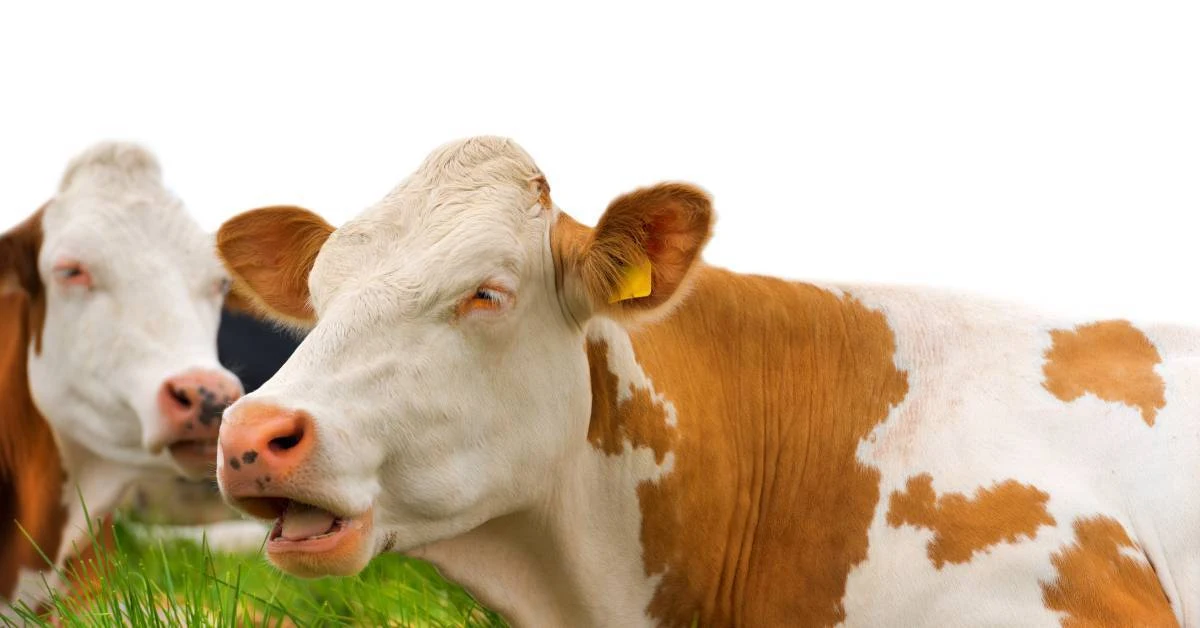

Rumination collars and ear tags are no longer new technology. They are already clipped onto cows on thousands of dairies worldwide. Yet on many of those same farms, the data these devices generate sits in a dashboard that nobody checks until something has already gone wrong. The hardware is in place, but the decision-making layer is missing.
That gap matters more than ever. Feed costs remain high, margins are tight, and every hour of delayed intervention chips away at milk yield and cow health. Rumination data, when you actually know how to read it, gives you a head start that no visual check alone can match.
This guide walks you through what cow rumination actually is, what normal looks like, the four most significant drivers that change it, and exactly how it connects to milk yield. You will also get a step-by-step action playbook, complete with thresholds, checklists, and scenario tables, so that you can turn sensor data into fast, correct decisions every day.
What Rumination Is and What the Cow Rumen Is Actually Doing?
Rumination is simply the process of bringing partially digested feed back up from the rumen, re-chewing it (what we call “chewing cud”), mixing it with fresh saliva, and swallowing it again. That second round of chewing breaks fiber down into smaller particles so rumen microbes can do their job more efficiently.
You will notice that cows ruminate mostly when they are lying down and resting, not while standing at the bunk eating. According to the reports, cattle may spend 35 to 40 percent of each day ruminating, and the amount of time depends heavily on the diet they are eating. That rest-and-chew pattern is a feature, not a flaw. It is how the system was designed to work.
The Cow Rumen: Why Fiber Needs Extra Work
The cow rumen is the largest of the four stomach compartments, capable of holding 25 gallons or more of material. It functions as both a storage vat and a fermentation chamber where billions of microbes break down plant cell walls into volatile fatty acids, the cow’s primary energy source.
Coarse feed particles physically stimulate nerve endings near the esophageal opening, which triggers the rumination reflex. The cow regurgitates a bolus, re-chews it to reduce particle size, and swallows it back so it can pass through the reticulo-omasal orifice and move forward in the digestive tract.
Saliva Is the Hidden Benefit
Every minute a cow spends chewing cud, she is also producing saliva, and that matters enormously. A mature cow can make up to 50 quarts of saliva per day. That saliva is rich in bicarbonate, which buffers rumen acidity and helps maintain pH between 6.2 and 6.8, the sweet spot for healthy fiber digestion.
What “Normal” Rumination Looks Like, and Why Averages Can Mislead You
Healthy cows ruminate 7-9 hours daily, but individual baselines matter more than herd averages. Track each cow’s own pattern to catch meaningful deviations before they become costly problems.
Typical Time Ranges and Daily Rhythm
Most healthy dairy cows ruminate somewhere between 7 and 9 hours per day, or roughly 420 to 540 minutes. However, rumination is not spread evenly across the day. It tends to peak at night and in the hours after feeding, and it is more likely to happen when cows are lying down comfortably.
Research confirms that rumination and feeding are mutually exclusive activities, so rumination naturally dips during high-intake periods and rises during rest. If you are checking sensor data at midday, right after feed delivery, a lower reading does not necessarily mean trouble.
Baselines Beat Herd Averages
A herd average of 480 minutes tells you almost nothing about an individual cow who normally runs 530. If she drops to 470, she is still ‘above average’ on paper but 60 minutes below her own baseline, which is the real indicator of concern. Tracking each cow’s personal pattern helps you identify meaningful deviations before they escalate into health issues.
The practical rule is straightforward: look for a sustained deviation from that cow’s own baseline, such as a drop of more than 10-15%-before reacting. Two or more consecutive low readings, or a group-wide dip beyond set thresholds, should trigger immediate attention. Digital herd health records make tracking these thresholds easier than relying on memory or averages.
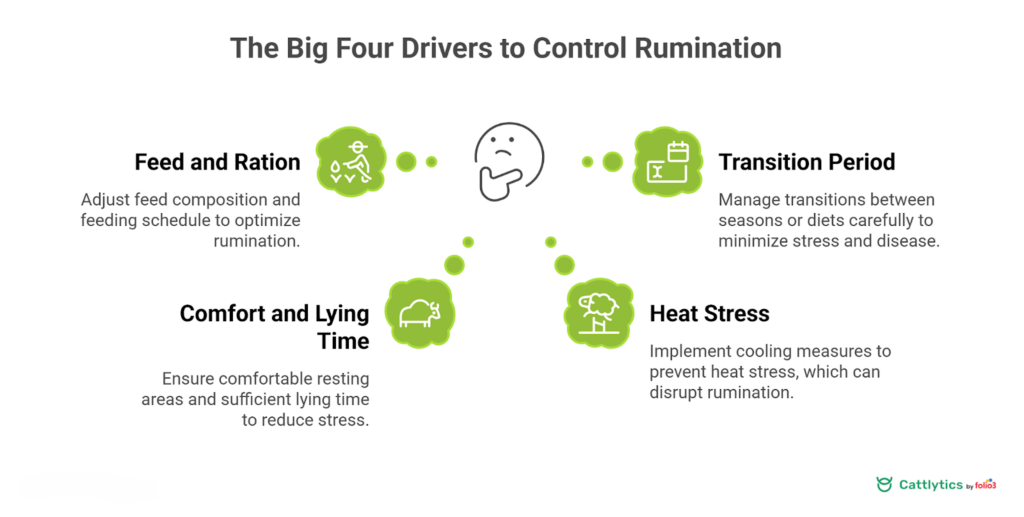
Why Rumination Changes: The Big Four Drivers You Can Control
Feed composition, stall comfort, heat stress, and transition health directly impact rumination time. Understanding these drivers helps you diagnose problems fast and intervene before milk production drops.
Feed and Ration Drivers
A meaningful share of rumination variation traces back to intake and ration makeup. Neutral detergent fiber (NDF) and starch are the two numbers to watch. Higher concentrations of physically effective fiber increase rumination and salivation, which in turn support rumen pH. On the flip side, high-starch, finely ground, or heavily processed diets reduce chewing time and push pH downward.
Meanwhile, physical form matters just as much as nutrient content. A ration with adequate NDF on paper can still cause problems if the forage is chopped too short, because the cow does not need to chew as long and produces less saliva. As per research, grains or pelleted feeds can reduce saliva flow to just 20 percent of what a long-hay diet would produce.
Ration change week mini-checklist:
- Monitor group rumination daily for the first 5 to 7 days after any ration change.
- Watch for feed sorting at the bunk, which can skew actual intake away from formulated targets.
- Check manure consistency for undigested grain or loose stools as a sign of rumen upset.
Comfort and Lying Time
Cows ruminate more when they are lying down, which means anything that reduces lying time will also reduce rumination. Stall comfort and space availability show up in your rumination data fast. If cows are standing idle in alleys rather than lying and chewing, the problem might not be nutritional at all.
Three practical comfort checks:
- Stall bedding: Is it deep, dry, and clean? Thin or wet bedding discourages lying.
- Stocking density: Are there more cows than available stalls? Overstocking compresses lying time.
- Time away from pen: Long holding times before milking eat directly into rest and rumination hours.
Heat Stress and Environment
Heat stress commonly reduces rumination time and shifts the daily pattern. An elevated temperature-humidity index is associated with lower rumination, making rumination data a useful proxy for how well your cooling systems are performing.
What to review same day when rumination dips, and temperatures rise:
- Fan operation and airflow direction in freestall barns.
- Soaker or sprinkler timing and coverage.
- Water access: enough trough space, clean water, adequate flow.
- Shade availability for grazing or drylot herds.
Transition Period and Disease Pressure
The transition period, roughly three weeks before and three weeks after calving, is when rumination monitoring earns its keep. Drops in rumination during this window can precede visible illness, making it a valuable early warning system. The rumination can fall by 170 to 225 minutes around calving day alone.
Conditions to watch for in fresh cows include mastitis, metritis, and metabolic stress such as ketosis or displaced abomasum. If you are already tracking cattle breeding and calving records, pairing that timeline with rumination trends gives you a much clearer picture of which cows need attention and when.
Why Rumination Matters for Milk Yield, Not Just “Health Monitoring”
Here is the practical takeaway: rumination drops often show up before milk drops, making rumination a leading indicator you can act on. Changes in rumination frequently preceded clinical signs of disease and production losses by 12 to 24 hours. That is a window most dairy managers do not get from milk meters alone.
However, there is an important nuance. Within-cow timing matters because rumination and feeding trade off in short windows throughout the day. A cow that eats aggressively for an hour will ruminate less during that hour, and vice versa. It means daily rumination totals by themselves may not perfectly mirror daily dry matter intake.
The real value is in tracking each cow’s own trend over multiple days rather than treating a single day’s number as a diagnosis. Farms using dairy management software can overlay rumination trends with milk yield and health records to spot patterns that would otherwise be invisible in pen-level summaries.
Milk Components, Rumen Stability, and Chewing Time
Rumination drives saliva flow, saliva buffers rumen pH, and a stable rumen pH supports the microbial population responsible for fiber digestion. When those microbes are working well, they produce a healthy ratio of volatile fatty acids, particularly acetate, which is a precursor for milk fat synthesis.
Here is a practical example: if you push too much rapidly fermentable starch into the ration without enough effective fiber, rumination drops, saliva drops, rumen pH crashes, and the microbial balance shifts away from fiber digesters toward acid producers. The result can show up as milk fat depression, loose manure, and reduced overall production, sometimes within just a few days of the ration change.
How to Track Rumination From Pen-Side Checks to Rumination Collars
You do not need a collar on every cow to get useful data. The “herd snapshot” method is simple: walk through the pen during a rest period and count how many cows are lying down and actively chewing cud. A benchmark of 60 percent or more of lying cows ruminating at any one time is a sign of good herd-level rumen function. Timing matters, so take your count at least two hours after feeding to avoid skewing the results.
Rumination Collars, Ear Tags, Boluses, and Cameras
Wearable and non-wearable technologies each capture slightly different data points. Here is a comparison to help you decide what fits your operation:
| Option | Measures You Get | Best Use Case | Watchouts |
| Collar tag | Rumination minutes plus activity | Freestall herds, daily alerts | Fit, loss, data gaps |
| Ear tag sensor | Rumination plus activity signals | Grazing and mixed systems | Tag placement, signal noise |
| Rumen bolus | Internal signals, sometimes temp | Transition focus, remote herds | Cost, retrieval not possible |
| Camera analytics | Visual behavior classification | Research, some barns | Setup, lighting, and accuracy vary |
Research reviews confirm that commercial rumination sensing systems can reliably measure daily rumination time, though values vary across sensor types and between individual cows. Regardless of which technology you choose, wearables should support, not replace, your physical observations and pen walks.
Interpreting Alerts Without Chasing Ghosts
Before you pull a cow out of the pen, compare the alert to her own baseline first. Predictable drops happen around calving (170 to 225 minutes), estrus (about 75 minutes), and even hoof trimming (up to 45 minutes), so factor in recent events before escalating.
Build an “alert confirmation” habit:
- Check feed access: was feed pushed up on time, is there feed in the bunk?
- Check water: is the trough full, clean, and accessible?
- Check temperature: has it spiked since yesterday?
- Run one quick health screen: rectal temp if available, udder feel, and manure check.
What to Do When Rumination Drops
Rumination drops can precede visible signs of illness by roughly 12 to 24 hours. Treat any sustained drop as an early warning, not a false alarm.
Practical trigger: Investigate if rumination drops more than about 30 to 50 minutes per day from an individual cow’s baseline, or if a group-wide dip appears.
Add your edge with percent change: For farms with different sensor systems or breed mixes that produce different absolute baselines, flag a drop of 10 to 15 percent from that cow’s rolling average. This normalizes the threshold across your herd and reduces false negatives on high-ruminating cows.
The First 30-Minute Triage Checklist
When a rumination alert fires, run through these checks in order:
1. Confirm it is real
- Sensor uptime: Is the device transmitting normally?
- Cow ID: Is the tag matched to the right animal?
- Time of day context: Post-feeding dips are expected, overnight drops are not.
2. Feed
- Bunk push-ups done on schedule?
- Any visible sorting at the bunk?
- Recent changes in forage lot or effective fiber content?
3. Water
- Adequate flow and trough cleanliness?
- Crowding at water points?
- Frozen or excessively hot trough issues?
4. Heat and environment
- Cooling systems operational?
- Pen temperature trend rising?
- Shade available for grazing cows?
5. Comfort
- Lying time barriers: wet stalls, overcrowding, narrow alleys?
- Stall dimensions adequate for current cow size?
6. Health screen
- Rectal temperature, if available.
- Udder check for heat, swelling, or abnormal milk.
- Manure consistency: loose, bubbly, or off-color?
- Off-feed behavior or signs of pain?
Common Scenarios and What to Check First
Use the table below as a quick reference when you see a rumination alert:
| Scenario | Rumination Signal | Likely Bucket | First Checks |
| New ration or new forage lot | Gradual drop across the group | Nutrition | Sorting at bunk, fiber length, starch load, particle size |
| Hot day or rising heat stress | Drop with the daytime shift | Environment | Cooling systems, water access, crowding, shade |
| Fresh cow, low rumination | Low vs. own baseline | Transition health | Metritis, ketosis risk signs, temp, appetite |
| Single cow sudden drop | Sharp individual change | Health or injury | Mastitis, lameness, off feed, udder check |
| Cow in estrus | Drop of ~75 min, returns within 24 hrs | Reproduction | Confirm heat signs, check breeding records |
Estrus-related drops are well-documented, with reductions of approximately 75 minutes reported during standing heat. Calving-related drops are even larger, so always cross-reference your calving and breeding timeline before escalating a fresh cow alert to a health concern.
Set Up Rumination Monitoring So It Saves Time and Milk
A single herd-wide threshold will generate too many false alarms in some groups and miss real issues in others. Instead, establish a baseline window for each pen or lactation stage group. Note every ration change in your records so you can separate a legitimate nutritional shift from a health concern.
Track trends over rolling 5- to 7-day windows rather than reacting to a single day. This smooths out noise from estrus events, weather swings, and normal day-to-day variation. Farms that tie rumination baselines to their cattle monitoring system can automate much of this tracking and free up time for the checks that actually require boots on the ground.
Build a Simple Alert Workflow Your Team Will Follow
Technology only works if the people using it have a clear process. Define the basics upfront:
- Who checks alerts: Assign a specific person per shift or per day to review the dashboard or app notifications.
- What gets checked first: Use the triage checklist above so every team member follows the same sequence.
- When to escalate: Set clear rules for when to call the nutritionist or the vet.
Log every alert outcome, even the ones that turned out to be nothing. Over time, that log lets you tune your thresholds, reduce false alarms, and build confidence in the system.
See how Cattlytics turns sensor data into faster decisions and measurable results. Schedule a demo today and discover what enterprise visibility can do for your dairy.
FAQs
How Many Hours Should a Cow Ruminate Per Day?
Healthy dairy cows typically ruminate 7 to 9 hours daily. The exact amount varies based on diet composition, stage of lactation, and individual cow factors. Monitor each cow against her own baseline rather than relying on herd averages for accurate health assessment.
What Causes a Sudden Drop in Cow Rumination Time?
Rumination drops signal feed changes, heat stress, illness, or reduced lying time. Common triggers include new rations with less fiber, overcrowded stalls, mastitis, or metabolic disorders. Drops often appear 12-24 hours before visible clinical signs, making rumination an early warning system.
How Do Rumination Collars Help Improve Milk Production?
Rumination collars detect health issues before milk yield drops, giving you time to intervene early. By catching problems like mastitis or metabolic stress within the 12-24 hour warning window, you prevent production losses. Stable rumination also indicates proper rumen pH and efficient feed digestion.
When Should I Investigate Low Rumination in Fresh Cows?
Investigate when rumination drops 30-50 minutes below the cow’s baseline for two consecutive days, or by 10-15 percent. Fresh cows naturally ruminate less around calving, but sustained low readings may signal metritis, ketosis, or other transition disorders.
Can Heat Stress Affect Dairy Cow Rumination Patterns?
Yes, heat stress reduces rumination time and shifts the daily pattern toward cooler nighttime hours. Monitor rumination alongside temperature-humidity index (THI) to evaluate cooling system performance. Same-day checks should include fan operation, water access, and shade availability when rumination drops during hot weather.