
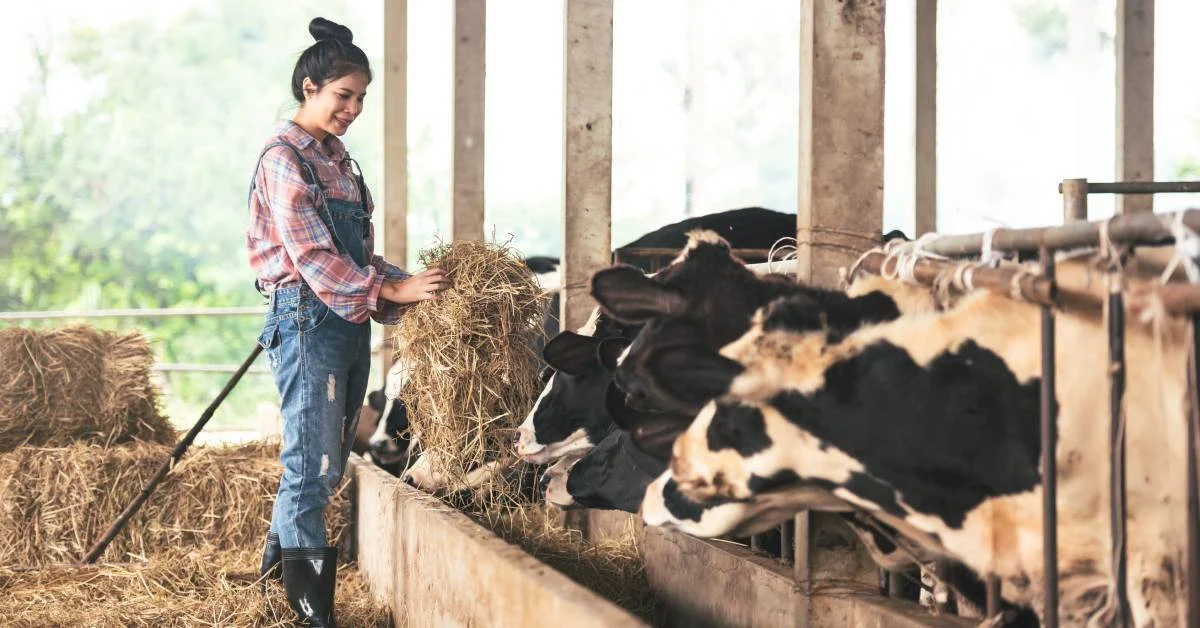

If you’re new to raising cattle, the hardest part isn’t the work; it’s knowing what to do first, what to buy, and how to build a routine that keeps cattle healthy. This guide is for raising cattle for beginners who want clear steps, not guesswork.
In this guide, you’ll learn:
- The setup you need before cattle arrive (land, fencing, water, handling)
- How to buy your first animals and avoid beginner mistakes
- A daily/weekly care routine, plus feeding and mineral basics
- Health and handling fundamentals, including when to call your veterinarian
- The basics of costs, timing, and profit
You’ll also pick your path early: raising beef cattle for personal use (freezer beef) or raising cattle for profit beginners (selling calves, stockers, or finished cattle). Either way, starting with a clear plan that covers infrastructure, financing, and operational timelines helps you avoid the expensive mistakes that derail most first-year operations.
Decide Why You’re Raising Cattle
Before you buy cattle, get clear on your “why.” In cattle raising, your goal determines your costs, daily workload, and the kind of fences and feed you’ll need. Beginner problems, such as running out of hay in winter, buying the wrong class of cattle, or realizing too late that you don’t have a selling plan, come from skipping this step.
If you’re raising cattle for beginners, this is your advantage: you can choose a simpler model that fits your land and schedule, and avoid detours.
Start by answering three questions:
- What do you want the cattle to produce: meat for your family, calves to sell, weight gain for resale, or breeding stock?
- What resources do you actually have: pasture quality, stored-feed capacity, time for handling, and cash flow?
- How do you want to get paid: auction, private sale, or direct-to-consumer?
Once you decide, farming cattle becomes simpler: match an operation type to your resources, then build a routine that fits your life.
Pick Your End Goal
Your end goal answers, “What does success look like?”
If you want freezer beef, you’re focused on steady growth, calm handling, and a processing date. If you want to sell calves, you’ll manage breeding, calving, and weaning.
Stocker/backgrounding means buying weaned calves, putting weight on them efficiently, then selling at a higher weight. If profit is the main goal, pick one model and price it out before you start.
Choose the Right “Cattle Operation Type”
Pick the one that matches your cash flow, available feed resources, comfort with breeding management, and your local marketing options.
| Operation type | Best for | Time to revenue | Feeding intensity | Beginner difficulty | Typical selling method |
| Cow-calf | You want to build a herd and produce calves annually | After weaning, often ~6–10 months | Mostly pasture + stored forage when grass isn’t growing | Requires breeding + calving management | Calves leave the herd of origin at weaning/young age into the next phase |
| Stocker (backgrounding/grower) | You want to buy weaned calves and add weight on forage | After a post-weaning period, commonly ~12–16 months | Forage-driven (pasture/roughage-based) | Requires buying/selling timing + feed management for gain | Cattle typically move to a feedlot/finishing phase after the stocker period |
| Finish / Freezer Beef | You want finished beef (or to take cattle to harvest weight) | When cattle reach harvest/market weight, often ~18–22 months | High-energy finishing diets or longer time on pasture | Requires ration discipline + higher cost control | Sold for slaughter/processing when market-ready |
| Seedstock | You want to sell genetics (bulls + replacement females) | Varies after breeding animals are developed and marketed | Smaller herds, but management is data- and selection-intensive | Requires selection, records, and buyer trust | Bulls + replacement females sold to cow-calf producers |
Once you’ve chosen your operation type, managing breeding schedules, calving records, and calf performance data systematically becomes essential, especially for cow-calf operations where reproductive efficiency directly determines annual revenue and long-term herd improvement.
What You Need Before You Buy Cattle
Learn how to prepare land, fencing, water, and handling so you can raise cattle confidently without overstocking, escapes, or costly setup mistakes.
Land & Stocking Reality Check
“How many acres per cow?” is the right question until you realize it’s conditional. Stocking rate depends on usable grazing acres, rainfall, forage species and productivity, topography, and the class of cattle you’re running. It also changes year to year, especially in drought, so plan a buffer. Instead of copying a rule-of-thumb from a small-acreage guide, validate locally: estimate forage production with your local Extension/NRCS. Plus, convert it to animal units (AUs) for the grazing season, then monitor pasture use and adjust supplementation or headcount before you overgraze.
Fencing that Holds Cattle
Your fence only has one job: keep cattle in and problems out. Avoiding the most common fencing errors like inadequate corner bracing, poor wire tension, or placing gates in low-traffic patterns saves you from repeated escapes and expensive repairs during your first season. For a minimum viable setup, build a solid perimeter first. Barbed wire is common for cattle, and electric fencing is often faster to install and easier to repair. Wood/board fences work in high-pressure areas but cost more. Upgrade later with cross-fencing for grazing control. Prevent escapes with regular checks: tension, posts, gates, and electric voltage.
Water System Basics
Water is non-negotiable when you raise cattle. Intake rises with heat, body weight, and lactation, so your system needs capacity and reliability. Use a clean trough/tank with a steady refill, place water where cattle can reach it easily, and avoid muddy choke points. For cold weather, plan freeze protection like buried lines, insulated tanks, or a consistent winter routine.
Handling & Safety Setup
You don’t need fancy facilities, but you do need workable handling. At minimum, set up a small holding pen, a safe alley, and a squeeze chute/head catch so you can vaccinate, treat, or load cattle without a rodeo. Prioritize solid gates, sound footing, and precise flow to the trailer. A simple, well-designed setup reduces stress on cattle and injuries for you.
How to Buy Your First Cattle
Understand which cattle class to start with, where to buy safely, and how to spot health or temperament issues before money changes hands.
What Class Should Beginners Start With?
For beginners, the ‘best’ class is the one you can manage safely and consistently. Understanding breed characteristics from temperament and growth rates to environmental adaptability and market demand helps you match cattle to your climate, forage type, and end goal before you buy. Weaned or feeder calves let you learn feeding, fencing, and daily observation without the added complexity of breeding and calving.
Meanwhile, yearlings are often hardier but cost more upfront. Bred heifers and cow-calf pairs can work, but they require calving management, more handling readiness, and tighter nutrition. Whatever you buy, prioritize a clear vaccination/weaning history when possible.
Where to Buy
Auctions offer selection and price discovery, but cattle may be commingled and sold with limited health history. A private treaty or a local breeder can provide a clearer background, temperament insight, and vaccination records, often with less variety. Risk controls: ask for health/weaning details, avoid sick cattle, and quarantine new arrivals briefly before mixing.
Quick Health & Temperament Check
Use this quick field check before you buy:
- Eyes: bright, not sunken or crusty
- Nose: clean breathing; no heavy discharge
- Respiration: no cough, labored, or rapid breathing
- Movement: sound walk; no obvious lameness
- Demeanor & manure: alert with the group; manure not watery/bloody
Note: If you see depression, droopy ears, deep coughing, or diarrhea, walk away.
How to Take Care of a Cow
Follow a simple care routine that covers daily checks, weekly adjustments, and seasonal planning to keep cattle healthy and problems small. A comprehensive approach to cattle care encompasses nutrition, health monitoring, environmental management, and behavioral observation working together to create resilient, productive animals that stay out of crisis mode.
Daily Non-Negotiables
Spend 10 minutes, twice a day, doing the same checks. For operations that scale beyond a few head, systematic monitoring tools help you capture daily observations so patterns emerge faster and nothing falls through the cracks when life gets busy. Make sure water is flowing and clean, cattle need continuous access, and intake changes with heat and diet.
Scan the herd: are they eating, chewing cud, and moving normally? Watch for coughing, labored breathing, droopy ears, or one animal hanging back. Check fences at pressure points (gates, corners). Confirm free-choice mineral/salt is available and note any sudden behavior change today.
Weekly Tasks
Once a week, walk your pasture and look for overgrazing, muddy spots, and broken wires. Score body condition (too thin, too fat, or steady) and adjust feed before weight loss shows up in performance. Inventory hay, supplements, and minerals so you can reorder early instead of scrambling during weather weeks.
Monthly/Seasonal Tasks
Monthly, review records and decide what to change: feed levels, rotation timing, or treatment plans. Use your veterinarian’s recommendations for parasite control based on season and local risk. Seasonally, prep for winter: secure hay storage, test water systems for freezes, and confirm you can handle or load cattle when needed.
Feeding Program for Beginners
Build a pasture-first feeding plan, manage hay quality and waste, and use minerals correctly to support steady growth without overspending.
Pasture-First Feeding
For most beginner systems, pasture is your cheapest feed, but it isn’t “complete” year-round. Learning how to rotate cattle through paddocks systematically, moving before overgrazing and resting until regrowth is ready maximizes forage production and reduces your annual hay bill significantly. As grasses mature, digestibility and protein typically drop, and cattle may not meet their needs from forage alone.
Expect seasonal shifts: spring growth can be high in energy and protein yet still unbalanced; later summer, fall, and winter often drive supplementation decisions. Also, consider a forage test when practical, and supplement only what’s limiting to keep gains steady and costs controlled for your herd.
Hay 101
Hay quality and storage determine whether you’re feeding cattle or feeding waste. Buy the best forage you can verify (ask for a hay test when available), then protect it from rain and ground moisture. Indoor storage is best; if outside, use a well-drained base and cover when possible to reduce spoilage. During feeding, use a feeder that limits trampling and “bedding down” hay in mud. Check refusals and adjust daily.
Minerals & Salt
Provide free-choice salt and a mineral mix suited to your region; it’s one of the simplest ways to avoid deficiencies. In lush spring pasture, some herds use “Hi-Mag” mineral (higher magnesium) to help reduce grass tetany risk, especially in lactating cows on growing cool-season grasses. Work with your vet on timing and intake targets, and keep minerals available consistently daily.
Health & Handling: Build Your Vet Plan Before You Need It
Set up a vet relationship, recognize early health warnings, and handle cattle calmly to reduce stress, injuries, and emergency decisions.
Set Up a Vet Relationship + Herd Health Plan
Build a relationship with a veterinarian before the first problem. Many beginners make preventable health management errors like inconsistent vaccine timing, poor quarantine protocols, or waiting too long to treat. So, ask for a written herd health plan: local vaccine timing, castration/dehorning guidance, calving-season protocols, and a parasite strategy.
Also, confirm quarantine recommendations for purchased cattle, when to take a temperature, and what “call now” signs look like during weekends and after-hours. Also, agree on emergency contact steps, drug storage rules, and withdrawal times so you can act fast without guessing.
Beginner Health Watchlist
Watch daily for signs like bloat, respiratory disease, lameness, dehydration, and parasite pressure. Understanding what these symptoms mean, how quickly they can escalate, and which treatments work helps you respond appropriately instead of panicking or waiting too long to call your veterinarian. Add reduced appetite or separation from the herd to your warning list.
Safe Handling Basics
Move cattle calmly using low-stress techniques that work with their flight zone and natural movement patterns, and use your facilities to control flow rather than fighting them. A workable setup includes a holding area, alley, and squeeze chute/head catch. Keep footing solid, eliminate pinch points, and never enter a pen with unrestrained animals alone.
Key Tips for Raising Cattle (Beginner-Proof)
Apply practical, field-tested tips that help beginners avoid common mistakes, protect margins, and scale cattle raising only after systems work.
Tip 1: Start Small, Then Scale
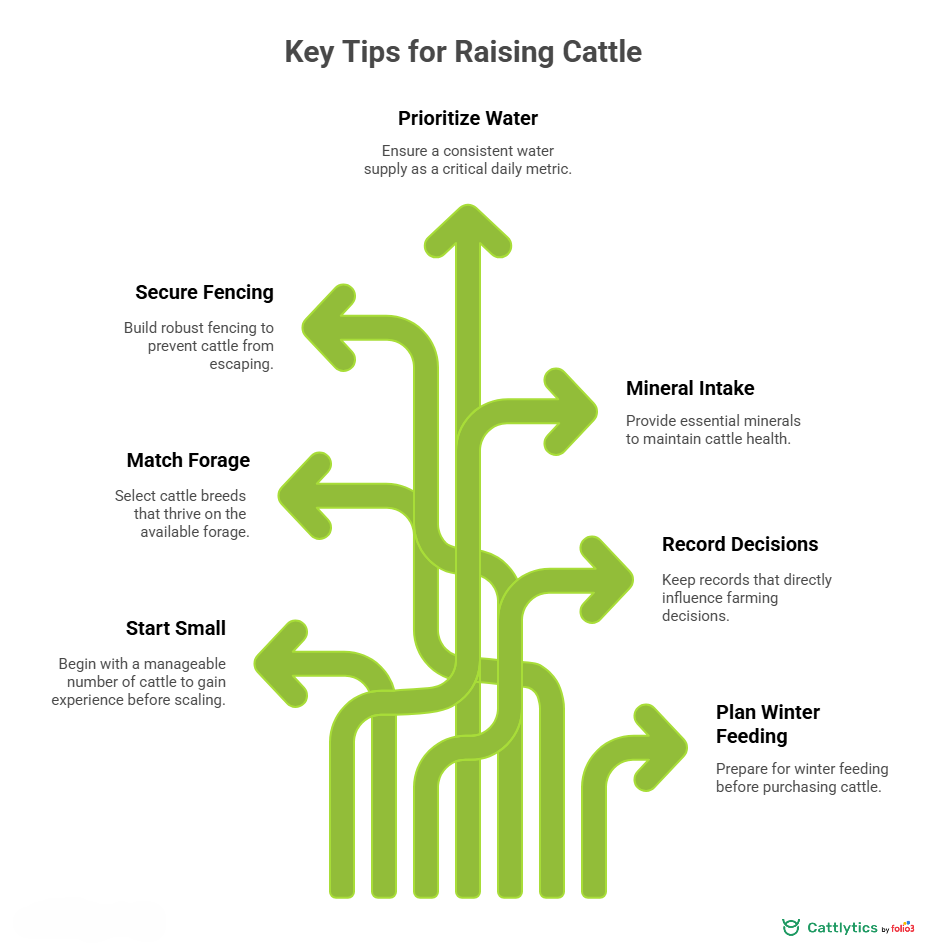
Start with a small, manageable number of animals so you can dial in fencing, water, feeding, and handling. When your routine is consistent, then add headcount, growth should follow your system, not your excitement.
Tip 2: Match Cattle to Your Forage, Not Just Your Acreage
Don’t stock based on acres alone. Match cattle size and class to what your pasture can grow across seasons, then adjust with hay or supplements. Extension tools help you set realistic stocking rates for your area.
Tip 3: Build “Escape-Proof” Fencing Before Day 1
Before cattle arrive, build a strong perimeter fence and fix weak gates, corners, and low spots. Electric can be fast and economical, but only if the voltage stays up. Walk your fence line regularly; maintenance prevents escapes.
Tip 4: Water Is Your #1 Daily KPI
Treat water like a daily KPI: if water fails, everything fails. Check flow, cleanliness, and access points every day, and plan for heat and freezes. Size tanks and lines for peak demand, not averages.
Tip 5: Ensure Mineral Intake
Provide free-choice salt and a balanced mineral suited to your region. Many forages are low in sodium, and consistent mineral intake supports performance. In spring, on lush grass, ask about higher-magnesium (“Hi-Mag”) minerals for tetany risk.
Tip 6: Record Only What Drives Decisions
Keep a beginner record stack that answers: Are cattle healthy, gaining, and profitable? Track records digitally from day one including animal ID, purchase cost, weights, breeding/calving dates, treatments with withdrawal times, and deaths/culls. Skip anything you won’t review monthly. Centralizing animal records, health events, and financial tracking in one accessible system helps beginners stay organized without drowning in spreadsheets or losing critical information during busy seasons.
Tip 7: Plan Winter Feeding Before You Buy Cattle
Winter feed is often the highest cost. Before you buy, estimate feeding days, hay needs, and storage/feeding losses, then line up hay and storage. If the math doesn’t work on paper, it won’t work in mud.
A Simple Timeline for Raising a Cow for Meat
Understand finishing options, processing timing, and preparation steps so raising beef for personal use stays predictable and stress-free.
Pick Your Finish Strategy
Grass-finished beef usually takes longer because weight gain on forage is slower, while grain-finished cattle typically reach market weight faster and develop more marbling. Grass-fed beef is often leaner, and fat color can differ, so preference matters. A hybrid finish uses pasture as the base with a grain phase to balance time, feed cost, and eating quality.
When to Process
Schedule your processing date around how you’re finishing: grain systems finish faster than grass systems. Keep cattle calm, don’t run or excite them before hauling; stress can affect meat quality. Ask your processor about hanging/aging time; a typical range is 7–14 days for tenderness. If you’re home slaughtering, cool nights help the carcass chill properly.
Pre-Processing Checklist
Confirm your appointment and cut sheet before slaughter day. Use freezer-space guidance: about one cubic foot for each 35–40 lb of cut-and-wrapped beef. Plan transport with coolers, and make sure your freezer can handle the load.
Raising Cattle for Profit: Can You Make Money Raising Cattle?
There are four beginner-friendly ways to make money raising cattle.
- Cow-calf means breeding cows to produce a calf crop and selling weaned calves into the next phase.
- Raising stocker cattle means buying weaned calves, growing them on forage and limited supplements, then selling them heavier.
- Finishing + selling “commodity” sells market-ready cattle through traditional outlets.
- Finish + sell direct (freezer beef) markets a live animal or beef directly to consumers if you can build demand. Match it to your cash flow.
Run break-even per head: total costs and compare them to your selling route.
| Cost buckets | Revenue route | Break-even lever | Common mistake |
| Animal, feed, minerals, vet, facilities | Weaned calves | Weaning wt + price | Skip overhead in math |
| Calf purchase, forage, health, and shrink | Stocker cattle | Cost per lb gain | No sell plan/date |
| Feeder, finish feed, yardage, loss | Commodity fed cattle | Feed efficiency | Ignore death/shrink |
| Feeder, finish feed, processing, marketing | Freezer beef | Pre-sold shares | Underprice processing |
Selling Channels & Timing
Auctions offer price discovery and quick payment, but you sell on the day’s market, and cattle can be commingled. Private treaty rewards known history and calmer cattle when you trust the seller. Direct-to-consumer freezer beef can stabilize pricing, but it adds customer work and requires the right processing/inspection path for what you sell. Match the channel to your cash timing, workload, and real local buyer demand.
Conclusion
Raising cattle gets much easier when you follow a simple sequence: pick a clear goal, build your setup, buy the right class of cattle, and run a repeatable routine. From there, tighten feed and health basics, then choose a profit plan that matches your land and time. If you want a shortcut, consult with our experts at Cattlytics, so you can plan your cattle raing journey before you scale.
FAQs
Can You Make Money Raising Cattle On A Small Farm?
Yes, you can, but profit comes from matching cattle numbers to your forage and keeping feed waste low. Small farms often win by controlling costs and choosing the right selling route (stocker or freezer beef).
What’s The Easiest Cattle Setup For Beginners?
The simplest start is a small group of weaned/feeder calves with solid fencing, reliable water, and free-choice minerals. Avoid breeding at first; calving adds risk, labor, and time you may not be ready for.
How Many Cows Should A Beginner Start With?
Start with the smallest number you can safely handle and afford to feed through a bad weather stretch. “Start small, then scale” is practical advice because your system gets tested before your herd gets expensive.
What’s The Most Important Daily Care Task?
Water, every day, because if water fails, intake drops fast and health problems follow. Pair that with a 2-minute visual check: appetite, breathing, movement, and any animal acting off from the group.
Is It Better To Raise Cattle For Meat Or Sell Calves?
Raising cattle for personal use can be simpler because you’re managing fewer moving parts than a breeding program. Selling calves can scale well, but it requires breeding, calving readiness, and a clear market plan.
What’s The Biggest Mistake New Cattle Farmers Make?
Buying cattle before your basics are ready: fencing, water, winter feed, and a handling plan. The second mistake is starting without a selling goal, so you can’t price your costs or choose the right cattle class.