

CattleCon 2026 was one of those events where you could feel the weight of the industry in every conversation. Hosted by the National Cattlemen’s Beef Association, this year’s show brought together producers, feedlot operators, advisors, and technology leaders, all navigating tight herd numbers, cost pressure, and an increasingly data-driven operating environment.
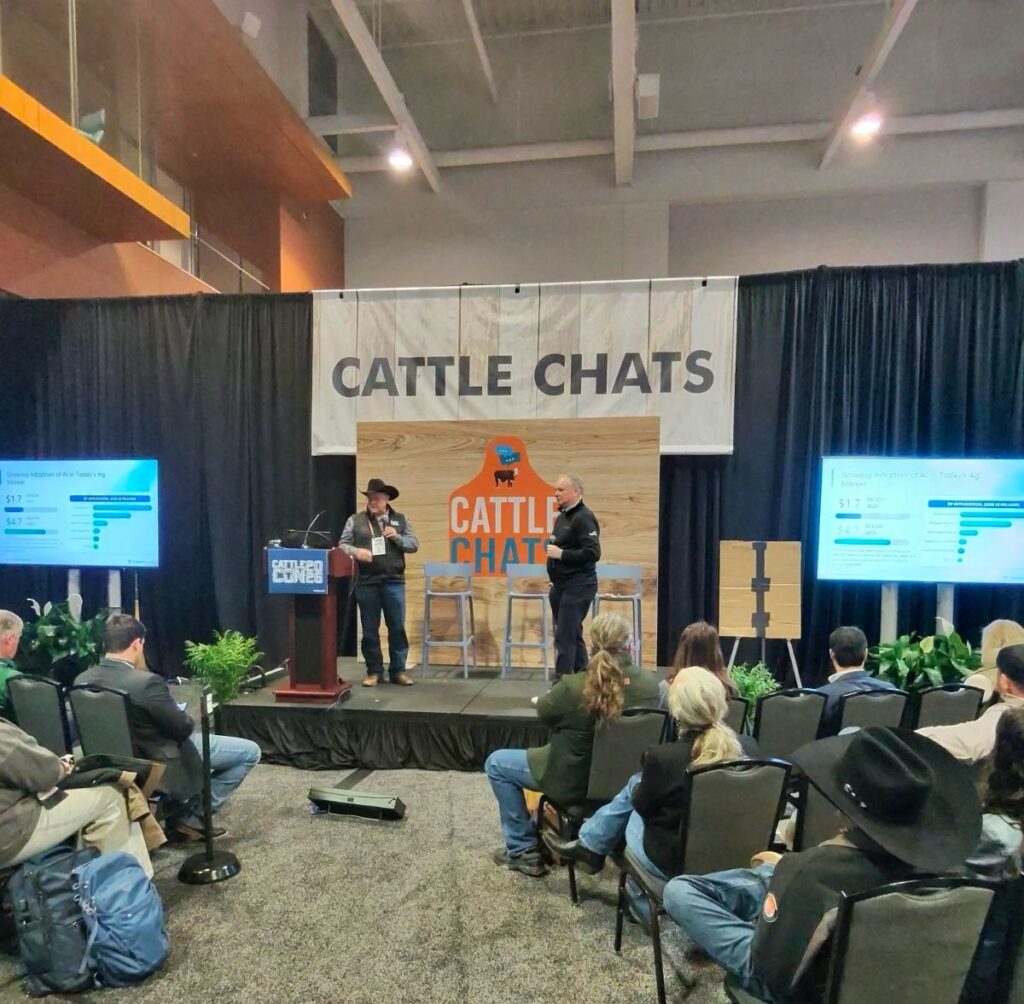
Our team at Cattlytics spent the week on the show floor at Booth 944, reconnecting with partners and meeting operators who are actively looking for better visibility into performance, costs, and risk. Alongside exhibiting, we had the opportunity to step into the Cattle Chats lineup and lead a session titled Bringing AI to Your Cattle Operation: Better Decisions, Better Returns.
The goal wasn’t to present AI as a trend, but to break down how it can be applied in practical, measurable ways inside cattle operations.
What We Covered In Cattle Chats
CattleCon 2026 brought together sessions covering market outlooks, herd health, policy updates, and the expanding role of technology in cattle operations. Within that broader industry conversation, Cattlytics stepped into the Cattle Chats lineup to address one of the most discussed and often misunderstood developments in agriculture today: artificial intelligence and what it actually means for cattle businesses.
Who Led the Session
The session was led by Harold Birch and Rob Terry from the Cattlytics team.
Harold is EVP of UnCommon Farms, our strategic partner, and serves as an industry consultant to Cattlytics. With extensive experience in agricultural operations and farm management, he brings a practical understanding of how cattle businesses run day to day and how decisions impact performance and profitability.
Rob Terry, Sales Director at Folio3, works closely with cattle operations on their technology and systems strategy. His focus is on aligning digital infrastructure with operational and financial goals, ensuring that new capabilities like AI integrate effectively within existing business environments.
Session Topic: Bringing AI to Your Cattle Operation: Better Decisions, Better Returns
Artificial intelligence is steadily gaining traction across agriculture. Investment in AI-driven solutions continues to rise, and producers are seeing practical applications move from pilot projects to operational tools.
Companies like John Deere are integrating AI into precision sprayer systems that target weeds with extreme accuracy, while equipment manufacturers are embedding predictive maintenance capabilities into tractors to anticipate breakdowns before they occur. From precision field equipment to livestock monitoring and financial forecasting, AI is becoming part of how modern agricultural businesses operate.
In the cattle industry specifically, the growing volume of operational data, including animal health records, feed performance, inventory movement, and financial tracking, has created both opportunity and complexity. AI offers a way to interpret that data at scale, surface patterns earlier, and support more informed decision-making. As adoption increases across the broader ag sector, cattle operations are beginning to evaluate where and how AI fits into their own business models.
Why This Topic Matters in Today’s Cattle Industry
Cattle operations are working in one of the most data-heavy and margin-sensitive environments the industry has seen in decades. U.S. cattle inventory recently dropped to its lowest levels in over 70 years, tightening supply and increasing the financial impact of every operational decision. At the same time, feed accounts for the largest portion of production costs, and diseases like Bovine Respiratory Disease continue to cost the industry over $1 billion annually due to delayed detection.
During the session, Harold discussed how fragmented records and limited visibility create operational blind spots. AI, in this context, becomes a tool for bringing those scattered data points into clearer focus..
Across agriculture, AI adoption is accelerating because it helps identify patterns earlier and with greater consistency. In cattle operations specifically, that translates into measurable areas such as:
- Earlier detection of illness through behavioral and intake pattern shifts
- Feed conversion prediction to evaluate cost per gain more accurately
- Heat stress monitoring using environmental and activity data
- Mortality risk flagging based on performance trends
- Financial forecasting is tied directly to herd performance
As Harold noted during the discussion, ranchers are not looking for complexity; they’re looking for clarity. AI matters today because it can help reduce guesswork, surface risks sooner, and support decisions that directly affect profitability and herd performance.
Use Cases Explored During the Session
A key part of the discussion focused on where AI is already showing up in practical, operational ways. Rob and Harold highlighted specific use cases that connect directly to cattle health, feed efficiency, workflow management, and financial performance. The goal was to show how AI can support everyday decisions inside an operation, not replace them.
Animal Visibility and Health Monitoring
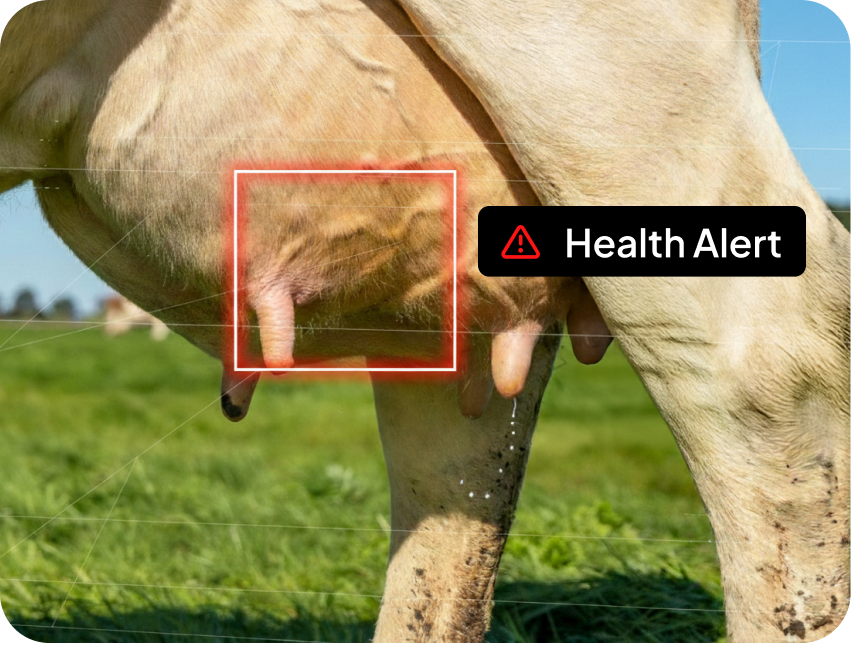
AI-driven monitoring tools are helping producers gain earlier insight into animal condition and behavior through:
- Cattle counting and automated identification
- Behavioral tracking to detect changes in activity patterns
- Early heat stress detection using environmental and movement data
- Predictive illness detection, including BRD risk signals
- Mortality risk flagging based on performance and intake trends
These tools help shift health management from reactive treatment to earlier intervention.
Feed and Performance Optimization
Feed remains the largest cost driver in most cattle operations. AI can assist in:
- Feed conversion prediction to estimate gain relative to input cost
- Ration optimization based on performance data
- Intake analytics to identify underperforming animals sooner
- Yield and weight gain forecasting
This allows producers to evaluate cost per gain more accurately and make more informed ration adjustments.
Operational Workflow Automation
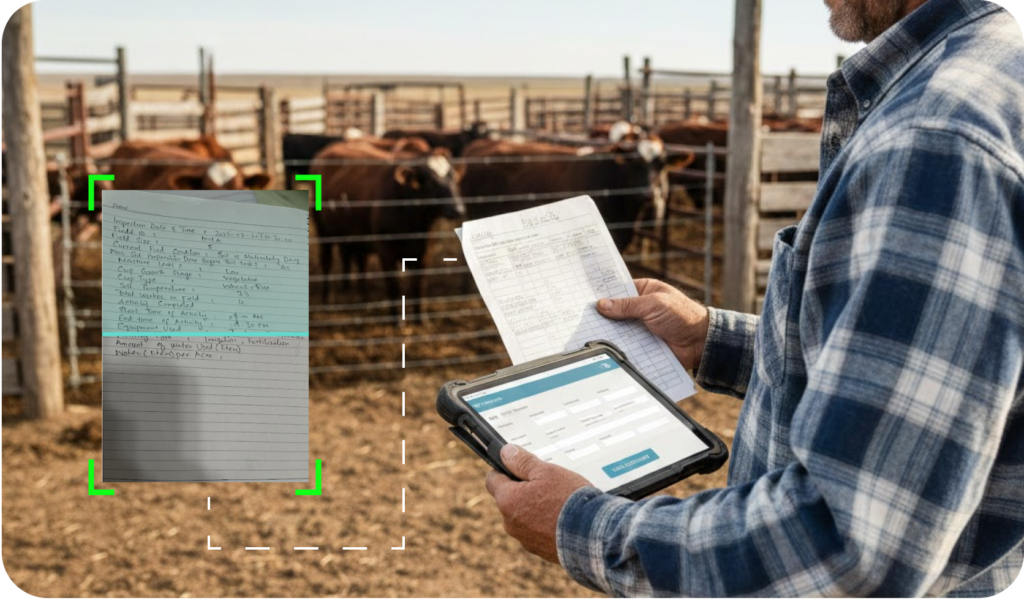
The session also explored how AI can reduce administrative burden through:
- Paper-to-digital conversion using OCR for feed tickets, vet notes, and scale sheets
- Automated data sorting and cleaning to reduce record errors
- Document summarization and record retrieval
- Pen occupancy optimization
- Inventory tracking and shortage prediction
These capabilities help improve visibility while reducing manual data handling.
Financial Insights and Forecasting
Beyond operations, AI is increasingly being used to connect performance data with financial outcomes, including:
- Budget forecasting tied to herd performance
- Feed cost planning and price sensitivity analysis
- Risk scoring for pens or lots
- Scenario modeling for weather, feed price, or weight fluctuations
- Profitability prediction at the pen or lot level
This brings operational performance and financial planning closer together, supporting more strategic decision-making.
How Cattlytics Is Advancing Practical AI in Cattle Operations
Advancing AI in cattle operations is not about layering new technology onto existing systems. It begins with identifying where clarity is missing, where risk is accumulating, and where better visibility could change an outcome. Across the operations Cattlytics supports, the work starts with understanding how the business actually runs and what business capacity they are aiming to achieve.
Cattlytics partners with cattle and livestock businesses to design and implement AI solutions that address defined operational priorities. This includes building systems for accurate cattle counting and identification, developing predictive models for early health detection and performance forecasting, and applying analytics to areas such as mortality risk and feed efficiency.
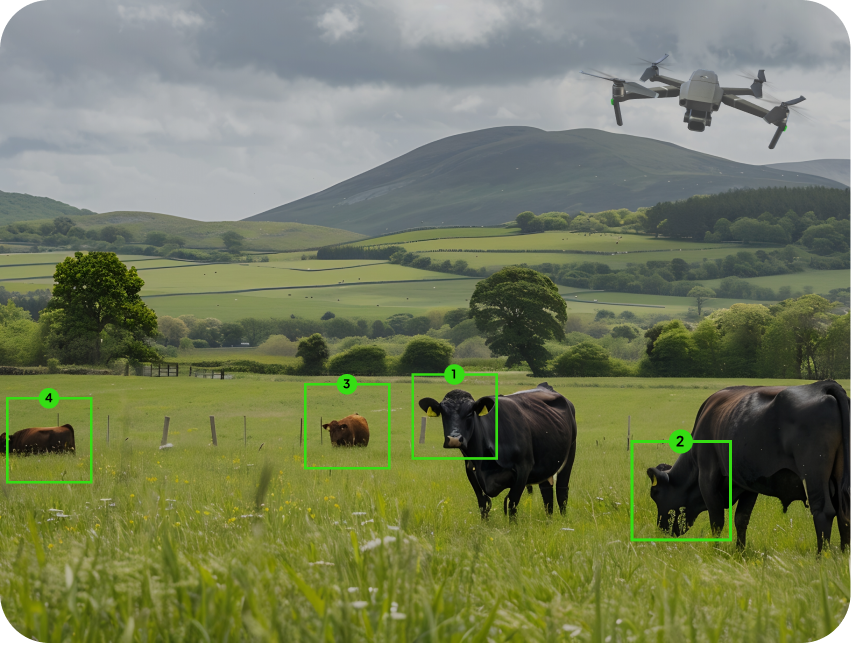
Beyond animal-level management, the focus also extends to modernizing information flow. Many operations are still managing critical data through paper records or disconnected spreadsheets. By converting those records into structured digital systems, improving data integrity, and aligning operational metrics with financial reporting, clearer insight becomes possible across pens, inventory, and profitability.
Technology alone does not create value. What differentiates Cattlytics is the combination of:
- Industry expertise, through agricultural consultants who understand how cattle operations function day to day
- Engineering depth, capable of building scalable, integrated systems
- Operational alignment, ensuring AI applications fit existing workflows and financial structures
At a time when many operations feel pressure to “adopt AI,” the real challenge is determining where it fits and what impact it can deliver. The goal is not adoption for its own sake, but implementation that is intentional, measurable, and grounded in business outcomes.
Continuing the Conversation Beyond CattleCon
CattleCon created space for meaningful conversations about where the industry is headed and how operations are adapting to new realities. The discussion around artificial intelligence was one of many signals that cattle businesses are actively evaluating tools that can support stronger performance and financial discipline.
The dialogue that began during Cattle Chats did not end when the session closed. Throughout the event, producers stopped by to share their own questions, where AI might fit, where it might not, and how to approach it without adding unnecessary complexity. Those conversations reinforced a common theme: technology only delivers value when it aligns with how an operation actually runs.
As the industry continues to evolve, the focus remains on practical progress, applying innovation in ways that strengthen decision-making, improve visibility, and support long-term sustainability. The conversation around AI is ongoing, and it will continue to be shaped by the realities of the cattle business itself.