
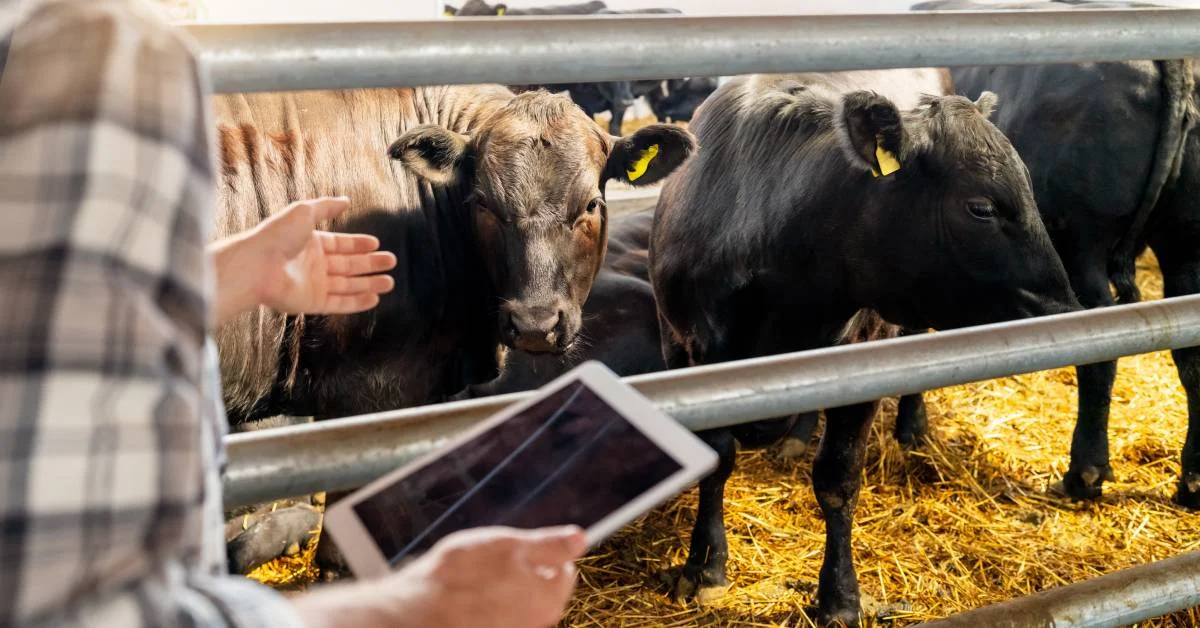

In modern cattle operations, cattle monitoring alerts have become essential to managing herd health and daily performance. Sensors, cameras, and tracking tools now cover every pasture, pen, and feed line in real time. From calving activity to feed intake, everything can be measured but when every small change triggers a notification, things quickly get overwhelming.
Across the industry, ranchers are battling what experts call alert fatigue a flood of constant, low-value notifications that make it harder to catch the alerts that actually matter. A recent USDA review found that producers using automated cattle monitoring systems spend more than ten hours a week filtering false or repetitive alerts. In larger herds, that distraction can lead to missed health problems, delayed treatment, and unnecessary losses.
The purpose of cattle monitoring alerts is not to overwhelm ranch managers with noise but to help them act faster when something truly needs attention. The challenge isn’t the technology itself — it’s how alerts are defined, filtered, and prioritized.
This guide breaks down how ranchers can fine-tune their alert systems for real results. You’ll learn which alerts drive herd performance, how to reduce false notifications, and how to build a smarter system that turns livestock alert management into a competitive advantage.
The Real Cost of Too Many Alerts
Too many alerts don’t just interrupt your day. They drain time, attention, and focus that should be going to herd management.
A 2024 USDA study found that nearly three out of four cattle operations using automated monitoring report some level of alert fatigue. On average, ranch managers spent nine to twelve hours each week checking notifications that turned out to be false. That is a full workday lost every week to alerts that didn’t require action.
In cow–calf and feedlot operations, those wasted hours matter. While you are clearing unimportant notifications, a real issue, such as a sick calf, a leaking water line, or a gate left ope,n can slip through unnoticed. Over time, the crew starts ignoring alerts altogether.
Lost Focus, Missed Signals
When alerts go off too often, they lose credibility. Research from Iowa State University shows that delayed responses to true health events increase treatment costs by up to 20 percent and reduce daily weight gain during calving season. In short, too many false alerts make herds less healthy and operations less efficient.
The Trust Problem
Once the team stops trusting alerts, technology becomes background noise. Every investment you have made in monitoring or data collection starts to lose value. People either revert to manual checks or assume the system will catch everything, and both approaches leave gaps in oversight.
The Fix
The answer isn’t to abandon technology. It’s to simplify it. A useful alert system should mirror the way your team works. It should send fewer messages, give better context, and trigger only when action is truly needed. When your alerts become accurate and dependable, they start working as an extra set of eyes instead of another digital distraction.
The solution isn’t abandoning technology. It’s simplifying it. A well-designed cattle monitoring alert system sends fewer, more meaningful messages. It gives clear context and triggers only when action is truly needed. When your alerts are accurate, they stop being background noise and start acting as an extra set of eyes across the ranch.
What Makes an Alert Worth Listening To
A good alert doesn’t just tell you something changed. It tells you what happened, why it matters, and what to do next. Anything less is noise. When you look across successful ranch operations, the alerts that actually move the needle usually fall into five categories:
- Calving and birthing activity
- Heat or breeding behavior
- Low activity or off-feed signs
- Boundary and gate security
- Water or heat-stress risks
Everything else is secondary. If it doesn’t demand a reaction within an hour, it can wait until the daily summary.
Clarity
Every useful alert gives context, which animal, what behavior, and for how long. “Cow 126 hasn’t shown feed activity for six hours” is specific enough for someone to act on. “Low activity detected” isn’t.
Timing
The best alerts trigger only when a real pattern shifts. A short burst of motion shouldn’t set off a notification. Sustained changes, like reduced activity or calving behavior, should.
Accuracy
No two ranches run alike. Baselines differ with herd size, terrain, and season. When thresholds reflect your own data, false alarms drop and trust increases.
Actionability
An alert should end with a clear next step — check a pen, inspect water, or confirm a gate. If it can’t guide action, it’s clutter.
Smart monitoring tools like Cattlytics Cattle Monitoring Software are built around these principles. They filter the noise, highlight real issues, and help ranchers act faster when it matters most.
Calving Watch: Catching Trouble Before It Starts
Calving season is when every small delay can have big consequences. The hours before and after birth decide more than survival; they shape the next breeding cycle, future weight gains, and overall herd efficiency.
Smart cattle monitoring alerts can detect calving behavior long before visible signs appear. When a cow becomes restless, lies down more frequently, or isolates from the herd, it’s often an early indicator of labor. Tracking these patterns consistently helps ranchers act early and prevent complications.
Reliable calving alerts also improve the accuracy of cow-calf records. Each confirmed event, birth weight, or intervention adds to a clearer understanding of herd performance. When calving information is complete, it becomes easier to identify recurring issues, measure maternal behavior, and make informed decisions about which cows to retain or breed again.
Alert systems and cow-calf management work best when they reinforce each other. Good alerts protect the moment, and good records turn that moment into better planning. Ranches that connect both save labor, reduce stress, and raise more consistent calves year after year.
Heat Detection and Breeding Efficiency
Every rancher knows timing is everything. Miss a heat by a day, and your whole breeding schedule starts to slip. Good alerts catch those windows before they close.
Timing is everything in breeding. Miss a heat by a day, and you can throw off your entire schedule. Accurate cattle monitoring alerts can detect behavioral changes that mark the start of heat, increased movement, mounting, or restlessness.
The goal isn’t to get more alerts. It’s to get the right ones. When your phone pings for every small movement, you stop trusting it. But when it buzzes only for a consistent change — like hours of activity that match a heat cycle — you pay attention.
Accurate alerts also build better records. Each confirmed heat adds another piece to your breeding history: conception rates, bull performance, calving intervals. Over time, that data helps you spot which cows keep the herd profitable and which ones are costing you time and money.
When you connect heat detection with clean breeding records, you stop guessing and start managing. The result is tighter cycles, healthier calves, and a breeding program that runs on facts, not luck.
Off-Feed or Low Activity: The Quiet Red Flag
Every rancher has that one animal you spot right away — the one standing back from the bunk, head low, chewing slow. You don’t need a vet to know something’s off. The problem is, you can’t be everywhere at once. That’s where smart activity alerts come in.
That’s where cattle monitoring alerts make the difference. When a cow’s activity drops or feed visits decline, the system flags the change early. Most illnesses show up in behavior before visible symptoms, giving you crucial time to intervene.
The trick is getting the balance right. If alerts trigger after every small dip in movement, your crew will start ignoring them. But if you set the system to react only when an animal’s activity drops well below her normal level for a few hours, you’ll catch real issues early without drowning in noise.
Those early alerts can save more than a sick animal. They save time, medicine, and performance across the herd. When you act before appetite or rumination crashes, recovery is faster and losses are smaller. It’s one of the simplest ways to turn herd data into real decisions that pay off every day.
Boundary and Gate Alerts: When Seconds Count
If you’ve ever had cattle slip through a gate or break a fence, you know how fast a calm day turns into a long chase, whether it’s a curious steer wandering off or a spooked group breaking a panel; every minute counts.
That’s why boundary and gate alerts exist — not to annoy you, but to protect your herd and save hours of recovery work. A well-tuned system doesn’t alert you every time the wind moves a gate. It pings you when something truly unusual happens, like a gate staying open too long or an animal crossing a fence line after dark.
What Makes a Useful Boundary Alert
| Trigger | Why It Matters | Action to Take |
| Gate open longer than 10 minutes | Prevents accidental escapes during off-hours | Send nearest crew member to check and secure |
| Movement outside the fence boundary | Detects potential break or theft | Confirm animal location via GPS or visual check |
| Multiple animals near same gate | Could signal group stress or attempted breakout | Inspect area for feed shortage or disturbance |
How to Keep Alerts Accurate
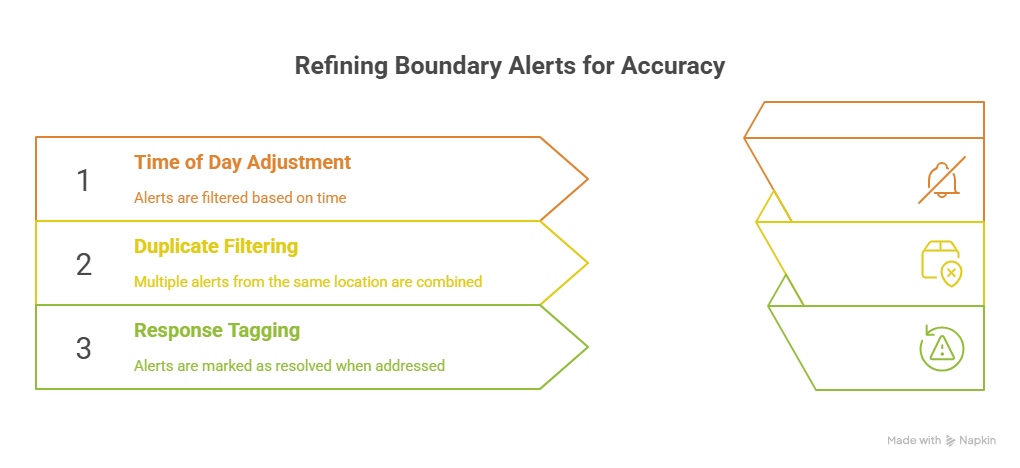
- Adjust by time of day. Gates opened during working hours don’t need alerts. Off-hours do.
- Filter out duplicates. Combine multiple pings from the same location into one notification.
- Add response tags. When someone closes the gate or finds the animal, they can mark it as resolved.
Boundary alerts work best when they stay quiet most of the time and speak up only when something’s really wrong. You don’t need constant updates — you need that one call that tells you to move now.
When seconds matter, the right alert can mean the difference between a quick fix and a half-day spent rounding up cattle.
Water and Heat-Stress: Protecting the Hidden Lifeline
Water might be the most overlooked part of herd performance. Cattle can go a day without feed, but not without water, especially when the heat rolls in. During summer, a single pump issue or a broken float valve can set an entire pen back before you even notice.
Cattle monitoring alerts that track water flow and temperature protect both animal health and performance. A sudden drop in trough levels or a spike in heat index can trigger a timely alert before dehydration or stress affects the herd.
What a Good Water Alert Should Watch For
- Sudden drops in trough levels that don’t match herd activity.
- Refill cycles that stop or slow down during hot hours.
- No flow events that point to pump or pipe failure.
- Temperature spikes that push heat index levels into danger zones.
When those alerts come through, it’s not just about fixing equipment. It’s about preventing dehydration, reduced feed intake, and performance losses that show up in the next weigh-in.
Did you know?
Heat stress can reduce daily weight gain by up to 0.3 pounds per head and lower conception rates during peak summer months. Catching early signs of water or heat issues can prevent those drops before they start.
Quick Checks That Keep You Ahead
| Check | When to Monitor | What It Prevents |
| Verify float valves | Every 48 hours in summer | Water shortage and heat stress |
| Monitor refill alerts | Midday and late afternoon | Pump failure or blockage |
| Review temperature data | Daily during heat waves | Early detection of stress conditions |
Water alerts don’t just keep animals hydrated. They keep the operation moving. A quiet water line might seem small, but every gallon lost to delay shows up later in performance. Early detection keeps cattle comfortable, feed intake steady, and summer losses off your books.
Delivering Alerts That People Actually Read
The best alert in the world is useless if no one reads it. Most ranchers do not ignore alerts because they do not care. They ignore them because the messages arrive too often, reach the wrong person, or say too little to be helpful.
For alerts to work, they have to match how your ranch actually runs. Critical notifications should go straight to the person who can act right away. Routine updates can wait until the end of the day. When alerts are sent to the right people at the right time, they stop feeling like background noise and start feeling like part of the daily workflow.
The way an alert is written matters too. Keep it short, clear, and specific. It should say what happened, where it happened, and what needs to be done. For example, “Gate open in North Pasture for 15 minutes. Ella nearby.” tells you everything you need to know without wasting time.
Assigning ownership to alerts also helps keep systems clean. When someone checks an issue, confirms it, and marks it resolved, the system learns what was real and what was not. That feedback keeps false alarms from repeating and makes every new alert more reliable.
When alerts are well timed, clearly written, and properly routed, they stop being interruptions. They become the quiet reminders that keep your operation running smoothly.
Measuring Alert Performance: Keep What Works, Fix What Doesn’t
Once your alerts are in place, the real test begins. It is not about how many notifications you get; it is about how many of them actually help. Measuring how alerts perform is what separates useful information from noise.
Ask the Only Question That Matters
Are these alerts helping anyone act faster? If not, something needs to change. An alert system is only as good as the actions it inspires.
Count the Hits and Misses
Track how many alerts were real and how many were false. If most of them end up being nothing, the settings are off. Alerts should focus on patterns that signal genuine risk, not normal behavior.
Check How Fast the Crew Responds
The speed of your response says a lot about the clarity of your alerts. If it takes too long for someone to act, messages may be too frequent or poorly written. The clearer the alert, the faster the reaction.
Learn from the Missed Events
Every ranch misses something now and then. A cow goes off-feed without a flag, or a gate stays open after hours. Use those moments to adjust thresholds and fix routes so the same issue does not happen again.
Keep a Simple Scorecard
You do not need fancy reports to measure performance. Keep a short monthly note of which alerts caught real issues, which ones were false, and which were ignored. Over time, this quick review will show you exactly where to improve.
Keep a short monthly record of results, what worked, what didn’t, and what to change. Over time, those small reviews make your cattle monitoring alerts sharper and more effective.
The Checklist for a Quieter, Smarter Operation
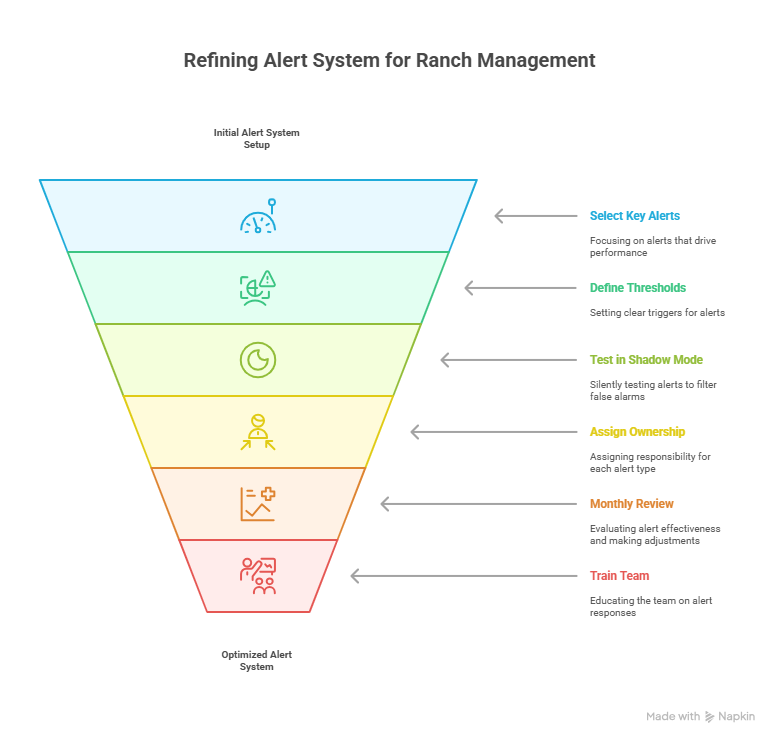
A reliable alert system runs quietly in the background and only speaks up when it matters. To get there, you need a routine that keeps it sharp and simple. The checklist below turns that into something you can actually use on your ranch.
| Step | What to Do | Why It Matters | Example from the Field |
| 1. Start with a handful of alerts | Pick five that truly affect performance, such as calving, feed intake, water flow, or open gates. | Keeps the focus on what drives results instead of chasing noise. | A feedlot near Amarillo reduced daily alerts from 90 to 18 after narrowing to five key types. |
| 2. Set clear thresholds | Define what triggers an alert and who receives it. | Prevents confusion and ensures each alert leads to action. | Calving alert triggers after 45 minutes of restlessness, not every motion spike. |
| 3. Run in shadow mode | Test alerts silently for 7–10 days before activating. | Filters out false alarms before the crew ever sees them. | A Nebraska ranch found 30% of alerts fired too early and fixed them pre-launch. |
| 4. Assign ownership | Give each alert type to a responsible person or role. | Builds accountability and faster responses. | The night calving crew owns all after-dark notifications. |
| 5. Review monthly | Log which alerts were useful, false, or ignored. | Keeps the system honest and prevents alert fatigue from returning. | A Texas cow-calf operation holds a 15-minute review at the end of every month. |
| 6. Train the team | Show everyone how alerts work and what to do when one fires. | Avoids confusion and missed responses. | Crew members walk through one example alert every morning meeting. |
| 7. Adjust for seasons | Tighten or loosen thresholds depending on calving, breeding, or heat season. | Keeps alerts relevant year-round. | Water alerts become more sensitive from June to August to manage heat stress. |
The ranches that get the most out of their monitoring systems treat alert setup as part of herd management, not an afterthought. When your alerts are reviewed, owned, and tuned regularly, they stop being distractions and start becoming tools that protect time, cattle, and peace of mind.
With the right setup, you spend less time checking your phone and more time managing your herd. That is what smarter ranching looks like.
Conclusion: Let the Right Alerts Work for You
The best alert system is the one you barely notice. When your cattle monitoring alerts are accurate, timely, and trusted, they quietly protect your herd while giving you more time to manage.
The goal isn’t more technology. It’s a better use of the technology you already have. Start small, track what helps, and refine it until every alert serves a purpose. Over time, those small changes add up to faster reactions, fewer losses, and a smoother-running ranch.
At Cattlytics, we believe herd monitoring should feel this simple. Our tools are built for ranchers who want visibility without the noise of systems that help you catch problems early, record every event clearly, and make each season easier than the last.
FAQs
What types of alerts matter most for cattle operations?
Focus on alerts that have a direct impact on herd health and efficiency. Calving activity, feed intake, water flow, temperature changes, and boundary movement are the top priorities. These are the alerts that prevent real losses and improve daily decisions.
How can I cut down on false alerts?
Start by tuning thresholds to match your herd’s normal patterns. Review alert data every few weeks to remove triggers that cause unnecessary noise. A well-calibrated system should stay silent during routine behavior and only alert when something truly needs attention.
Can cattle monitoring alerts really improve herd performance?
Yes. Early warnings about reduced activity or feed intake often catch health problems hours before visible symptoms appear. That extra time allows for faster treatment, fewer losses, and better long-term productivity.
How can alerts connect with my existing herd records?
Modern platforms can link alerts directly to animal profiles, automatically updating health, calving, or feeding events. This connection helps track performance from start to finish without duplicate data entry.
If you want this kind of integration, Cattlytics Cow-Calf Management Software connects real-time alerts with herd records for a complete operational view.
Why do ranchers choose Cattlytics for herd monitoring?
Cattlytics filters out noise and delivers only meaningful alerts — the kind that save time and protect performance. It combines accurate tracking, health insights, and cow-calf record integration so ranchers spend less time chasing false alarms and more time managing their herd.