
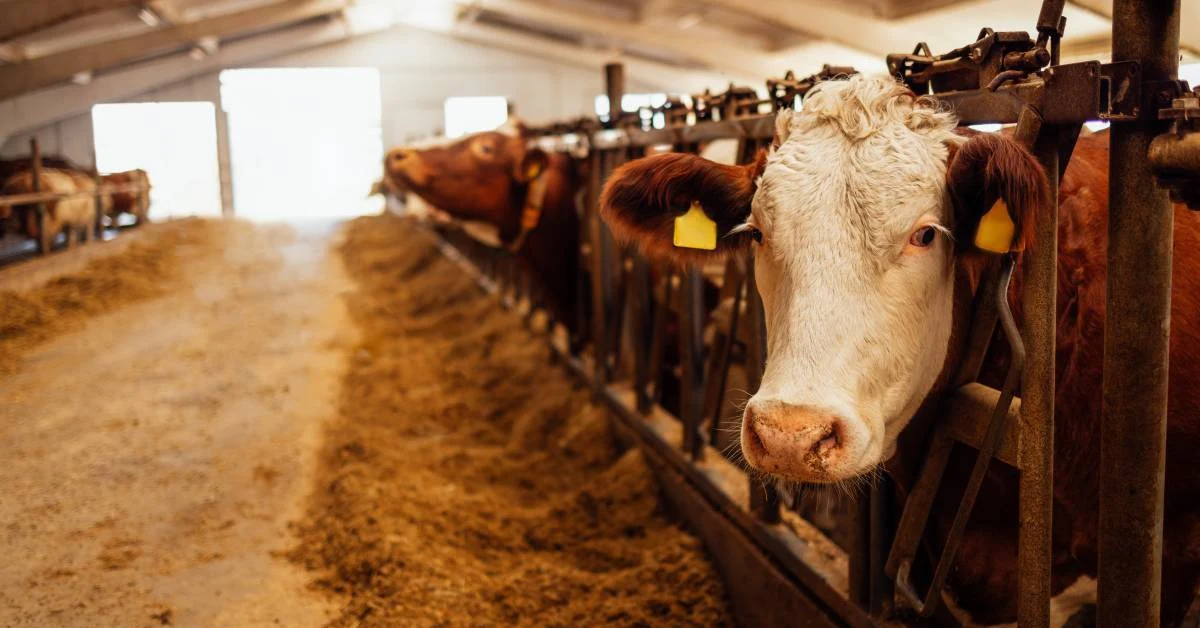

When you’re running cattle, the fastest way to lose time is not knowing which animal is which when it matters during processing, treatment, sorting, or sale. Strong livestock identification gives each animal a usable identity, so animal identification records stay tied to the right head, not your memory. It also powers traceability: if animals move off-farm, you can document and verify identity and movement from your place to the next stop.
In this guide, you’ll get a selection matrix for cattle identification methods and a rollout playbook that fits real chute and pasture workflows. We’ll also answer: what is animal identification, in plain terms.
What Is Animal Identification in Cattle Systems and What Counts as Livestock Identification?
What is animal identification? It’s how you assign cattle a label you can recognize later. You may use an individual ID or a group/herd ID like a mark that links animals to an operation or lot. Example: tag a calf at birth, keep that number through weaning, then carry it as a heifer ID. A herd brand shows ownership; the individual tag tells cows apart.
Why Livestock Identification Is More Than “A Tag in an Ear”
On a busy day, livestock identification is less about the tag and more about the decision you can make because of it. That’s where dollars and hours leak. When you can match the right head to the correct record, cattle identification supports:
- Faster sick pulls and treatment follow-ups
- Breeding and pregnancy status tracking
- Withdrawal times and health compliance
- Ownership proof and theft deterrence
- Performance tracking (weights, calves weaned, costs)
The big rule: If it isn’t recorded, it didn’t happen. A tag without a clean, consistent animal identification record still leaves you guessing later, mainly when you sell, commingle, or review herd performance at season’s end.
Identification vs. Traceability: How They Connect in the Real World
Understand how cattle identification turns into traceability through everyday events like treatment, movement, sale, and documentation.
The Simple Traceability Chain (Farm → Movement → Market)
Think of traceability as your “paper trail,” but in ranch terms, it’s just linked events. A calf is born, and you assign a cattle identification number. At spring processing, you record vaccines and treatments under that same ID.
Months later, the calf moves to a new pasture or a backgrounder, and the movement date and destination are logged. At sale time, animals may be commingled; the buyer relies on livestock identification to match the right animal to health and ownership records. If a question comes up later, you can verify the chain.
Why “Readable at the Right Time” Matters More Than “Fancy Tech”
The best animal identification methods are the ones you can read when you’re under pressure. In the chute, a small tag number might be fine because you’re inches away. In pasture, you’re dealing with mud, brush, sun glare, and a cow that doesn’t want to stand still. Lost tags happen, too.
That’s why many cattle identification methods need two tests: can you read it at sorting distance, and can you confirm it at processing? If the ID isn’t readable at the right moment, it won’t get recorded, and traceability breaks.
Animal Identification Methods for Cattle – What Works, When
A practical breakdown of cattle identification methods, explaining what works best, when to use each option, and key tradeoffs.
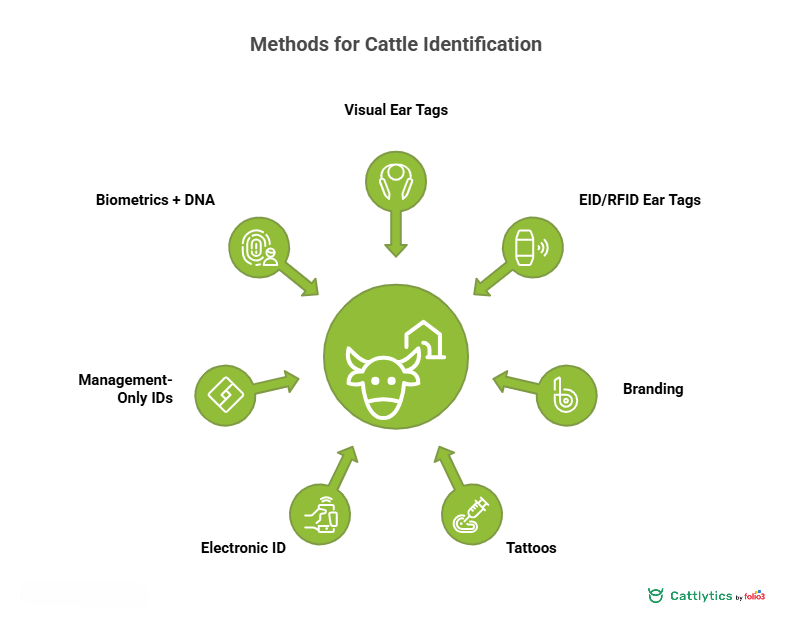
Visual Ear Tags (The Most Common Starting Point)
If you’re asking, “What is a common way to identify cattle?” in cow identification methods, it’s ear tags. Across livestock identification methods, cattle identification methods usually start with visual ear tags because you can apply them fast, read them in the pasture, and sort cattle without electronics.
Most operations start with either blank tags you write on or pre-numbered tags ordered in sequence; both come in sizes for age and environment. Some are management tags for your own records, while others are program/official tags used when a program needs an “official eartag” recorded.
Strengths: low cost, quick application, and easy day-to-day sorting. In the chute, placement matters: tags are installed between cartilage ribs, and numbering both sides helps you read from front or back.
Limitations: Tags can get dirty on pasture, numbers can fade, and tag loss is common enough that many producers use a backup method for permanent identification and records over time.
Electronic Identification (EID/RFID) Ear Tags
Electronic Identification (EID/RFID) ear tags are animal identification methods that add a “scan-to-capture” layer to cattle identification methods. In practical terms, each tag carries a unique number inside an RFID chip and antenna; when a reader stimulates the tag, it returns that number.
The payoff is in the workflow: You scan at processing, weaning, preg-check, or shipping, then the ID lands in your records without someone re-writing digits by hand. That can reduce reading/recording work and improve accuracy, especially when you’re handling cattle daily at scale or tracking data points. These livestock identification methods can also support animal disease traceability when movements and events are logged.
Where it fails is usually operational, not technical, as no reader at the chute, dead batteries, or a crew that scans but doesn’t record the event. The tag is only valuable when it’s scanned and tied to a record.
Branding (Hot Iron vs Freeze Branding)
Among types of animal identification, branding is a permanent animal identification method used in some cattle identification methods when you need an ownership mark readable from a distance, often in extensive grazing systems.
Hot iron branding uses a heated iron for a few seconds, creating a scar that prevents hair regrowth. Freeze branding uses a chilled iron to damage pigment-producing cells so hair grows back white, making it easiest to read on dark-hided cattle. Both methods are easier to spot at a distance than chute-only IDs, but they require restraint, technique, and the right equipment. Brands are often placed on the shoulder or rump.
Practical positioning: Treat the brand as “who owns this animal.” For individual records, you’ll still want a personal number, commonly an ear tag, linked to that brand in your system.
Tattoos (Ear Tattoos for Permanent Identity)
Ear tattoos are permanent animal identification methods used for animal identification up close, common in registered/breed-association cattle. In cattle systems, the tattoo is placed inside the ear and read with restraint and good lighting.
Pros: Permanence and low-tech simplicity. For dark-pigmented ears, green ink is used to improve readability.
Cons: Tattoos are tough to read at a distance, so most operations pair them with a visual ear tag for daily identification.
Electronic ID Beyond Ear Tags (Microchips, Boluses, Collars)
Within livestock identification methods, not every electronic option is an ear tag. Microchips can be permanent and scan-to-read, but they’re less common in food animals because a chip can migrate and be hard to locate later.
Ruminal boluses carry an identifier in a “pill” designed to lodge in the rumen. They require a reader, and many systems still keep an ear tag as the primary farm identifier. If that visual ID is lost, you’re relying on scanning. Electronic collars can carry IDs and support monitoring, a niche type of animal identification for research or sensor programs.
Temporary & Management-Only IDs (Paint, Chalk, Backtags)
As animal identification methods, temporary IDs help you manage the day, not trace an animal over time. Paint, chalk, and backtags are types of animal identification for short-term sorting, marking treatment groups, pen to ship, or lots at an auction/yard.
Although handy in the chute, they don’t persist through mud or movement, so they’re not traceable. USDA-approved backtags are for stockyards/slaughterhouses and can’t be the only identification for on-farm testing.
Emerging Methods (Biometrics + DNA)
Biometrics like retinal scans, nose/muzzle, or face recognition support animal identification, but dirt and lighting can make capture inconsistent. Promising, but still early for routine ranch workflows today. DNA profiling is a livestock identification method option for verification and parentage, not a chute-side daily ID.
How to Choose the Best Method for Your Operation?
You don’t need every tool, just the right mix of animal identification methods your crew can apply and read consistently. Use this view to compare cattle identification methods across types of animal identification:
| Method | Cost | Permanent? | Readability | Equipment | Time/head | Handling | Best-fit system |
| Visual ear tag | Low | No | Dist + chute | Tagger | Low | Ear pierce | Most herds |
| EID/RFID ear tag | Med | No | Chute (scan) | Reader | Low | Scan + record | High-volume |
| Hot/freeze brand | Med | Yes | Distance | Irons | Med | Restraint/skill | Extensive |
| Ear tattoo | Low | Yes | Chute only | Tattoo kit | Med | Light/clean ear | Seedstock |
| Microchip/bolus | High | Yes | Scan only | Reader | Med | Placement/training | Specialty |
| Paint/backtag | Low | No | Short-term | Marker/tag | Low | Temporary | Yards/sorting |
“Dist + chute” means readable in pasture and at processing; “chute only/scan only” means you must have cattle in hand. No single method fits the job, so pairing methods is common.
Selection Rules (The Practical “If/Then” Guide)
Use these “if/then” rules to pick cattle identification methods that match how you work:
- If you run mostly pasture/extensive grazing, choose distance-readable IDs (large visual tags and/or brands) and keep a backup for when tags are lost.
- If you process high volume through the chute, prioritize scan speed and clean data capture (EID + a visible number) so treatments and weights don’t get misfiled.
- If you sell into value programs or regulated movements, confirm the “official ID” accepted for your paperwork, and record every ID present on the animal.
Best practice is a stack: A fast daily ID plus permanent animal identification methods for long-term proof. Build a lost-tag rule to replace immediately, every time, and link old-to-new IDs in your records.
How to Turn Livestock Identification Into Traceability
Learn how to meet buyer and regulatory expectations with consistent livestock identification records that stand up over time.
What Regulators and Buyers Typically Expect
Regulators and many buyers want livestock identification that stays consistent from your ranch through movement paperwork.
APHIS lists several forms of “official ID” for cattle:
- An official eartag.
- An individual animal’s registration tattoo is accompanied by the official registration certificate from a recognized breed association.
- An official registration brand is one that is accompanied by official brand inspection certificates from a recognized brand inspection agency.
APHIS considers that USDA-approved backtags are used primarily in stockyards or markets for limited situations. The practical rule is to record every official ID that is already on the animal, and use the same ID consistently on documents and in your records. That consistency is what makes questions traceable months later, easily.
The Minimum Dataset That Makes Traceability Possible
Traceability only works when your animal identification is paired with a small set of fields you capture the same way every time. For livestock identification, this “minimum dataset” keeps records usable without turning chores into paperwork:
- Unique animal ID (and a backup ID, if you use one)
- Birth year or estimated birth date, plus the source group
- Sex, breed, and production type (cow, bull, steer, heifer)
- Key health events: vaccinations, treatments, and notes needed to follow up
- Movement events: date, origin, destination, and lot/group
- Ownership transfer or sale reference (invoice, consignment, or bill of sale)
Meanwhile, using a digital livestock identification system reduces manual errors and keeps identification, health, and movement records connected.
Implementation Playbook for a Livestock Identification System
Step-by-step guidance to implement livestock identification smoothly without disrupting daily cattle handling or overwhelming your team.
Design a Numbering System You’ll Still Understand in 5 Years
A numbering system should give each animal a unique, positive ID. A simple approach is birth-year plus birth-order, then carry that number across tag, EID, and records.
Whatever format you choose, write it down and stick to it, especially when multiple people tag calves. Duplicate IDs are the silent killer of livestock identification because two cattle identification histories merge, and you lose trust.
Apply the ID at the Right Handling Moment
Pick the handling moment you already control, then make ID application non-negotiable. For many herds, that’s the calving or birth window, so the calf leaves your place with an ID linked to its dam record. If birth-time isn’t practical, use processing day or branding day.
At weaning, verify IDs and replace lost tags. During replacement selection, confirm the heifer’s ID matches her history before she enters the breeding group. It keeps animal identification accurate, always.
Make Data Capture Frictionless
Choose one “source of truth” for livestock identification methods: notebook, spreadsheet, or herd software, and update it whenever you work with cattle. If you run EID, scan once and reuse that ID everywhere instead of retyping. Add quick validation rules: required fields for animal identification and date, no blanks, and a duplicate-ID check before saving. That prevents cleanup work at shipping.
Lost Tag Protocol + Audit Checks
Replace lost tags immediately, cross-reference old and new numbers, and audit monthly so permanent animal identification methods keep a full history.
A Smarter Way Forward for Livestock Identification
Livestock identification works best when it fits how you actually run cattle, not how a rulebook imagines it. From visual tags and EID to branding and records, the goal is simple: know which animal is which, every time it matters. Digital tools like cattle monitoring systems remove guesswork by linking identification, health, and movement into one reliable record. If you’re ready to move from manual tracking to a system built for your operation, get in touch and let’s design it together.
FAQs
What Is a Common Way to Identify Cattle?
The most common way to identify cattle is with visual ear tags because they’re low-cost, quick to apply, easy to read, and reliable for daily use.
What Are Permanent Animal Identification Methods?
Permanent animal identification methods include branding, ear tattoos, rumen boluses, and microchips. These methods stay with the animal long term and support ownership proof, traceability, and record accuracy when visual tags are lost or damaged.
Are RFID/EID Tags Worth It for Smaller Herds?
RFID/EID tags can be worth it for smaller herds if you want cleaner records, faster processing, and easier traceability, especially when paired with simple software.
Can I Use More Than One Identification Method?
Yes, many operations use more than one identification method, such as visual tags with EID or branding, to improve readability, backup lost tags, and traceability.