
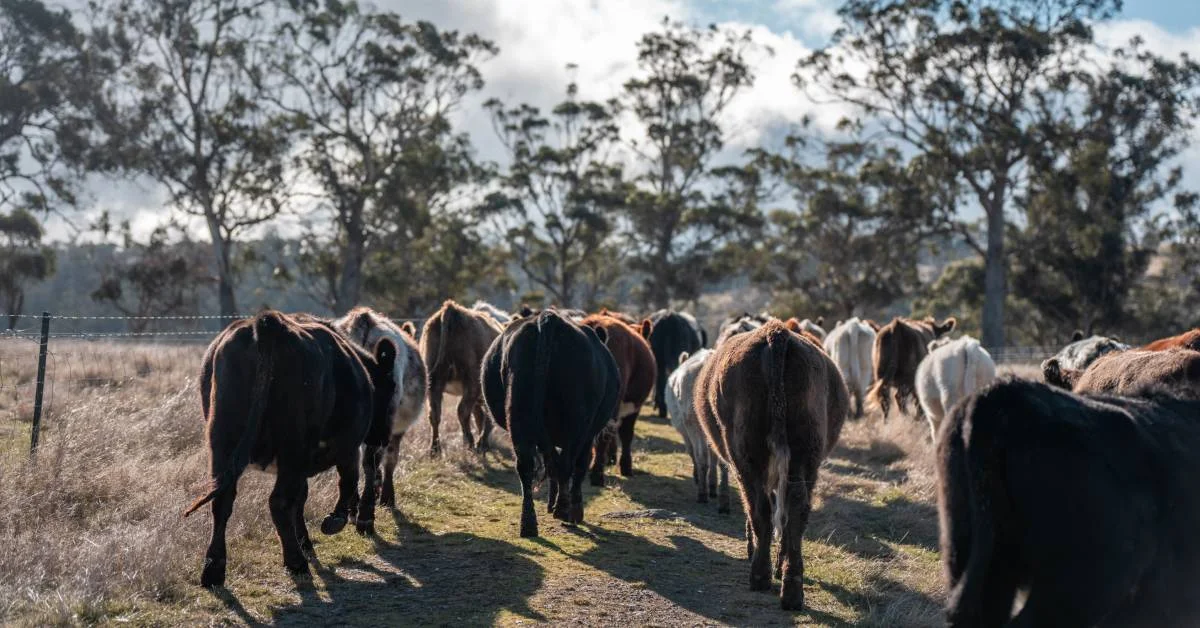

Rotational grazing is a way of managing pasture where you move cattle through a set of smaller grazing areas, let each area rest, and come back only after the plants recover.
If you are used to leaving a herd on one field all season, rotational grazing cattle management changes three things. You plan moves, you protect rest days, and you keep simple records so you can repeat what works.
This guide is for you if you run a cow-calf herd, background stockers, or manage mixed livestock where timing and pasture recovery matter. You will leave with:
• A starter setup plan for paddocks, water, and fencing
• A practical stocking rate method so you can size your herd to your acres
• A first-month rotation example you can copy, then adjust as grass growth changes
Start small, then add paddocks as your confidence grows. Use it as a field manual, not a theory lesson.
What is Rotational Grazing, and How Does it Work in Real Life?
What is rotational grazing? You split a pasture into paddocks, graze one paddock for a short time, then move the herd to the next. While cattle eat elsewhere, the grazed paddock gets a rest period so plants can rebuild leaf area, store energy, and regrow to grazing height. Think of it as a repeatable loop: graze, move, rest, and return only when the forage has recovered.
Meanwhile, building a structured approach to pasture rotation that accounts for seasonal changes helps you move from reactive grazing to predictable, sustainable management that protects both cattle performance and pasture health. The exact timing changes with rainfall, temperature, and how fast your grass is growing, so the pasture decides the schedule, not the calendar. That is the system.
Rotational Grazing vs Continuous Grazing
Continuous grazing keeps animals on one pasture without planned rest, so they often return to the tastiest plants and overgraze. Rotational grazing moves the herd between paddocks, which protects rest and regrowth.
What Livestock Rotation Really Means
You will also hear the phrase livestock rotation. Sometimes it just means the same rotational grazing cattle herd moving from paddock to paddock, and other times it means rotating classes or species. For example, cattle first, then sheep or goats, to use different plants, hit weeds and brush, and help break parasite cycles. Match the rotation to your pasture goals and labor limits.
Benefits of Rotational Grazing for Cattle, Pasture, and Profitability
The benefits of rotational grazing appear when you manage moves and rest on purpose. With rotational grazing, you protect plants, feed cattle better, cut risk, and keep costs steady.
Pasture and Soil Benefits
Rotational grazing benefits start in the ground; you keep more ground cover in place and give plants time to recover.
- That recovery supports deeper roots that hold soil together and improve soil structure over time.
- More living cover and better structure also help build organic matter and keep soils more resilient.
- Improved water infiltration can protect water quality by reducing runoff and nutrient loss from the surface.
- With healthier roots and more residue left behind, more carbon can stay stored in the soil instead of being lost.
- The result is often less erosion and a pasture that handles traffic better without breaking down.
- You also tend to see steadier regrowth after each pass, which makes the rotation easier to manage.
Animal and Forage Benefits
For cattle, the benefits of rotational grazing show up in what they eat and how evenly they use pasture.
- Because you move the herd onto rested forage, rotational grazing cattle often get fresher feed access.
- They also spend less time grazing stressed regrowth, which can help protect plant recovery.
- Shorter stays reduce selective grazing, so utilization becomes more uniform across the paddock.
- As cattle rotate, manure and urine spread out more evenly, improving nutrient cycling where you need it.
- Planned moves also create a calmer handling routine, especially when lanes, gates, and water are set up well.
- When the system runs smoothly, it can help extend the grazing season by keeping forage in better shape.
Risk and Climate Resilience Benefits
Rotational grazing benefits also show up as risk control; you spread grazing pressure and enforce rest.
- That lowers the chance of chronic overgrazing on your best plants, which protects long-term pasture health.
- It matters most in drought, when regrowth slows, and paddocks need longer recovery to keep roots alive.
- In extreme rain years, planned moves help you pull cattle off saturated ground and protect soil cover.
- It also reduces runoff and limits damage in high-traffic areas where mud builds quickly.
- Adaptive grazing focuses on flexibility, adjusting rotation speed, herd size, and paddock area to match forage supply.
- With records, you can spot a forage gap early and destock before damage spreads across the farm.
Rotational Grazing Systems Explained, From Simple Pasture Rotation to Intensive Management
Learn how different rotational grazing systems work, from simple pasture rotation to intensive management. That’s how you can match paddocks, labor, and goals without overcomplicating decisions.
Simple Rotational Grazing Systems for Cow Calf and Small Herds
Simple rotational grazing systems are the easiest way to start rotational grazing cattle on a working farm. You divide one pasture into a few paddocks, then move the herd in a loop so each paddock gets a longer rest. The goal is not perfection; it is control. You watch how fast forage returns, you keep water access simple, and you use temporary fence where it saves money. This approach fits cow-calf herds and small herds because moves stay manageable, and your notes help you tighten timing quickly each season.
Intensive Rotational Grazing, Higher Control, Higher Management
Intensive rotational grazing pushes control further. You add more paddocks so cattle stay in each area for a shorter grazing bout, then that paddock gets a longer recovery before the next graze. This setup can raise the potential stocking rate because you can match intake to forage supply more tightly, but it also raises the management demand. You will spend more time sizing breaks, moving fences, checking water, and watching residual so plants do not get clipped twice during regrowth. If you like data, this is where rotational grazing cattle records really pay off. It works best with daily planning.
Adaptive and Multi-Paddock Grazing: What the Terms Mean in Practice
You will see names like adaptive grazing, adaptive multi-paddock, and planned grazing. In practice, they all sit inside rotational grazing. The difference is how strict your plan is. Instead of forcing a fixed rotation, you adjust paddock size, stock density, and move timing to match current growth and weather. In fast growth, you may speed up to stay ahead of seedheads. In slow growth, you slow down to protect recovery. This flexibility is where many rotational grazing benefits show up. Your records tell you when to stretch and rest again.
How to Set Up Pasture Rotation for Cattle
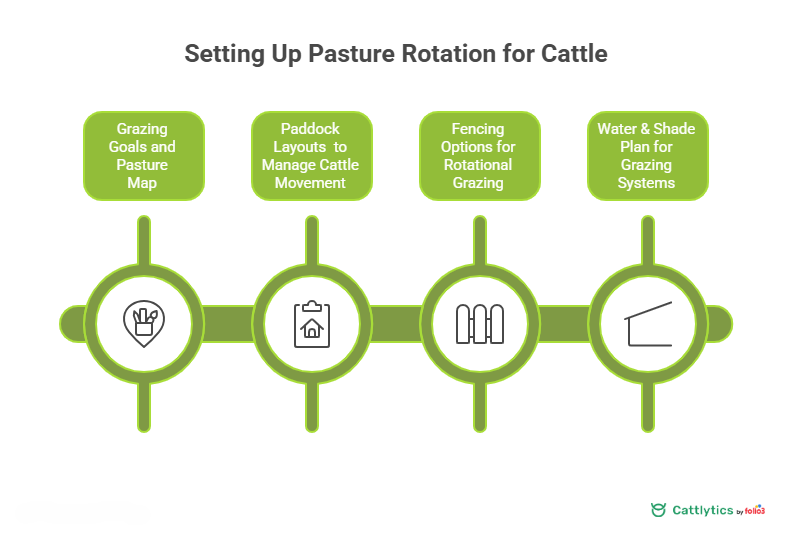
A workable pasture rotation for cattle starts with goals, then layout, fencing, water, and shade choices that keep moves easy.
Start with Clear Grazing Goals and a Basic Pasture Map
Before you build paddocks, decide what success looks like for your pasture rotation for cattle. Write two or three goals you can measure, then create a detailed visual map that shows fields, gates, water points, slopes, sensitive areas, and proposed paddock boundaries. That’s how you can evaluate different layout options, estimate distances cattle will travel, and identify bottlenecks before you invest in permanent infrastructure.
Common goals include extending the grazing season, keeping cattle out of creek banks during wet periods, improving utilization so less grass gets trampled, and cutting hay days by planning rest. A map makes those tradeoffs visible. It also helps you estimate paddock sizes.
Paddock Layouts That Make Cattle Moves Faster and Reduce Labor
Good cattle rotational grazing design reduces the time you spend walking fence and pushing cattle. A central lane lets you reach each paddock without opening multiple cross fences, and it keeps moves predictable. In a hub and spoke layout, several paddocks share a common watering point, which can cut pipe and trough costs if traffic stays dry. Strip grazing is another option, you advance a temporary front fence to ration forage while back fencing protects regrowth. Whatever layout you choose, place gates where cattle naturally flow, and keep equipment access in mind so chores stay quick.
Evaluate Fencing Options for Rotational Grazing
Most rotational grazing cattle setups often use a mix of permanent perimeter fence and flexible interior fencing. For starters, temporary electric fences, such as polywire on step-in posts, let you change paddock size as forage growth changes, without upfront cost. Permanent high-tensile or woven wire makes sense where you need long-term boundaries, lanes, or predator control. Virtual fencing is an emerging option that uses GPS collars to create a movable boundary, which can reduce physical fence work in some situations. Still, it needs power, training, and oversight.
Water and Shade Planning for Cattle Rotational Grazing Systems
Water and shade are not optional in rotational grazing cattle systems. Plan for access in every paddock, or use a lane and gated access so cattle can drink without damaging recovering forage. Place troughs on firm, well-drained sites and size them so cattle do not crowd, because congregation creates mud, manure buildup, and hoof issues. Moving water points closer can also reduce uneven grazing where animals camp near the tank. Shade matters in hot weather, so consider trees, shade structures, or timing moves to reduce heat stress during summer.
Running the Rotation, When to Move Cattle and How Long to Rest
Running rotational grazing is mostly about timing. Your pasture rotation for cattle improves when you move animals before they graze regrowth, then rest paddocks until plants recover. Use notes, not guesswork.
When to Move Cattle to the Next Paddock Without Hurting Regrowth
In rotational grazing cattle systems, the move happens before the pasture is skimmed to the dirt. You need a clear graze down target for each forage type, then you leave enough residual leaf to power the next flush. The biggest mistake is letting cattle stay long enough to bite the same plant twice. Once new shoots appear, repeated bites slow recovery and weaken root reserves. Walk the paddock, check the average residual, then move the herd even if a few corners still look tall. That protects regrowth in that cycle.
Setting and Adjusting Rest Periods Based on Grass Growth
Rest is where pasture rotation for cattle pays off. In spring, grass grows fast, so you can run shorter grazing periods and still come back sooner. In summer, growth often slows, so rest periods usually need to stretch. Instead of picking a fixed number of days, use plant recovery as the trigger. Look for enough new leaf area and strong stems before you return. If plants are still short or thin, wait, even if your schedule says move. It keeps the rotation honest as records help you spot patterns each season.
Managing Wet Conditions, Compaction, and Sacrifice Areas
Wet weather can wreck rotational grazing cattle plans fast. If hooves start punching deep tracks or water is pooling around gates and troughs, pull cattle off before compaction sets in. Compacted soil sheds water and limits roots, which hurts the whole paddock later. Use a sacrifice area, such as a dry lot or a challenging field you can renovate, to protect your best pasture during saturated periods. Keep cattle away from creek banks and muddy runoff paths to avoid water quality issues. Then restart the rotation once the ground firms up.
Rotational Grazing Stocking Rates: How Many Cows or Sheep per Acre
There is no single answer to how many cows per acre with rotational grazing because your feed supply changes. Forage growth, rainfall, soil type, and irrigation set how much dry matter you grow. Species mix, grazing season length, and your day-to-day management decide how much you can harvest without hurting recovery. Rules fail when grass growth drops.
How to Calculate Rotational Grazing Cattle per Acre Using Animal Units
Calculating rotational grazing cattle per acre starts with the Animal Unit (AU) concept, which is based on a 1,000 lb cow with a calf. Each Animal Unit needs approximately 26 lbs of dry matter per day. Here’s how to calculate:
- Estimate forage dry matter per acre: Know how much dry matter (forage) your pasture produces.
- Choose a conservative use factor: Use about 30% of the total dry matter to avoid overgrazing.
- Divide by demand: For each animal unit, calculate the demand (26 lbs per day) and divide the total available forage by that number. It gives you animal days per acre.
This formula lets you scale stocking rates for different classes of cattle, whether you’re grazing cow-calf pairs, yearlings, or mature cattle. Understanding these steps ensures you don’t overgraze your pastures while meeting the nutritional needs of your livestock.
Stocking Rate Examples for Cows, Stockers, and Sheep Under Rotational Grazing
Here’s an example table that helps calculate your stocking rate for rotational grazing cattle and sheep. Consider factors like daily dry matter intake and animal days per acre for accurate stocking decisions.
| Pasture Acres | Forage Dry Matter per Acre | Use Factor | Grazing Days | Herd Class | Daily Dry Matter Intake | Animal Days per Acre | Recommended Head for the Rotation |
| 10 | 2,500 lbs | 30% | 180 | Cow Calf Pair | 26 lbs | 1,500 | 5 pairs |
| 20 | 3,000 lbs | 30% | 180 | Stockers | 22 lbs | 1,500 | 8 stockers |
| 15 | 2,000 lbs | 30% | 180 | Ewes | 4.5 lbs | 900 | 100 ewes |
For sheep, start with 2-3% of body weight for daily intake, then adjust based on the growth stage. This table provides a practical view of how to use the grazing area without overloading it.
Does Rotational Grazing Increase Carrying Capacity Over Time
Rotational grazing benefits can include higher carrying capacity over time, but only when you protect recovery. When paddocks get enough rest, and you leave residual plants that keep leaf area and roots, they can regrow more total forage across the season. Better distribution can also improve utilization. If you simply add animals without matching forage supply, you will overgraze and lose gains. Stay honest with monitoring and stocking decisions.
Adjusting Stocking Rate During Drought or Slow Forage Growth
In times of drought or slow forage growth, adjust your stocking rate to prevent pasture damage. To manage rotational grazing cattle during these periods:
- Lengthen rest periods to give pastures more recovery time.
- Reduce time in each paddock to avoid overgrazing.
- Destock early if needed to protect key paddocks for future recovery.
- Protect critical areas like riparian zones or sensitive slopes from overuse.
Common Rotational Grazing Mistakes and Health Risks to Watch For
Spot common rotational grazing mistakes early, understand health risks that come with pasture changes, and learn practical fixes to protect cattle performance and pasture recovery.
Common first-season mistakes
- Most seasonal trouble in rotational grazing cattle comes from trying to do it with too few paddocks.
- You end up leaving the herd too long, moving too late, and the best plants get bitten again during regrowth.
- Skip a back fence, and cattle walk back to fresh shoots, slowing recovery even more.
- Put water too far away and cattle camp near it, causing uneven grazing and mud.
The fix is simple: plan rest first, then size paddocks to protect recovery.
Parasites, bloat, nitrates, and water stress
Health risks in rotational grazing cattle usually show up when the pasture changes rapidly. Parasite pressure can rise in irrigated rotations because moisture helps larvae survive, so keep grazing bouts short, maintain solid rest periods, and avoid grazing wet forage early in the day. Lush legume growth can trigger bloat, especially when cattle hit it hungry. Drought-stressed or fertilized forages can carry higher nitrates, and unsafe water can add risk. Watch intake, provide clean water, and test suspect forage.
Quick fixes and when to call an expert
If a paddock is not recovering, shorten the stay and lengthen the rest, then reassess residual. Move water or minerals to stop camping.
If you suspect bloat, nitrate toxicity, or heavy parasite load, call your veterinarian. For planning help, contact your extension office or a grazing group in your area.
Example Cattle Rotational Grazing Plan
Follow a clear example cattle rotational grazing plan that shows how to start, move through paddocks, adjust timing, and handle setbacks during the first month.
Sample 30 Day Rotational Grazing Plan Using Eight Paddocks
- Start your pasture rotation for cattle by picking a paddock with average forage and firm footing, not your best stand.
- Grazing that first area sets your residual target for the month. Back fence if regrowth appears.
- With eight paddocks, a simple template is three to four days per paddock, then move, which gives roughly twenty-one to twenty-eight days of rest before you return.
- Keep a sacrifice area ready near water and shade for storms or saturated ground, so you can pull cattle off without tearing up sod.
- After each move, write down the date, paddock, pre-graze height, and residual.
- If grass is ahead, speed up or split paddocks into smaller ones. If it is behind, slow down and extend rest.
How Rotational Grazing Changes from Spring Flush to Winter Feeding
- In spring flush, rotational grazing cattle often speed up because grass regrows quickly, so the stays get shorter and you focus on keeping plants vegetative.
- In the summer slump, growth slows, and heat stress rises, so rest periods usually lengthen, and you protect the residual to keep roots alive.
- In the fall, many farms stockpile forage by resting select paddocks so you can graze them later with less waste, often using strip grazing.
- For winter, plan a feeding strategy that protects sod. Use sacrifice areas, feed hay where you can manage mud, and return to pasture when the ground and plants can handle traffic.
Track conditions weekly and adjust rotation speed for forage.
Tracking Pasture and Grazing Performance Over the Season
See what to track each week so rotational grazing stays on course. It will help you spot problems early, compare seasons, and make better livestock rotation decisions.
What to Measure Weekly in a Rotational Grazing System
Weekly checks keep rotational grazing from drifting off plan. Walk each paddock on the same day each week and record:
- Pre-graze height
- Post-graze residual
- Rest days achieved
- Manure distribution
- Water points and mud
Add a quick note on what you see, plus one photo from the same spot. You can organize these weekly observations to compare paddocks across seasons and identify trends in forage response. It shows bite depth, recovery, and where traffic or nutrients are concentrating, so you can adjust before damage spreads.
Simple Grazing Records That Improve Decisions Year After Year
For livestock rotation, simple records beat memory. Keep:
- One-page grazing chart with paddock order and planned rest
- Pasture notes on forage condition and weeds
- Rainfall notes from your gauge or local report
- Move log with dates, herd class, and paddock
Review monthly, and you will spot patterns and adjust stocking and timing sooner, without guessing what happened last season again.
Conclusion
Use the calculator table in this guide to estimate stocking rate, then test it in the field with weekly notes. Linking grazing records to individual animal performance, health events, and financial outcomes helps you verify whether your rotational grazing system is delivering the productivity and profitability improvements you planned for. If you want faster results, book a pasture walk plan, a grazing season setup consult, or a custom rotation map for your farm. You will leave with paddock sizes, move timing, and a rest strategy you can run this week.
FAQs
How Often Should Rotational Grazing Be Done?
Rotational grazing timing depends on how fast your pasture is growing. During rapid growth, pastures often need about 20 to 30 days of rest. When growth slows, rest periods may stretch to 40 days or more. The key is watching plant recovery and adjusting moves so cattle return only after forage has fully regrown.
What Animals Are Best for Rotational Grazing?
Rotational grazing works well with many livestock species. Cattle, sheep, goats, pigs, and poultry each graze or forage differently, which helps use more plant types and improve nutrient cycling. Using multiple species can increase forage efficiency and support better pasture and soil health over time.
How Many Pastures Do You Need for Rotational Grazing?
You can start rotational grazing with as few as two or three paddocks, but adding more gives you better control. Many operations run four to eight paddocks at first, while more intensive systems may use 20 or more. The right number depends on your forage growth, grazing goals, and available labor.
What Is the 30 Month Rule for Cattle?
The 30-month rule for cattle relates to food safety regulations tied to Bovine Spongiform Encephalopathy. In some markets, beef from cattle older than 30 months faces restrictions. These rules affect marketing and processing decisions, so it is essential to understand how they apply in your region.