Meet Cattlytics at NCBA’s CattleCon 2026 , Booth 944. Book Now
Dairy Systems Integration Services
Custom Dairy Integrations Built Around Your Operation
Whether you're looking to connect a single system or multiple data sources, our team designs and maintains integrations that keep information flowing between Cattlytics and the technologies already running your dairy, from parlor software and activity monitors to genetics platforms, EID readers, milk buyers, and custom applications.
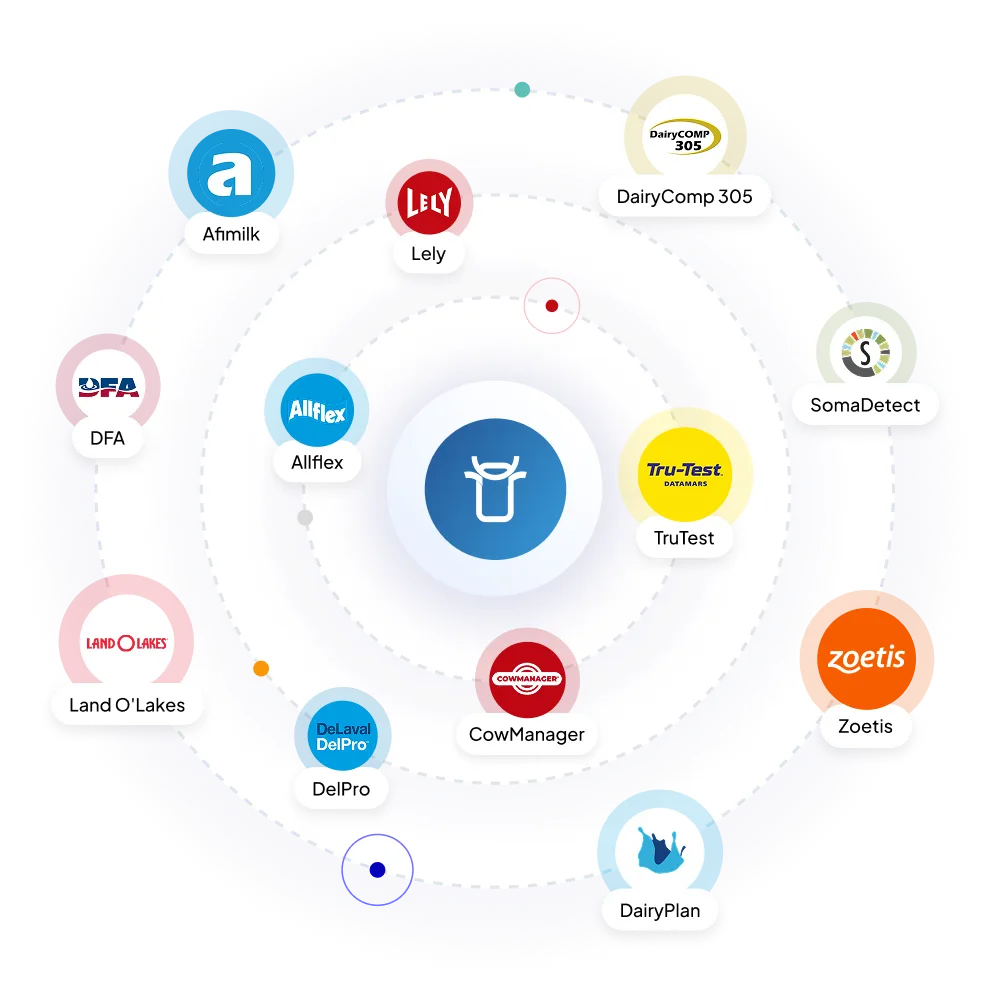
Leading Companies That Trust Folio3 for Innovative Solutions
What’s In It For You
Stop Managing Data Across Disconnected Dairy Systems
Your team shouldn't have to reconcile spreadsheets, compare reports, or switch between applications to understand what's happening in the herd. Integrations keep critical data connected and accessible.
Reduce Manual Data Entry
Eliminate repetitive imports, exports, and duplicate recordkeeping between Cattlytics and the systems your team already uses.
Keep Animal Records Up To Date
Automatically synchronize production, health, reproduction, and monitoring data with the correct animal profile.
Spot Issues Earlier
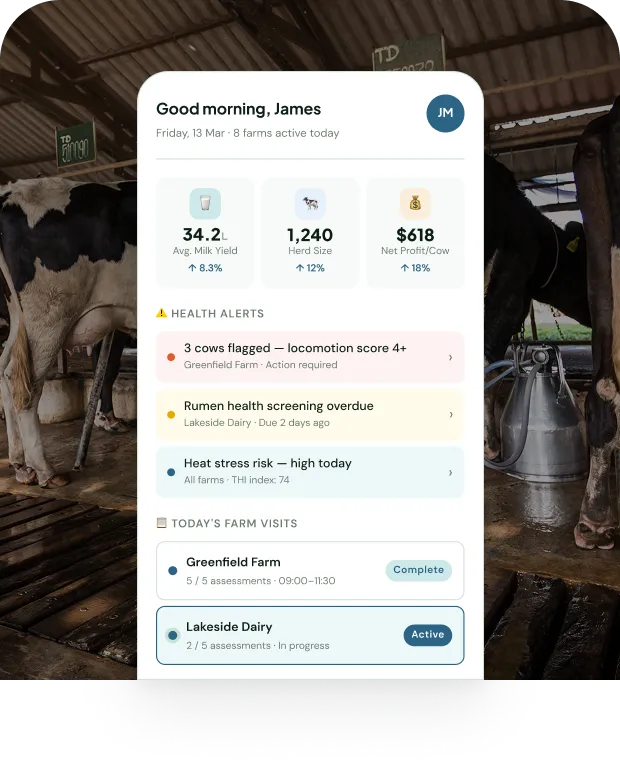
Bring milk quality results, activity alerts, health events, and production changes into one operational view.
Support Better Herd Decisions
Give managers, consultants, nutritionists, and veterinarians access to more complete and connected herd information.
Animal Identification & Monitoring Systems
See Every Animal Activity Through a Single Operational View
From RFID scans and heat detection alerts to rumination changes and health events, critical animal data is often spread across multiple monitoring platforms. We connect these systems with Cattlytics so every signal is tied to the right animal record and available where herd decisions are made.
EID Reader Integration
Turn every RFID scan into a usable herd record by connecting Allflex, Gallagher, and Tru-Test readers directly with Cattlytics.
Connect Parlor Systems and Milk Buyer Data With Cattlytics
Integrate parlor management systems, milk buyers, processors, and cooperative reporting platforms with Cattlytics to keep production, milk quality, and herd performance data connected across your operation.
Bring Parlor Data Directly Into Cattlytics
Connect parlor systems like DelPro, DairyPlan, T4C, and AfiFarm with Cattlytics to automatically synchronize milk weights, conductivity readings, SCC measurements, and milking events with the correct animal records.
Link every milking session to the cow's production, health, and reproductive history
Monitor yield drops, conductivity spikes, and parlor events directly within Cattlytics
Eliminate manual imports between parlor software and herd management systems
Bring milk pickup records, component testing results, quality reports, and payment data from processors, cooperatives, and milk buyers directly into Cattlytics.
View fat, protein, SCC, and bacteria count results alongside herd records
Access milk quality and payment information without switching between portals
Identify trends affecting milk premiums, penalties, and overall herd performance
Connect Cattlytics With Your Analytics And Reporting Tools
We connect Cattlytics with analytics platforms, reporting systems, consultant tools, and custom data environments, so herd information flows automatically to the people who rely on it.
Connect herd activity data with tools like DairyComp 305 or custom dashboards, and reporting platforms
Give consultants, nutritionists, herd managers, and leadership teams access to consistent data without spreadsheets or manual exports
We handle data mapping, integration setup, validation, and ongoing maintenance
Ready to Move to Cattlytics?
Enjoy Expert Migration Support!
Whether you’re switching from another cattle management app or working off spreadsheets and paper, our team makes data migration effortless. We’ll securely transfer your herd data into Cattlytics, so you can start managing smarter right away.
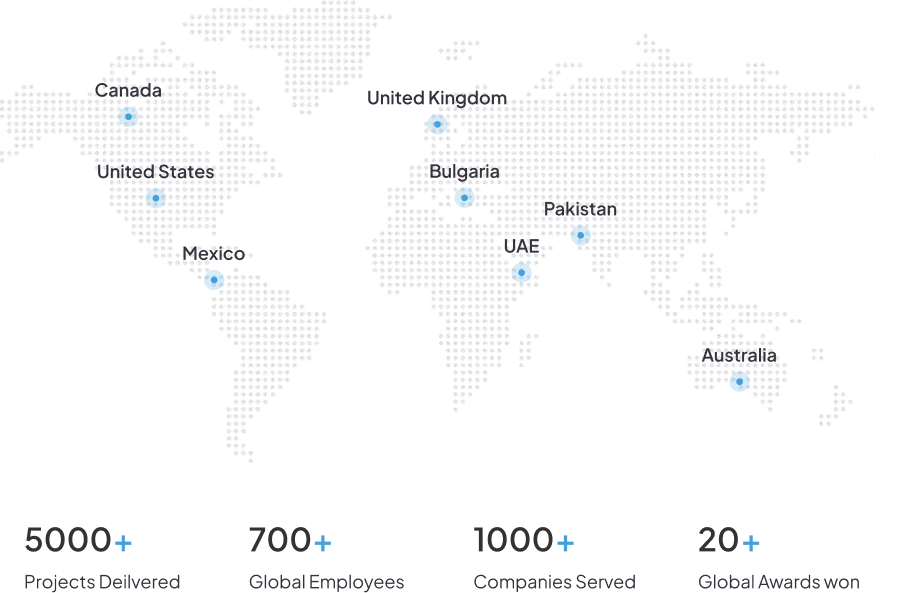
As of April 1st, 2024, we successfully migrated users from the legacy dairy management application to a new, more advanced platform. Today, over 440 consultants globally are actively using the system, with adoption expected to grow further in the coming months. The platform is now supporting dairy operations across regions, including North America, South America, Europe, Asia, and Africa.
One regional dairy team was among the first to transition and has already reported increased usage and engagement. In FY23, a total of 444 on-farm visits were recorded, with 361 classified as routine herd visits. In FY24, the number has already reached 550 visits to date, including 440 routine visits, showing that consultants are consistently using the platform during everyday dairy farm activities.
Our web app enabled Vytelle to have a complete digital OPU process from manually managing locations and donor forms to updating inventory at labs.
A Leading Global Dairy Corporation
Empowered a leading global dairy corporation with our Dairy Management Software, streamlining operations, enhancing efficiency, and ensuring seamless dairy supply chain management
Folio3 helped digitize the entire feedlot compliance management and auditing process with comprehensive compliance management web and mobile solutions.
Our web app automated the life cycle of a sale book from start to end such as filling animal related information, designing book layouts, & communicating with multiple users.
Frequently Asked Questions
Can you connect multiple dairy systems at the same time?
Yes. Many operations rely on separate platforms for milking, activity monitoring, genetics, herd health, and reporting. Integrations can be built across several systems, allowing data to move automatically between them without duplicate entry.
What types of dairy technologies can be integrated?
Most projects involve parlor software, RFID and EID systems, activity monitoring platforms, health monitoring tools, genetics providers, milk buyers, cooperative reporting systems, analytics platforms, and custom applications.
We use a system that's not listed on your website. Can it still be integrated?
In many cases, yes. Every dairy has a unique technology stack, and custom integrations can often be developed for proprietary software, internal databases, and specialized industry platforms.
Will our team need to change existing workflows?
Not necessarily. Most integrations are designed around existing operational processes, allowing teams to continue using the systems they're familiar with while reducing manual data movement between them.
How is information matched to the correct animal?
Animal data is typically linked using RFID tags, EID numbers, management IDs, or other unique identifiers already used throughout the operation. This helps maintain accurate records across connected systems.
Can historical herd data be migrated as part of the project?
Yes. Historical production, reproduction, treatment, inventory, and animal records can often be migrated alongside the integration, depending on the systems involved and the quality of available data.
How do integrations reduce manual work on a dairy?
Many dairies spend hours importing spreadsheets, entering the same information into multiple systems, or comparing reports from different platforms. Integrations automate much of this process by keeping data synchronized between systems.
What happens when a software vendor updates their platform?
Technology providers regularly update their products. Ongoing integration support helps maintain compatibility and address changes that could otherwise disrupt data flows.
Can data be shared with consultants, nutritionists, and veterinarians?
Yes. Connected systems make it easier for advisors to work from consistent information rather than relying on separate exports, emailed reports, or manually assembled spreadsheets.
How long does a typical integration project take?
It depends on the complexity of the systems involved. A straightforward connection may take only a few weeks, while projects involving multiple platforms, historical data migration, or custom workflows typically require additional planning and testing.
Do integrations only work with software platforms?
No. Many projects involve hardware and field technologies as well, including RFID readers, activity collars, health monitoring devices, scales, sensors, and milking equipment.
Where should a dairy start if it uses several disconnected systems?
Start with the areas creating the most manual work or information gaps. For many dairies, that means connecting production, monitoring, health, or identification systems first, then expanding integrations as operational needs evolve.
Looking for An Enterprise Level Customized livestock
Solution for Your Business.
Get a Free Consultation Now!
00
Days
00
Hours
00
Min
00
Sec
50% Off During CattleCon Week. Save Before CattleCon Ends. Valid until February 5