
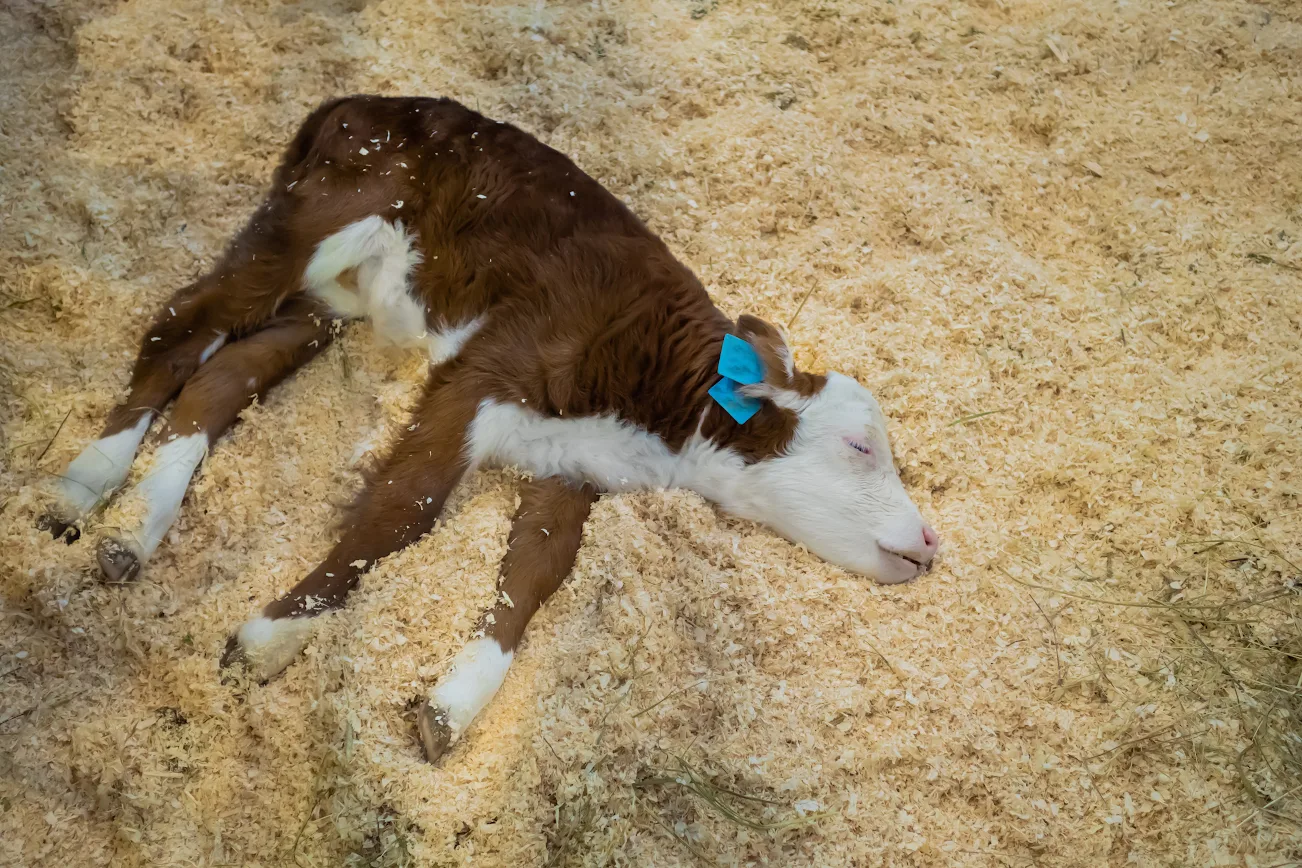

One of the most unsettling phrases in calf rearing is “fine at one feeding, dead at the next.” If you have been through a clostridial disease outbreak, you already know how fast it moves. If you have not, it is worth understanding before you do. Research published in peer-reviewed veterinary literature shows that bovine enterotoxemia caused by Clostridium perfringens can account for up to 20% of total calf mortality in certain production systems. That is not a fringe event.
Clostridium in calves is one of the more dangerous disease threats producers face because it often kills before visible symptoms appear. By the time you notice something is wrong, the toxins have already entered the bloodstream. Understanding what causes clostridial disease in calves, what signs to watch for, and how to prevent it with vaccination and management is what separates operations that lose calves to it repeatedly from those that get it under control.
In this guide, you will find a clear explanation of what clostridium is, the different types that affect calves, why outbreaks happen, what they look like clinically, how to respond, and how to prevent future losses.
What Is Clostridium and Why Does It Affect Calves?
Clostridia are anaerobic, spore-forming bacteria. They live in soil, manure, poorly preserved feeds, contaminated colostrum, and the intestinal tracts of healthy animals. These bacteria are not inherently unusual to find in a calf’s environment or even in its gut. The problem is not their presence. It is when they overgrow.
Under the right conditions, clostridial bacteria multiply rapidly in the gut and produce powerful toxins. Those toxins cause tissue destruction, systemic shock, and in many cases, death. The speed of this process is what makes clostridial disease in calves so difficult to manage reactively.
Young calves are especially vulnerable because their immune systems are immature and their gut microbiomes are still establishing. Colostrum quality and timing play a direct role in how well a calf can resist early infection. A calf with poor passive transfer is significantly more exposed than one that received adequate colostrum within the first two to four hours of life. If you are already tracking colostrum protocols and newborn calf health on your operation, the newborn calf health guide covers the full picture of early calf management.
Types of Clostridium That Affect Calves
There is more than one type of clostridial organism that causes disease in calves, and they do not all present the same way. Understanding the key types helps you make more informed decisions around vaccination and diagnosis.
Clostridium Perfringens in Calves
Clostridium perfringens is by far the most common cause of clostridial disease in calves. It is classified into five toxin types: A, B, C, D, and E. Each produces a different set of toxins, and each causes a somewhat different clinical presentation.
- Type A is increasingly recognized as a cause of abomasitis (inflammation of the abomasum) in young calves. It produces alpha toxin, which damages the abomasal mucosa and can lead to bloat, abdominal pain, abomasal ulcers, and hemorrhagic diarrhea. Many cases of “mystery bloat” in young calves are tied to Type A.
- Type C is one of the most virulent strains for calves under 10 days of age. It produces beta toxin, which causes severe hemorrhagic enteritis. Many affected calves die before diarrhea even develops. This is the classic “no warning, sudden death” presentation that producers find so frustrating to deal with.
- Type D causes enterotoxemia in older ruminants more commonly than in neonatal calves, but it can still affect calves and is particularly associated with sudden grain overload or dietary changes.
- Types B and E are less common but have been documented in cases of hemorrhagic enteritis in calves, with Type E accounting for a notable proportion of isolates in some diagnostic submissions.
Other Clostridial Diseases in Cattle That Can Affect Calves
While C. perfringens gets most of the attention in calves specifically, other clostridial species cause disease across the broader cattle herd.
- Blackleg (Clostridium chauvoei) primarily affects cattle between 6 months and 2 years of age, including weaned calves. It causes sudden acute lameness, swelling in muscle groups, high fever, and death. Vaccination is highly effective. For more on blackleg specifically, you can read through the blackleg in cattle guide.
- Tetanus (Clostridium tetani) can follow any wound, including navels in newborn calves, dehorning sites, and castration wounds. Navel hygiene at birth matters both for preventing tetanus and for reducing overall bacterial load on the newborn.
- Botulism (Clostridium botulinum) results from ingestion of the botulinum toxin in contaminated feed, carcasses, or water, causing progressive paralysis and death. This tends to be more of an adult cattle concern, but calves can be affected through contaminated milk or feed sources.
Understanding the full range of clostridial diseases in cattle matters when building your vaccination protocol, since many combination vaccines cover multiple Clostridium species in a single product.
What Causes Clostridium in Calves: The Triggering Factors
The bacteria are almost always present. What drives an outbreak is the disruption of conditions that normally keep them in check. Knowing these triggers is key to understanding why clostridial disease in calves tends to cluster around specific management events or environmental conditions.
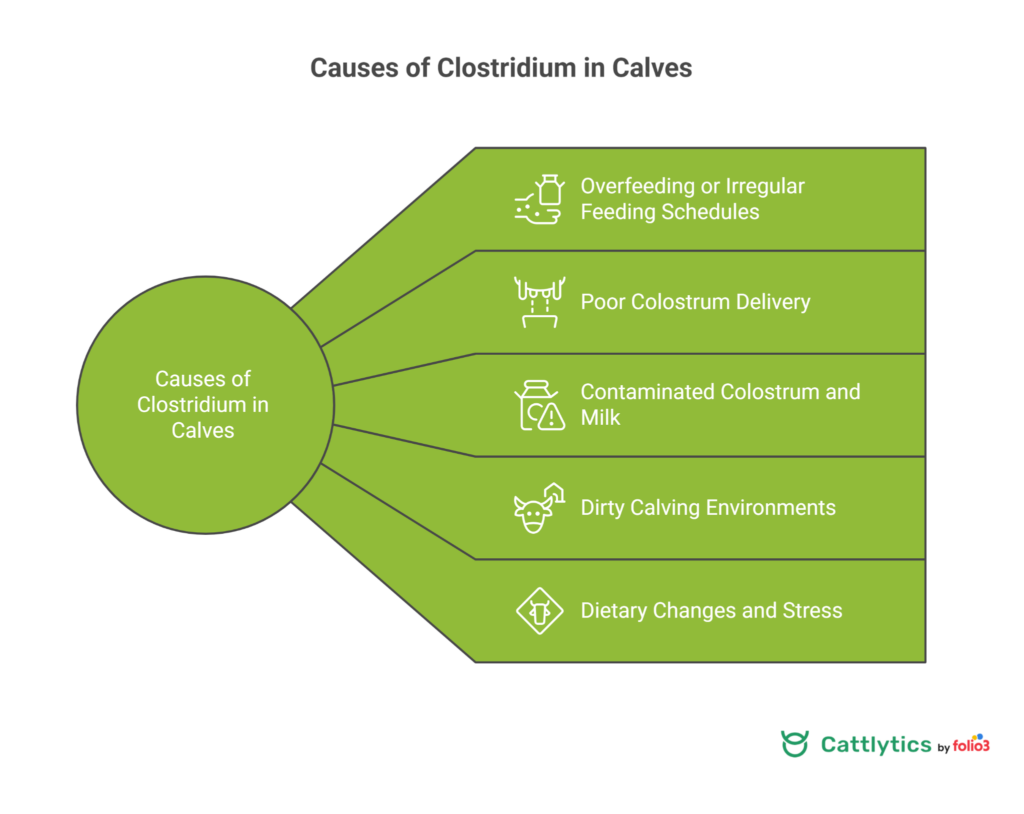
Overfeeding or irregular feeding schedules
When a calf is underfed at one feeding and then receives a large volume of milk at the next, undigested substrate moves into the intestine rapidly. This creates an ideal anaerobic environment for C. perfringens to proliferate. This is one of the most consistently documented triggers in field outbreaks.
Poor colostrum delivery
Failure of passive transfer leaves the calf’s gut without the immunoglobulins it needs to resist pathogen overgrowth. A calf that received inadequate colostrum in the first hours of life is significantly more vulnerable to clostridial overgrowth and other enteric pathogens. For more on the link between colostrum and early calf immunity, the cattle care guide for calf rearing provides useful context.
Contaminated or improperly handled colostrum and milk
Colostrum that has been stored incorrectly, partially thawed and refrozen, or fed at incorrect temperatures can introduce a high clostridial load directly into the calf’s gut. This is a particularly dangerous route because the calf receives a concentrated dose at the exact moment its gut is most permeable.
Dirty calving environments
High bacterial loads in maternity pens, calf hutches, or group housing areas increase exposure at birth and in the days following. The fewer organisms a newborn calf encounters in those first days, the lower its risk.
Dietary changes and stress
Any abrupt change in feed type or volume, or stress from weaning, transport, or illness, can trigger dysbiosis in the gut. That shift creates the conditions clostridial bacteria exploit.
Symptoms of Clostridium in Calves
This is where C. perfringens infections become particularly hard to manage. Many cases, especially those involving Type C, progress so quickly that the calf dies with minimal warning signs. That said, there is a spectrum of presentation depending on the type involved and how early you are observing.
Peracute (sudden death)
The calf appears normal at one feeding and is found dead at the next. No diarrhea, no extended period of illness. This is the most frustrating presentation and is most often associated with Type C infections in calves under 10 days.
Acute presentation
The calf is visibly depressed, stops nursing, shows signs of abdominal pain (kicking at the belly, looking at the flank, teeth grinding), and may develop bloody diarrhea. Bloat may be prominent. Temperature may be normal or low. This is most often associated with Type A abomasitis or Type C enteritis.
Subacute or chronic
The calf is not doing right. Poor growth, intermittent loose stools, general unthriftiness. These calves are often harder to connect to a clostridial diagnosis without laboratory confirmation.
If you are seeing any of the acute or peracute presentations described above, get a vet involved immediately. Post-mortem examination, done quickly after death, is often the most reliable way to confirm clostridial disease in calves and identify the type involved.
The table below summarizes the key presentations by type.
| Type | Primary Presentation in Calves | Speed of Onset |
| A | Abomasitis, bloat, hemorrhagic diarrhea, abomasal ulcers | Acute to subacute |
| C | Hemorrhagic enteritis, sudden death | Peracute to acute |
| D | Enterotoxemia, neurological signs | Acute |
| B / E | Hemorrhagic enteritis | Acute |
Clostridium Perfringens Treatment: What Works and What Doesn’t
Being direct about this is important: once a calf is showing significant clinical signs of clostridial disease, treatment outcomes are poor. This is not a disease where catching it in the middle stage reliably leads to recovery. It moves too fast, and the tissue damage caused by the toxins is often irreversible by the time symptoms are obvious.
That said, here is what is used in clinical practice.
- Antitoxin: Polyvalent antitoxins targeting multiple C. perfringens types can be administered to affected calves and to at-risk calves in an outbreak situation. Antitoxin neutralizes circulating toxin but does not reverse damage already done. It is most useful as a herd-level intervention when you are actively losing calves.
- Antibiotics: Penicillin is commonly used to reduce the bacterial population and slow further toxin production. It is not a standalone solution and does not remove toxins already produced. Your vet will guide the specific antibiotic choice and dose.
- Supportive care: Fluids, electrolytes, and pain management can support a calf through acute illness. Calves with severe hemorrhagic diarrhea or shock require aggressive fluid support to have any chance of recovery.
- Gut motility support: Some protocols include interventions to improve gut motility and reduce the stagnant, anaerobic environment that allows C. perfringens to proliferate.
The practical reality for most producers is that C. perfringens treatment is a last resort, not a management strategy. If you are regularly treating calves for clostridium in cattle situations, the focus should shift to why outbreaks are occurring and what prevention measures are in place.
Prevention: Vaccination and Management
This is where you actually win against clostridial disease in calves. Prevention is far more effective than treatment, and the tools available are well-established.
Vaccination of the Dam
Vaccinating pregnant cows and heifers with a clostridial vaccine three to four weeks before calving is the foundational step. This boosts the dam’s antibody levels so that her colostrum is rich in protection against C. perfringens and other clostridial organisms. When the calf receives adequate colostrum in the first two hours of life, it gets passive immunity that covers it through the highest-risk early weeks.
Clostridial vaccines are available as combination products, commonly called “7-way,” “8-way,” or “10-way” formulas, covering C. chauvoei, C. septicum, C. novyi, C. sordellii, and C. perfringens types C and D in the most common formulations. Some also include Type A coverage, which has become increasingly relevant given its role in abomasitis.
For a broader overview of how vaccination protocols work and how to build one that fits your operation, the beef cattle vaccines guide and the livestock vaccines and herd immunity guide are useful references.
Direct Vaccination of Calves
In herds where clostridial disease is a recurring problem, or where dam vaccination history is unknown or incomplete, calves can be vaccinated directly starting at 1 to 2 weeks of age and boosted three to four weeks later. However, young calves may not mount a complete immune response if maternal antibodies are still high, so dam vaccination remains the priority.
Feeding Management
Consistent feeding schedules, controlled volumes, and proper colostrum handling are all directly linked to outbreak risk. Avoid situations where calves go off feed and then receive a large compensatory feeding. Measure milk volumes accurately rather than estimating. Warm milk to the correct temperature before feeding and never use colostrum that has been improperly stored.
Sanitation
Reduce the clostridial load in the environment by keeping maternity pens clean and dry, disinfecting calf housing between uses, and moving calves to clean areas when possible. You cannot eliminate clostridium from the environment, but you can reduce how much of it a newborn calf encounters in its first days.
Gut Microbiome Support
Emerging evidence supports the use of direct-fed microbials (probiotics) to support a healthy gut environment that resists clostridial overgrowth. Research published in the journal Antibiotics found that two commercial probiotic products significantly reduced diarrhea incidence and severity in calves experimentally challenged with C. perfringens, with 60% mortality in untreated controls compared to zero in one of the treatment groups. This is an area gaining traction in practical calf management.
Using Records to Spot Patterns Before They Become Outbreaks
One of the most practical things you can do if you are worried about clostridial disease in calves is to track individual animal health events, feeding records, vaccination dates, and dam histories systematically. Outbreaks rarely appear out of nowhere. There are usually patterns, seasonal timing, specific cows, or management events that correlate with losses.
When you have that information organized, you can identify the contributing factors and address them before the next season. That might mean adjusting your vaccination timing, reviewing your colostrum program, or changing how you manage a specific group of calves.
Cattlytics cow-calf software is built to do exactly this. You can log calf health events, track treatment history, record vaccination dates for both dams and calves, and flag animals with prior health concerns. That kind of organized record-keeping is what allows you to connect dots across seasons and make decisions based on your actual herd data, not guesswork.
Conclusion
Clostridium in calves is a serious risk because it progresses quickly and often before clear signs appear. The bacteria are usually already present, so outbreaks tend to follow management gaps like inconsistent feeding, poor colostrum intake, or unsanitary conditions. Since treatment options are limited once symptoms show, the focus has to be on prevention. This means timely dam vaccination, strong colostrum management within the first few hours of life, consistent feeding practices, and clean environments. Keeping accurate health records also helps identify patterns early, so issues can be corrected before they lead to further losses.
FAQs
What Causes Clostridium In Calves?
Clostridium in calves is caused by overgrowth of Clostridium bacteria, most commonly Clostridium perfringens, in the calf’s gut. The bacteria are present in the environment and the intestinal tract naturally, but they overgrow when conditions favor them. Common triggers include irregular or excessive milk feeding, poor passive transfer from inadequate colostrum, contaminated or improperly handled colostrum, dirty calving environments, and dietary changes or stress.
How Do You Treat Clostridium Perfringens In Calves?
Treatment options include antitoxin to neutralize circulating toxins, antibiotics (typically penicillin) to reduce bacterial load, and supportive care with fluids and electrolytes. However, treatment outcomes are poor once significant clinical signs are present. Clostridial disease progresses very quickly, often causing irreversible tissue damage before the calf is visibly sick. Prevention through vaccination and management is far more effective than relying on treatment.
How Do I Know If My Calf Has Clostridial Disease?
Clinical signs range from sudden death with no prior illness (peracute Type C) to acute abdominal pain, bloat, bloody diarrhea, and depression. A calf that was fine at one feeding and found dead at the next is a classic clostridial presentation. Subacute cases may show as poor growth, intermittent loose stools, or general unthriftiness. If you suspect clostridial disease, a prompt post-mortem examination by a veterinarian is the most reliable way to confirm diagnosis and identify the type involved.
What Vaccines Protect Calves Against Clostridium?
Combination clostridial vaccines (commonly called 7-way, 8-way, or 10-way products) protect against multiple Clostridium species including C. perfringens Types C and D, C. chauvoei (blackleg), C. septicum, C. novyi, and C. sordellii. Some newer formulations also include Type A coverage. Vaccinating pregnant dams three to four weeks before calving is the primary strategy, as it enriches colostrum with antibodies that protect the calf in the early high-risk weeks of life.
Is Clostridium In Calves Contagious To Other Cattle?
Clostridial disease in calves is not contagious in the same way that a respiratory virus spreads between animals. However, a contaminated environment, shared housing, or shared feeding equipment can expose multiple calves to the same high bacterial load, making outbreaks appear to spread through a group. The risk is environmental and management-related rather than direct calf-to-calf transmission. Improving sanitation and reviewing feeding protocols are key steps when multiple calves are affected.
Why Do Calves Die So Quickly From Clostridium?
The speed of death is due to the toxins produced by C. perfringens. Once the bacteria overgrow in the gut, they release toxins that rapidly destroy intestinal tissue, enter the bloodstream, and cause systemic shock and cardiac arrest. With Type C, this process can happen within hours of the bacteria reaching critical numbers. The calf’s immature immune system and incomplete gut microbiome make it difficult to mount a defense fast enough to survive without pre-existing immunity from colostrum.