
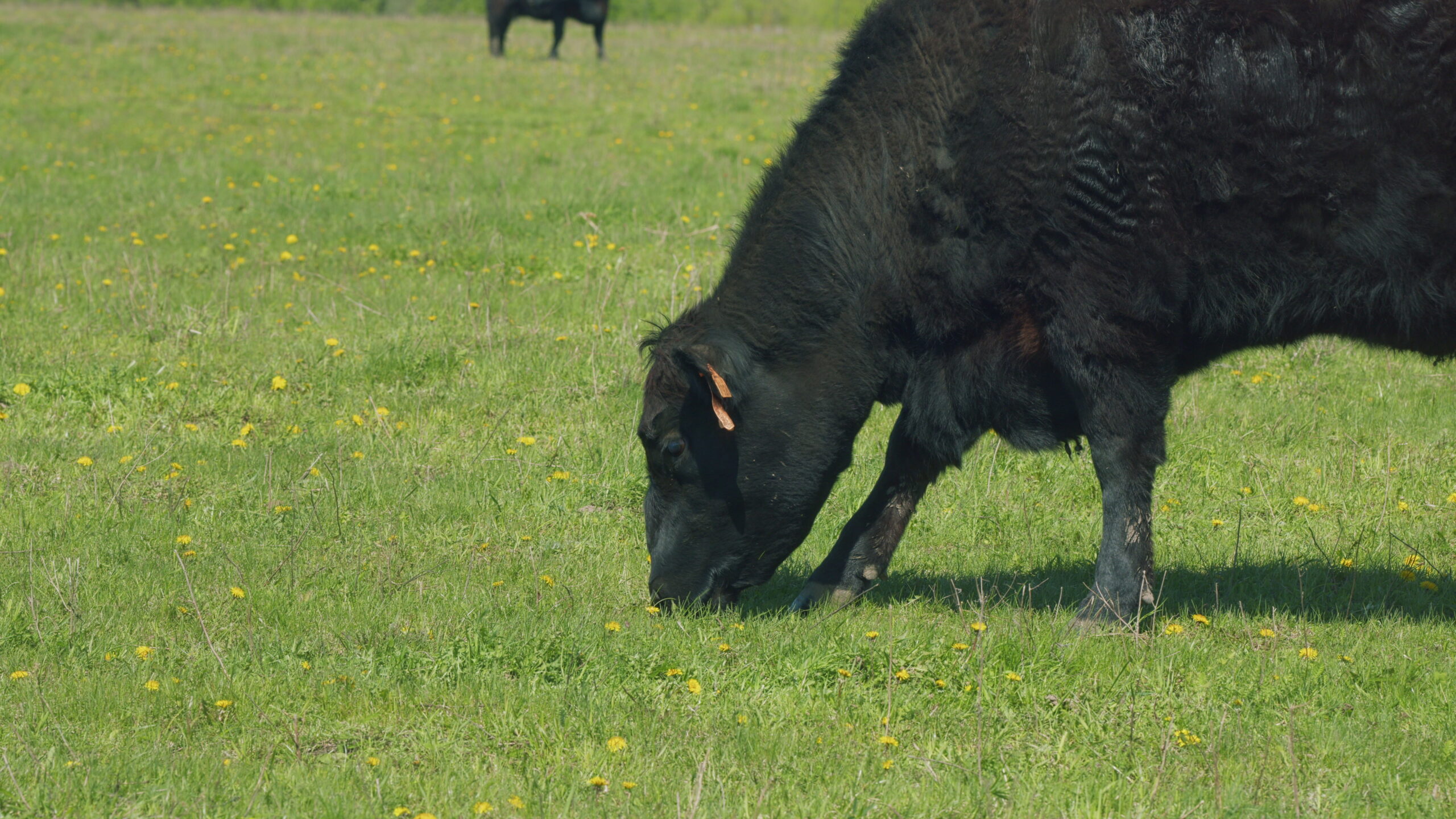

Nobody enjoys castrating calves. It is a stressful day for you, your crew, and definitely the calves. But here is the thing most producers underestimate: when you castrate, it has a bigger impact on your bottom line than how you castrate.
The connection between castration timing and Average Daily Gain (ADG) is well documented. Calves castrated early recover faster, gain weight more consistently, and qualify for premium beef programs with less hassle. Calves castrated late face compounding setbacks, from stress-related illness to record-keeping gaps that cost you at audit time.
Whether you are running 50 head or 500, the numbers tell a clear story. Early castration, paired with solid herd health records, is one of the simplest ways to protect both your calves and your profit margins. Let us walk through the data.
The Bull Penalty: Why Early Calf Castration Pays Off
Selling intact males costs you real money at the sale barn. Understanding the bull discount helps you see why castrating bull calves early is one of the easiest management wins.
If you have ever sold bull calves alongside steers, you have seen the price gap firsthand. Buyers and feedlot operators know that intact males come with added risk, and they discount accordingly. As per research, bull calves were discounted an average of $5.77 per cwt relative to steer calves at feeder cattle auctions. As calf weight increases, so does the discount. Heavier bulls can face markdowns of $6 to $13 per cwt, translating to $30 to $60 or more per head.
The penalty goes beyond the auction ring. A castrated bull, properly known as a steer (for anyone searching for the term “castrated male cow”), delivers better carcass quality. Steers produce more marbling and higher tenderness scores, which is exactly what today’s quality-driven beef market demands. Intact males, on the other hand, tend to grade lower at the packer, limiting access to premium programs.
Behavior matters too, as steers are calmer and easier to handle in groups. Bulls are more aggressive, which increases the risk of injury to both cattle and handlers. For operations focused on safe cattle handling, castrating bull calves early removes a major source of unpredictability from your daily routine.
Birth vs. Weaning: How Timing Impacts Average Daily Gain (ADG)
Timing is everything when it comes to castration and weight gain. The data consistently show that earlier castration protects your calves’ growth trajectory.
The Hidden Cost of Delaying
When you wait to castrate until weaning, you are stacking stressors on top of each other. The calf is already dealing with separation from its dam, a new environment, and often transportation. Adding the pain and inflammation of castration on top of all that creates a compounding stress event that hammers the immune system.
It is not a theory. Research found that calves castrated on arrival at the feedlot had more than double the morbidity rate compared to steers castrated at a younger age, at 38.4% versus 17.5%. Mortality nearly doubled as well, from 4.0% to 7.6%. That means castrating large bull calves late does not just slow growth. It significantly raises your veterinary costs and death loss.
The Numbers Behind the ADG Drop
Data shows that calves castrated early in life (birth to 2 months) achieved higher ADG during the post-weaning period than those castrated at weaning or post-weaning (6 to 10 months). Meanwhile, weaning weights between the two groups were similar at approximately 600 lbs, disproving the common belief that keeping calves intact longer builds more weight.
The ADG hit gets worse with heavier calves. Research published in the Journal of Animal Science found that 6-month-old band-castrated calves experienced a 31% reduction in ADG compared to intact bulls over the 6 weeks following the procedure. Calves castrated past 3 months of age also weighed an average of 20 lbs less at slaughter and required 12 extra days on feed to reach market weight.
The acute stress response from late castration also compromises the immune system, making calves significantly more vulnerable to bovine respiratory disease (BRD). Since BRD accounts for roughly 75% of total feedlot morbidity, late castration does not just cost you growth. It adds treatment expenses, labor, and potential death loss to every affected calf.
Choosing the Right Castrating Calves Tools and Methods
Picking the right method depends on calf age, your facilities, and your comfort level. Each approach has trade-offs that affect healing, risk, and your workflow.
Surgical Castration (The Knife Method)
Surgical castration involves physically removing the testes with a knife or scalpel. It is the most definitive method because you can visually confirm that both testicles have been fully removed. There is zero chance of a “stag” (a calf with a retained testicle) slipping through your program.
The downside is bleeding risk and the open wound. In fly season, the incision site is vulnerable to fly strike and infection. Good sanitation of your castrating calves’ tools is critical. Disinfect blades between animals, and keep treated calves in a clean, dry environment during recovery. This method works best for calves under 3 months of age, though experienced producers use it on older calves with proper restraint and pain management.
Banding and Elastration
Castrating calves with rubber rings, also called elastration, is a common choice for newborn calves in the first week of life. A small rubber ring is applied above the testicles using an elastrator tool, cutting off the blood supply until the scrotum dries and falls off. It is quick, bloodless, and requires minimal equipment.
For older, larger calves, castrating calves with bands involves heavy-duty latex rings applied with a tension banding tool. These bands are designed for calves over 150 lbs, where standard elastrator rings would not be effective. The key consideration with banding at any age is the risk of tetanus. A tetanus toxoid vaccine is absolutely essential when castrating calves with bands because the anaerobic environment under the band creates ideal conditions for Clostridium bacteria to thrive.
Many producers also use an emasculatome (Burdizzo clamp), which crushes the spermatic cords without breaking the skin. It is bloodless and avoids the tetanus risk of banding, but requires precise placement to be effective.
Knife vs. Banding: A Quick Comparison
| Method | Ideal Age | Required Tools | Tetanus Risk | Healing Time |
| Surgical (Knife) | Birth to 3 months | Scalpel, disinfectant, restraint | Low | 2 to 4 weeks |
| Elastrator Ring | First week of life | Elastrator tool, rubber rings | Moderate (vaccine required) | 3 to 6 weeks |
| Tension Banding | Over 150 lbs | Banding tool, latex bands | High (vaccine required) | 4 to 6 weeks |
| Emasculatome (Burdizzo) | 1 to 6 months | Burdizzo clamp | Low (no open wound) | No visible wound |
Pain Management: The New Standard for Cattle Castration
The beef industry has shifted significantly toward proactive pain management during castration. In Canada, it is already a code-of-practice requirement to use pain mitigation when castrating calves 6 months of age or older. The U.S. is moving in the same direction, with more beef cattle vaccines and health protocols now incorporating pain management as standard practice.
The two most commonly used drugs are Lidocaine (a local anesthetic) and Meloxicam (a non-steroidal anti-inflammatory drug, or NSAID). Lidocaine numbs the surgical site during the procedure, while Meloxicam reduces inflammation and pain in the hours and days following castration. The combination of lidocaine and meloxicam partially mitigated cortisol spikes and reduced pain-related behaviors like leg lifting, kicking, and stiff gait in castrated bulls.
From a practical standpoint, pain management helps castrated male cattle return to the feed bunk faster. Calves that eat sooner after the procedure recover ADG more quickly. But using these drugs comes with a critical responsibility: both Lidocaine and Meloxicam carry meat withdrawal periods. If you fail to track the exact dosage, administration date, and withdrawal countdown, you risk marketing an animal with drug residues, which could disqualify it from premium programs or trigger a food safety violation.
The Records That Matter When Castrating Bull Calves
Accurate records turn castration from a routine task into a verifiable management event. Without them, you risk audit failures and missed premiums.
Every time you castrate a calf, there are specific data points that need to be logged. Miss any of these, and you could find yourself scrambling when an auditor or buyer asks for documentation:
- Date of Procedure and Age of Calf: This establishes timing, which is critical for premium program verification.
- Method Used: Whether it was a knife, band, or emasculatome, the method needs to be on record.
- Pain Management Drug and Dosage Administered: Record the exact drug name, dosage (mg/kg), and route of administration.
- Meat Withdrawal Periods: This is crucial for cull timelines. Selling an animal before the withdrawal period expires is a serious compliance risk.
- Vet Notes and Complications: Any post-procedure swelling, infection, or retained testicle needs to be documented.
The problem? Keeping all of this in a physical notebook or scattered spreadsheets leaves you vulnerable. Notebooks get lost. Handwritten entries are hard to search. And when a program auditor asks for the withdrawal date on a specific animal’s EID tag, flipping through pages is not going to inspire confidence. Digital record-keeping is no longer a “nice to have.” It is the baseline for any producer serious about premium programs like NHTC or GAP.
Stop Guessing, Start Tracking: Manage Castration Data with Cattlytics
Turning raw castration data into organized, audit-ready records should not take hours. The right software does the heavy lifting for you.
Cattlytics is built for exactly this kind of workflow. Instead of logging castration details in a notebook and hoping you can find them later, you record medical and treatment updates directly to an animal’s digital profile, tied to its EID tag. That means your castration date, method, NSAID dosage, and withdrawal countdown are all linked to the specific animal, searchable in seconds, and exportable for any audit.
For producers working toward premium program compliance, like NHTC or GAP, Cattlytics makes verification straightforward. You can pull up a complete treatment and health history for any animal, confirm withdrawal periods have cleared, and generate the reports buyers and auditors need, without the paperwork headache.
When your cattle castrated male groups are organized and documented from day one, you are not scrambling at sale time. You are walking into the sale barn with records that back up the premium your steers deserve.
Conclusion: Protect Your Calves and Your Bottom Line
The data is clear. Castrating calves early, ideally before 3 months of age, protects ADG, reduces disease risk, and avoids the sale barn discount that eats into your margins. Pairing early castration with proper pain management and organized record-keeping positions your operation for premium programs and stronger returns.
The calves that perform best are the ones managed with intention, from the procedure itself to the records that follow them through your operation.
Ready to make your herd health records auditable and profitable? Book a demo with Cattlytics today.
FAQs
What Is the Best Age to Castrate a Calf for Maximum Weight Gain?
Castrating calves between birth and 3 months of age gives the best ADG outcomes. Research shows that calves castrated in this window recover faster, avoid the compounding stress of weaning-time procedures, and reach similar weaning weights as intact bulls.
Does Castrating a Calf Stunt Its Growth Permanently?
No. When done early, castration does not permanently stunt growth. University studies have shown that weaning weights are similar for bulls and steers at approximately 600 lbs. The testosterone advantage in intact males only becomes significant closer to puberty, well after the typical castration window.
Is Banding or Cutting Better for Castrating Calves?
Both methods are effective when performed at the right age. Surgical castration gives immediate confirmation of testicle removal. Banding is bloodless and simpler for newborns. The key factor is not the method itself but the timing and whether a tetanus vaccine is administered when using bands.
Do I Need To Give Pain Relief When Castrating Calves?
Yes, pain management is now considered best practice and is required in some regions. Using Lidocaine and Meloxicam during castration reduces stress behaviors, lowers cortisol levels, and helps calves return to feed faster, which directly supports ADG recovery after the procedure.
How Long Should I Wait To Sell a Calf After Castration?
Allow at least 3 to 4 weeks for healing, though the exact timeline depends on the method used and any medications administered. If you used NSAIDs like Meloxicam, you must also observe the meat withdrawal period before the animal can be sold for slaughter.