
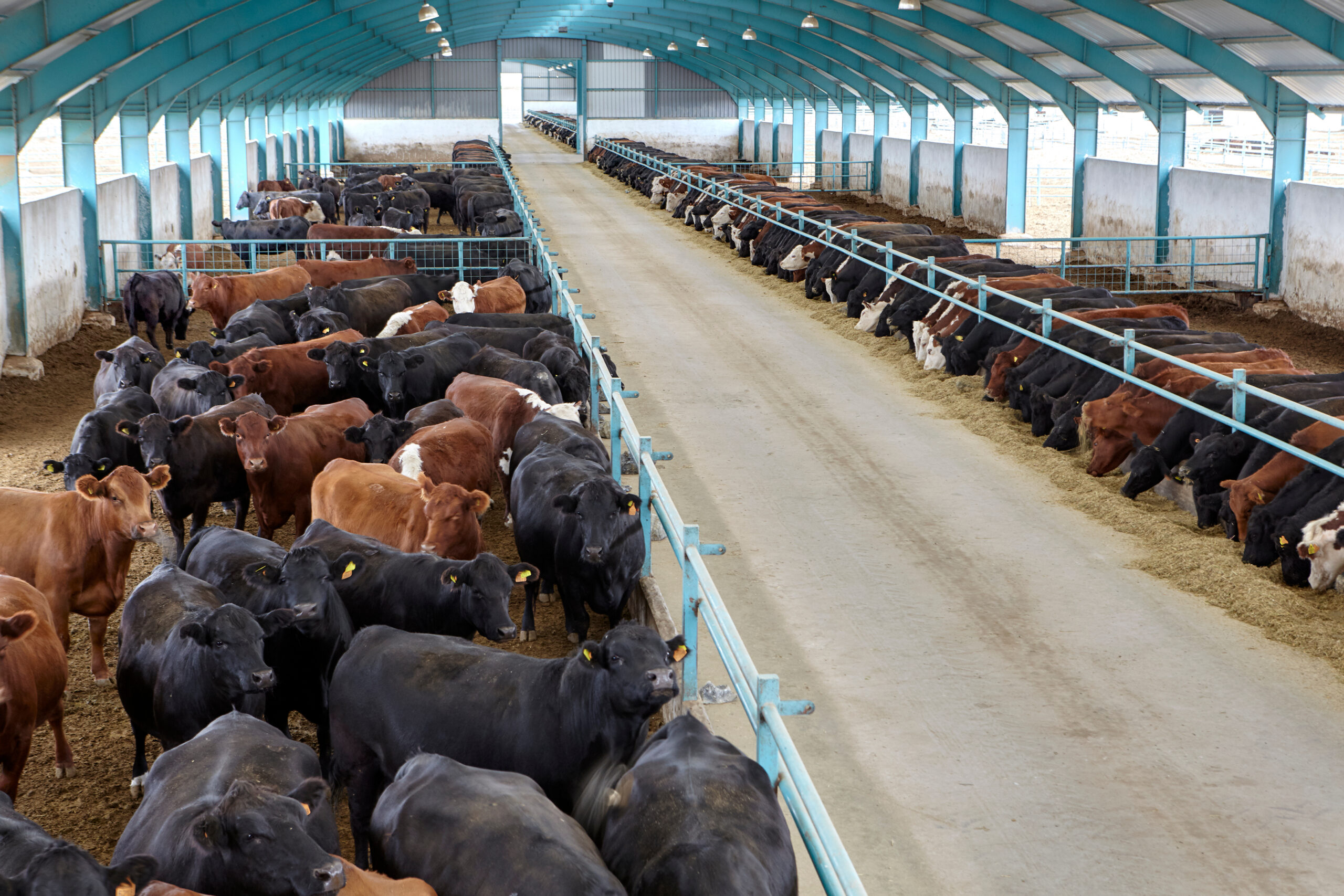

You count 247 heads on the spreadsheet, but only 239 are standing in the pasture. Those eight “ghost cattle” are costing you money you will never get back. If that sounds familiar, you are not alone.
Busy calving seasons, rapid pasture rotations, and end-of-day data entry from memory are a recipe for mismatched records. By the time you sit down to update the books, details blur and numbers slip.
Accurate cattle inventory tracking is about far more than counting heads. It is the backbone of profitable feed ordering, correct veterinary dosing, reliable herd health management, and clear financial reporting for lenders. In this guide, you will learn how to close the gap between what your records say and what is actually out in the field.
The Hidden Costs of “Losing Animals on Paper”
“Paper losses” happen when your records no longer match reality. This includes unrecorded deaths, sold animals never removed from the active herd list, or calves born but never matched to their dams. Over time, these errors stack up and distort every decision you make.
The financial damage is real. When your headcount is inflated, you over-order feed for animals that do not exist. Veterinary dosages get calculated for the wrong group size, meaning wasted product or under-dosed cattle. And when it is time to present your herd valuation to an agricultural lender, discrepancies between records and a physical count can delay or reduce your credit line.
Consider the scale of the problem nationally. In 2015, the U.S. cattle industry lost nearly 3.9 million cattle and calves to all causes, at an estimated cost of $3.87 billion. While not all those losses were recordkeeping failures, every unrecorded death inflates your operating costs and understates your real risk exposure.
On a per-head basis, a phantom animal on your books might cost $200 to $400 annually in unnecessary feed, labor, and vet supplies. Multiply that across a herd of 500, and you are looking at a serious problem hiding in plain sight.
Why Accurate Cattle Inventory Tracking is Crucial for Your Operation
Cattle inventory tracking touches every corner of your operation. Without it, you are making high-stakes decisions based on guesswork instead of data.
Financial Reconciliation: Banks and stakeholders need precise asset lists before they extend credit. Your cattle are collateral. If a lender counts 400 head during an audit but your records show 430, that gap raises questions about your entire operation. Accurate inventory records streamline loan applications and keep your financial relationships clean.
Herd Health and Traceability: When you track cattle inventory properly, you always know which animals received treatments, when withdrawal periods expire, and which groups need to be isolated. This is not optional. The USDA’s Animal Disease Traceability (ADT) framework now requires electronic identification for cattle over 18 months of age moving interstate, making individual-level tracking a regulatory baseline.
Breeding and Culling Decisions: You cannot cull an underperforming cow if you cannot trace her calving history. And you cannot evaluate a bull’s contribution without linking offspring back to him. Clean inventory records make breeding decisions data-driven instead of instinct-driven.
4 Core Methods for Cattle Inventory Tracking: From Basic to Advanced
The tools you use to track cattle inventory have evolved dramatically. Here is a look at four approaches, from pocket notebooks to cloud-based platforms, so you can choose what fits your operation.
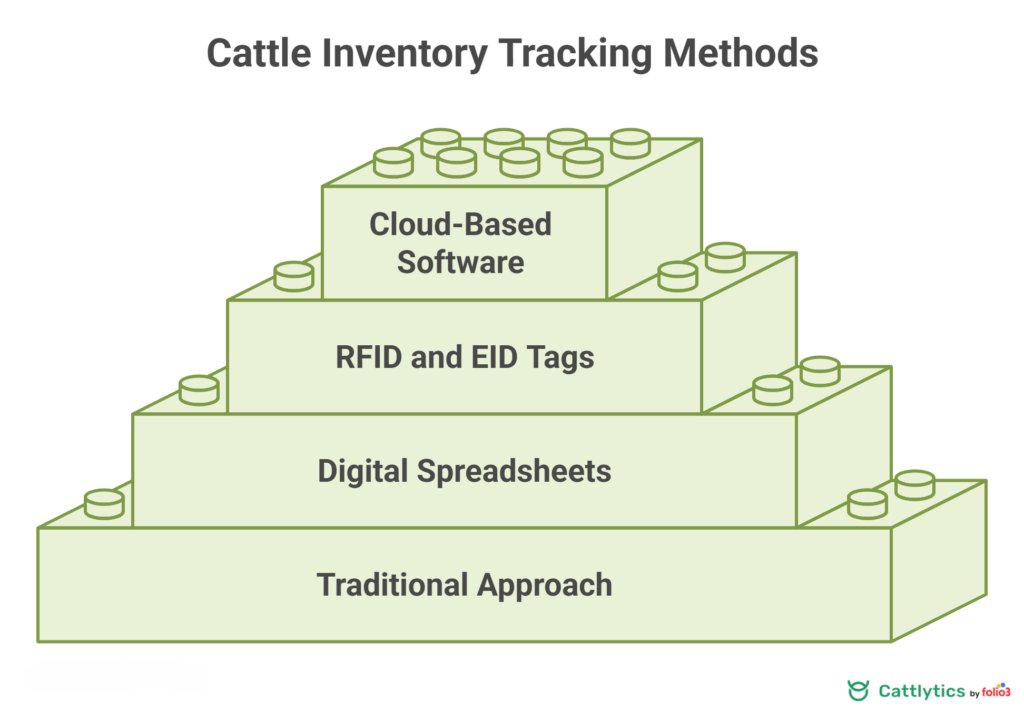
1. The Traditional Approach: Pen, Paper, and Pocket Books
The NCBA Red Book has been a staple in pickup trucks for decades. It is cheap, portable, and needs no battery. But it is terrible for data analysis. Notes get smudged, pages get wet, and entries are impossible to search. Research shows that annual ear tag replacement rates average about 4% on adult beef cattle, and without a centralized system, a lost tag often means a lost identity. For hobby farms under 50 head, paperwork. For anything larger, it is a liability.
2. Digital Spreadsheets (Excel/Google Sheets)
Spreadsheets are a step up from paper. You can sort, filter, and run basic formulas. But they still rely on manual data entry, and that is where problems start. The dreaded “delayed data entry” is the number one culprit: you gather data in the field, then try to enter it days later from memory. Formulas break, rows get duplicated, and there is no audit trail. For small to mid-sized ranches, spreadsheets are a useful bridge, but not a long-term solution.
3. RFID and EID (Electronic Identification) Tags
Electronic identification changes the game. An EID ear tag contains a microchip that transmits a unique 15-digit number to a wand scanner or panel reader. When paired with chute-side scales, it logs the animal’s ID, weight, and timestamp in seconds, with no handwriting to misread.
EID readers can process over 1,000 animals per hour compared to 200-300 with visual-only tags, delivering 99.9% read accuracy. For commercial operations and feedlots, EID is becoming the standard, especially after the USDA’s 2024 final rule requiring RFID for interstate cattle movement.
4. Cloud-Based Cattle Management Software
Cloud-based cattle management platforms bring everything together. You enter data on a mobile app in the pasture, even offline, and it syncs to the cloud when you are back in range. Your team sees the same real-time herd data, eliminating siloed records, duplicate entries, and the gap between fieldwork and data entry. For operations that want to scale, cloud-based software is the most reliable way to keep your cattle inventory accurate.
Comparison: Cattle Inventory Tracking Methods
| Tracking Method | Accuracy | Setup Cost | Best For | Risk of Paper Loss |
| Pen & Paper | Low | Very Low | Hobby farms (<50 head) | High |
| Spreadsheets | Medium | Low | Small to mid-sized ranches | Medium |
| EID & Scanners | High | High | Feedlots, commercial ops | Low |
| Cattle Software | Very High | Medium | Operations seeking growth | Very Low |
Step-by-Step Guide: How to Track Cattle Inventory Effectively
Knowing the tools is one thing. Putting them to work is another. Here is a practical workflow you can start implementing today to close the gap between your records and your pasture.
Step 1: Establish a “One Animal, One Record” System
Every animal in your herd needs a single, permanent identity that follows it from birth to sale. Assign a unique ID using a combination of a visual ear tag, an EID tag, and a tattoo or brand as a backup. This layered approach means that if one identifier is lost, the animal’s full data history is still accessible. One animal, one record, no duplicates.
Step 2: Log Lifecycle Events in Real-Time
The biggest recordkeeping mistakes happen between the chute and the kitchen table. When you wait three days to log a birth, a death, a weaning event, or a medical treatment, details get lost. Use a mobile app or chute-side tablet to record events while standing next to the animal. Real-time logging is the single most impactful change you can make.
Step 3: Manage Location and Pasture Movements
Tracking where each animal is located prevents accidental herd mixing, supports rotational grazing plans, and keeps pen headcounts accurate for feed ration calculations. Every time you move cattle between pastures, pens, or facilities, record the date, head count, and destination. Without location tracking, your inventory total might be correct overall but wrong at every individual site.
Step 4: Conduct Regular Headcounts and Reconciliations
No system is perfect, which is why physical audits matter. Schedule headcounts during natural gathering points: vaccinations, pregnancy checks, or shipping days. Compare the physical count against your digital cattle records and investigate every discrepancy immediately.
Top Production Metrics to Monitor in Your Cattle Inventory
Your cattle inventory is not just a headcount. It is the foundation for performance data that drives profitability across your entire operation.
Calving Percentage: It is calculated as calves born divided by cows exposed to a bull. A national benchmark for well-managed beef cattle operations is 85% or higher. If your inventory does not accurately reflect how many cows were exposed, this metric becomes meaningless.
Weaning Percentage and Weight: Weaning percentage shows how many calves survived from birth to weaning. Combined with weaning weight, it measures the true productivity of your cow herd. An inflated cow count makes your weaning percentage look worse than it is, leading to bad culling decisions.
Average Daily Gain (ADG): ADG is critical for feedlot managers tracking inventory efficiency. It tells you how much weight each animal gains per day and directly impacts your cost of gain and sale timing. Reliable ADG depends on accurate weight records linked to the right animal. Learn more about optimizing feed efficiency to improve your bottom line.
Common Cattle Record-Keeping Mistakes (And How to Avoid Them)
Even experienced producers make recordkeeping errors. Recognizing these patterns is the first step to eliminating them from your operation.
Mistake 1: Siloed Data. The vet has health records in one system. The ranch manager tracks movements on a spreadsheet. The owner has financial data in accounting software. None of these talks to the others. The fix: centralize all herd data into a single cattle inventory system that every team member can access.
Mistake 2: Inconsistent Tagging Protocols. An animal loses an ear tag, and someone issues a new number without linking it to the old record. Now you have two identities for one cow. Always link replacement tags back to the original ID, and use a secondary identifier like a tattoo or EID chip as a failsafe.
Mistake 3: Relying on Memory During Busy Seasons. The calving season is hectic. Weaning week is chaotic. These are exactly the moments when accurate records matter most, and exactly when people skip data entry. Build the habit of logging events in the moment, not after the fact.
Turn Your Cattle Inventory Into a Source of Profit
Every decision on your operation, from feed budgets to culling lists to lender presentations, flows from accurate cattle inventory data. Getting it right is the first step to running a profitable beef or dairy operation.
The gap between what your records say and what is in your pasture is not just an inconvenience. It is a direct hit to your bottom line. Whether you start by replacing a notebook with a cattle counting solution or by adopting EID and cloud-based management, the return on investment starts the moment your data matches your herd.
Ready to stop losing cattle on paper? Book a consultation today to see how digitizing your ranch records can protect your profits and simplify your daily operations.
FAQs
How Often Should I Reconcile My Cattle Inventory Records?
At a minimum, reconcile quarterly during routine gatherings such as vaccinations or pregnancy checks. Operations with frequent cattle movements benefit from monthly reconciliations to catch discrepancies before they affect feed budgets or financial reporting.
What Is the Best Way to Handle Cattle Inventory During Calving Season?
Use a mobile recording tool that works offline in the pasture. Log every birth, dam-calf pairing, and any complications as they happen. Waiting until the end of the week almost guarantees missed entries, especially with nighttime calving events when details are easy to forget.
Do I Need EID Tags if I Only Sell Cattle Within My State?
The USDA’s 2024 EID mandate specifically targets interstate movement, but several states have their own electronic identification rules for intrastate sales or market entry. Even without a mandate, EID dramatically reduces data entry errors and speeds up chute-side processing for any size operation.
Can I Migrate My Existing Paper or Spreadsheet Records to Digital Software?
Yes. Most cloud-based cattle management platforms support bulk imports from spreadsheets and CSV files. Clean your data first by removing duplicates, reconciling against a physical headcount, and standardizing your ID format before importing.
How Does Accurate Cattle Inventory Help With Tax and Insurance Reporting?
Clean inventory records make year-end tax reporting faster by documenting purchases, sales, births, and deaths with timestamps. For livestock insurance claims, verifiable records of animal counts and values strengthen your position and speed up the claims process.