

There’s a point in every grazing season when the math quietly shifts. Your cows’ milk is peaking or already declining, your pastures aren’t what they were two months ago, and your calves are growing fast but not gaining the way they should. That gap between what your calves need and what they’re actually getting is where a lot of weaning weight and real money goes missing every year.
Creep feeding is one of the oldest and most debated tools in cow-calf production. Some producers swear by it. Others have tried it and walked away, saying it didn’t pencil out. Both of them can be right, depending on their conditions and how they ran the numbers.
This guide breaks down what creep feeding is, when to start, what to feed, how to set it up correctly, and most importantly, whether it will pay on your operation this season.
What Is Creep Feeding and Why Does It Matter Today?
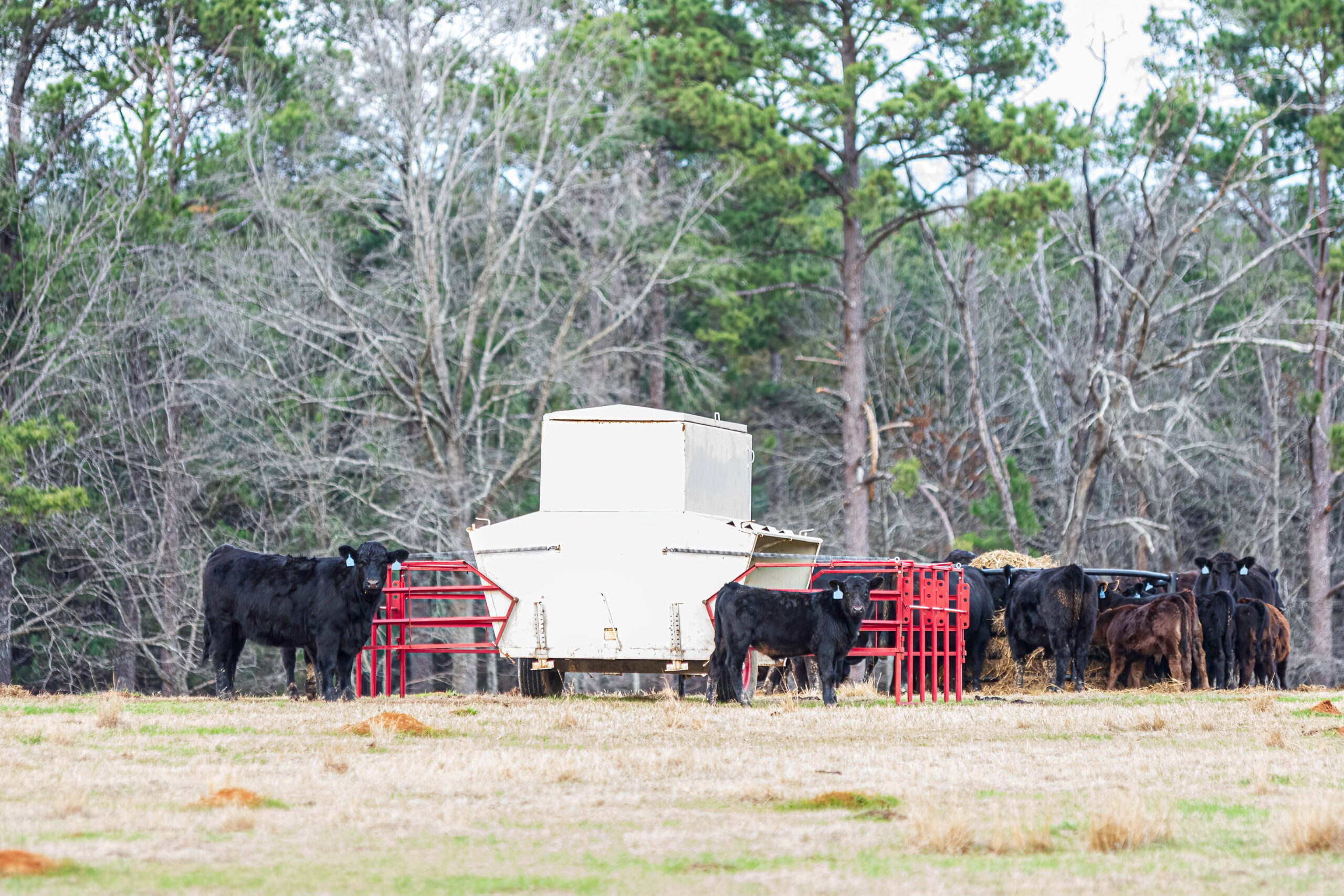
Creep feeding provides nursing calves with supplemental feed in a space cows physically cannot access. It directly addresses one of the most predictable nutritional gaps in cow-calf production.
The mechanics are straightforward. A creep gate or panel is placed in or around the feeding area with openings wide enough for calves to pass through, typically 16 to 18 inches, but too narrow for cows to enter. The feed inside can be grain, protein supplements, or high-quality forage. The calf gets it. The cow doesn’t.
Here’s why it matters today. By 3 to 4 months of age, a beef cow can only supply roughly 50% of the nutrients her calf needs to reach its growth potential. Milk production in beef cows peaks around 60 days after calving and then begins a steady decline. Meanwhile, the calf’s nutrient demands keep climbing.
This creates what producers often call the “hungry calf gap”, the point where milk and forage combined can no longer keep pace with what a fast-growing calf requires. When your forage crude protein drops below 8% in late summer or during drought, that gap widens fast.
When to Start Creep Feeding Calves for Maximum Gain
Getting the timing right is one of the most important decisions in the whole program. Start too early, and you burn feed dollars on calves whose rumens aren’t ready. Start too late, and you leave pounds on the table.
The rumen isn’t functional enough to process grain-based feed until calves are around 2 months old. Most producers begin at 3 to 4 months of age, which gives 80 to 120 days of creep feeding before a typical 7-month weaning date. Programs lasting 80 to 120 days can add 50 to 80 pounds of weaning weight under good management.
For more on how calving timing shapes your early-season decisions, see this guide on calving season preparation.
The Forage Factor
Your pasture condition is one of the best timing signals available to you. When forage crude protein drops below 8% or available forage tightens due to drought or overgrazing, your calves are no longer getting enough from grass alone. That’s when creep feeding becomes most efficient and most defensible from an economic standpoint.
Feed conversion ratios as low as 4.5 to 5 pounds of feed per pound of gain when cows are in a maintenance to negative energy balance, and forage quality is poor. That’s an exceptional conversion that makes creep feeding a clear win even at higher feed prices.
The Milk Curve
Think of the calf’s nutrition as two lines moving in opposite directions after 60 days. The cow’s milk output curves downward from its peak. The calf’s nutrient requirements curve upward as body weight climbs. Creep feed is the wedge you insert between those two lines to keep calf performance on track through weaning.
Here are five signals that tell you it’s time to start:
- Calves are 250 to 300 pounds and visibly pulling hard on their mothers
- Cow body condition scores are dropping below 5
- Forage crude protein has fallen below 8%
- Drought or overgrazing has cut into available pasture
- Your herd has a high share of first-calf heifers or older, low-milking cows
If two or more of these apply, run the numbers and get a feeder in place.
The Economics: Is Creep Feeding a Profit or an Expense?
This is the question every producer actually wants answered. The math is not complicated, but it has to be done honestly. Here’s a framework you can use right now.
The starting point is feed conversion, the ratio of pounds of feed consumed to pounds of added gain above what a non-creep-fed calf would gain. Depending on forage quality, ration type, and genetics, conversion ratios can range from 4:1 to 15:1 or more. For planning purposes, use 9:1 as your conservative baseline. That figure comes from a summary of 31 creep feeding experiments. Use a better number if your own records support it.
The value of added weaning weight runs approximately $0.50 to $0.60 per pound across a wide range of market conditions. For creep feeding to pay, your cost of gain must stay below that range. For a broader look at feed efficiency in cattle production, that resource walks through how to track efficiency across your entire feeding program.
Here is the simple formula:
Cost of gain ($/lb) = (Feed price per ton ÷ 2,000) × conversion ratio
At $120/ton and 9:1 conversion: ($120 ÷ 2,000) × 9 = $0.54/lb, roughly at break-even.
At $100/ton and 9:1: $0.45/lb, profitable in most market conditions.
Creep Feeding Break-Even Calculator
| Feed Cost ($/ton) | Conversion (lbs feed/lb gain) | Cost of Gain ($/lb) | Profitable at $4/lb calf? |
| $80 | 9:1 | $0.36 | Yes, strong margin |
| $100 | 9:1 | $0.45 | Yes |
| $120 | 9:1 | $0.54 | Borderline |
| $140 | 9:1 | $0.63 | No |
| $100 | 6:1 | $0.30 | Yes, high-protein program |
| $120 | 12:1 | $0.72 | No, poor forage conditions |
Always build labor, equipment, and the risk of a price discount on over-conditioned calves into your break-even. Those costs belong in the calculation, not as an afterthought after you’re already committed.
Strategic Rations: What to Put in Your Calf Creep Feeders
What you put in the feeder matters as much as when you put it there. The right ration depends on your marketing plan, your forage quality, and how much control you want over daily intake.
Target 14 to 16% crude protein for most programs. Young calves have limited rumen capacity, so nutrient density matters more than volume. Getting that balance right is where most ration decisions should start.
High-Energy vs. High-Protein: Which One Fits Your Goals?
Grain-based, energy-dense rations built around corn, oats, barley, or wheat produce the highest average daily gain. They also initiate marbling earlier by shifting the acetate-to-propionate ratio in the rumen, which starts fat deposition in the prime cuts. It is the right choice for calves going straight to the feedlot under retained ownership.
High-protein rations, typically soybean meal or cottonseed meal, work differently. They improve forage digestibility and are most effective when forage is available but low in crude protein. They produce lower daily gains but exceptional feed efficiency, often in the 2.25 to 2.80:1 range.
Salt-Limited Rations
If calves are consuming more than 1.5% of their bodyweight per day and beginning to look over-conditioned, salt is your simplest control. Including 10 to 15% salt in the ration limits daily intake to around 1 pound per calf. No mechanical adjustments needed.
One important note: salt is corrosive to metal feeders. If you’re running a salt-limited program, use rubber, wood, or plastic feeders to protect your equipment.
Palatability
New calves won’t rush to the feeder on day one. Expect 2 to 3 weeks before consistent consumption starts. Roll or coarsely crack your grains rather than grinding them finely. This reduces dust, cuts waste, and is easier on young digestive systems. Adding 3 to 5% molasses improves acceptance, reduces sorting, and keeps fines from separating in the feeder.
The Role of Ionophores
For calves destined for the feedlot, consider including an ionophore such as Rumensin or Bovatec at a recommended dose. Ionophores improve feed efficiency and provide protection against coccidiosis, which is a real threat in calves congregating around feeders. Prevention during the creep period costs far less than treatment after weaning.
Types of Creep Feeding Systems
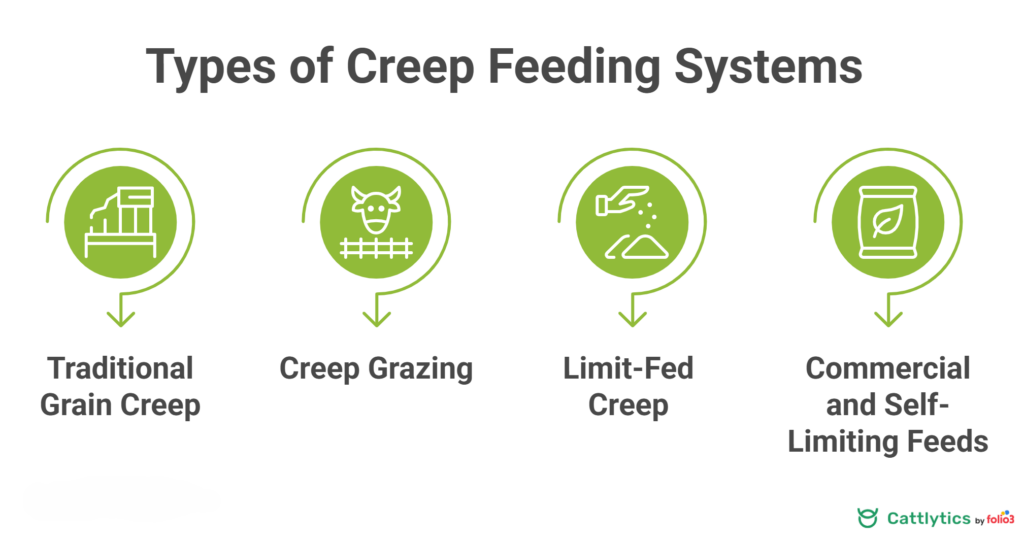
Choosing the right system comes down to your marketing endpoint, labor capacity, and forage base. Here is how the main options compare.
Traditional Grain Creep
This is the most common setup: a self-feeder loaded with a grain-based ration and fed free-choice through an attached creep gate. It produces the highest average daily gain and initiates marbling most effectively. The primary risk is over-conditioning, especially when calves have access to limited forage for 90 or more days. This system is best suited for calves that will go directly to the feedlot.
Creep Grazing
Creep grazing gives calves exclusive access to a high-quality annual forage plot while the cow herd is excluded. It’s the most affordable system available and carries far less risk of over-conditioning.
For warm-season setups, pearl millet or sorghum-sudan work well. Stock 6 to 10 calves per acre. For cool-season programs, oats, rye, wheat, or ryegrass deliver high-quality nutrition. Exclude cows with a standard creep gate or a single strand of electric wire placed 36 to 42 inches high. Calves duck under easily; cows don’t.
Calves that creep-grazed pearl millet on a tall fescue base weighed 75 pounds more at weaning than non-creep-grazed controls. For operations already using rotational grazing, creep grazing integrates cleanly into your paddock rotation.
Limit-Fed Creep
A limit-fed program uses a high-protein supplement at roughly 1 pound per calf per day, with enough salt included to restrict consumption naturally. It’s the right middle ground when you want the feed efficiency and forage digestibility benefits of protein supplementation without the risk of excess condition. Feed efficiency in this system runs 2.25 to 2.80:1 — some of the best numbers in any creep feeding system.
Commercial and Self-Limiting Feeds
Pelleted commercial creep feeds reduce dust, sorting, and waste. Many include built-in self-limiting technology through salt or proprietary intake-control mechanisms. If your time to monitor feeders is limited, a quality commercial product removes a significant management variable and keeps daily intake consistent.
Setting Up Your Creep Feeder for Calves
Feeder placement and setup are where well-intentioned programs often fall short. A creep feeder placed in the wrong spot can sit untouched for weeks while your calves stay close to their mothers.
Follow these practical steps to get your setup right from the start:
- Place feeders in high-traffic areas. Water sources, shade trees, and loafing spots are where your cow herd naturally spends time. Calves follow their mothers. Put the feeder where the herd already is.
- Allow enough feeder space: Target 3 to 4 inches of linear feeder space per calf. A 10 feet of feeder space comfortably handles 30 to 40 calves.
- Add a second feeder before access competition starts: One feeder per 30 to 50 calves is the starting point. If you see calves jostling at the creep gate, a second feeder is cheaper than the pounds you’ll lose to stress and sorting.
- Position mineral feeders or salt blocks nearby: This draws the cow herd to the area consistently, and calves come with them.
- Match feeder type to your management system: Portable wheeled feeders suit rotational grazing operations; fold them and move with the herd. Stationary feeders fit smaller or confined operations where cattle aren’t moving between paddocks.
- Inspect feeders weekly: Check for rodents, birds, and spoiled feed. Moldy creep causes digestive upset, kills intake, and wastes money. Pull and replace anything that looks or smells off.
Advantages and Disadvantages of Creep Feeding: The Honest Breakdown
Every management tool has a place and a limit. Knowing both sides of the equation helps you make the right call for your specific herd.
Advantages:
- Adds 30 to 80 pounds of weaning weight, depending on program length and forage conditions
- Calves arrive at weaning already bunk-broke, which means faster feedlot adaptation and fewer respiratory events during preconditioning.
- Grain-based programs initiate marbling early. 100 days of grain-based creep feeding can improve carcass quality grade by approximately one score
- Compensates for low-milking cows, first-calf heifers, and older cows in your herd
- Feedlot operators often pay a premium for bunk-broke calves with a documented creep background.
Disadvantages:
- Creep feeding does NOT reduce nursing pressure on cows. It is one of the most persistent myths in cow-calf management. Calves prefer milk first, creep second, forage third. Don’t expect the cow to gain body condition because you added a creep feeder.
- Compensatory gain largely erases the weight advantage for calves entering a stocker or backgrounding program on a low-energy post-weaning diet.
- Replacement heifers that receive high-energy grain creep can produce up to 25% less milk in their first lactation.
- Heavy, over-conditioned calves attract a price discount at the sale barn.
- Labor and equipment costs are real and must be included in your break-even calculation from the start.
Best Practices for Creep Feeding: From Setup to Weaning
Running a creep program well means managing it actively from the day you put the feeder out to the day the calves come off. These are the non-negotiables.
Keep feed fresh and feeders clean: Mold is the biggest silent killer of creep programs. Dusty or moldy feed causes digestive upset, kills consumption, and wastes money. Pull spoiled feed immediately and check feeders after every significant rain event.
Monitor intake and body condition every week: Calves should consume 1 to 1.5% of their bodyweight per day. A 300-pound calf should eat 3 to 4.5 pounds daily. If intake is running higher and calves are starting to look fleshy, adjust feeder openings or add salt to the ration before the problem shows up on the scale ticket. The broader context for keeping your calves healthy through this growth window is covered in this newborn and young calf health management guide.
Protect replacement heifers: Do not grain-creep-feed heifers you plan to keep as replacements. High daily gains above 2 pounds per day impair mammary gland development and can reduce first-lactation milk production by approximately 25%. Separate identified replacement heifers before the creep feeder goes in. If separation isn’t practical, run a creep grazing or limit-fed protein program instead.
When to Stop Creep Feeding
Your stop timing should match your marketing plan, not an arbitrary calendar date:
- Selling at weaning: Limit intake in the final 2 to 3 weeks before weaning to reduce fleshy condition and protect your price. Use salt to taper consumption.
- Going to the feedlot: Keep calves on creep through weaning and transition directly to a finishing starter diet within 28 days. Don’t let the nutrition drop sharply; that’s when you lose the marbling window.
- Entering a stocker program: Switch to creep grazing or a limit-fed protein program before weaning. Grain-creep-fed calves entering a low-energy stocker diet will gain more slowly than non-creep-fed calves as compensatory gain kicks in, and you’ll watch the weight advantage fade.
Stop early if calves are visibly over-conditioned or if feed conversion has deteriorated past 15:1 with no measurable weight response on your scale.
Making the Call for Your Herd
Creep feeding isn’t a guaranteed return. It’s a managed decision that changes year to year based on feed costs, calf prices, forage conditions, and where your calves are headed after weaning.
The producers who consistently profit from it are the ones who match the ration to the marketing endpoint, time the start date to the forage curve, and run the numbers honestly before the first bag of feed is bought. Use the break-even table in this guide as your starting point every season.
Tracking your creep feed costs, intake records, and weaning weights across multiple years also sharpens your decision-making over time. A digital cow-calf records system makes that year-over-year comparison easy and keeps everything organized from calving through weaning.
FAQs
Does Creep Feeding Reduce the Strain on Nursing Cows?
No. Research shows that milk intake is similar in creep-fed and non-creep-fed calves. Creep feed substitutes for forage, not milk. Don’t expect a creep program to help a thin cow recover body condition — that problem needs to be addressed directly through her own nutrition.
What Should Crude Protein Be in a Creep Ration?
Target 14 to 16% crude protein for most programs. Young calves have limited rumen capacity, so nutrient density matters more than total volume consumed. Higher protein levels in the 20 to 30% range can boost daily gains but are typically reserved for targeted high-performance programs.
How Long Does It Take Before Calves Start Eating Creep Feed?
Most calves take 2 to 3 weeks to begin eating consistently. Spread a small amount of hay near the feeder opening in the first week to attract curiosity. Once a few calves in the group start eating, the rest follow within days.
Can Creep Feeding Help Calves During a Drought?
Yes, drought is actually the best-case scenario for creep feeding efficiency. When forage quality and quantity both drop, the calf’s nutrient gap widens significantly, and feed conversion improves dramatically. Research data from fall-calving herds shows conversion ratios as low as 4.5:1 in drought conditions.
Should You Creep Feed Heifer Calves?
Generally no. High-energy grain creep feeding can reduce future milk production in heifers by approximately 25% if daily gains exceed 2 pounds per day. Separate identified replacements before placing grain feeders. If forage is severely limiting their growth, a creep grazing or limit-fed protein program is a safer option that supports growth without damaging mammary development.
How Do You Prevent Over-Conditioning in Creep-Fed Calves?
Monitor body condition and intake weekly. If calves begin to look fleshy or consumption exceeds 1.5% of bodyweight per day, increase salt in the ration to 10 to 15% to limit intake naturally. You can also adjust feeder gate openings to slow down access. For calves going to the sale barn, stopping or limiting creep 2 to 3 weeks before weaning reduces the risk of a price discount on over-conditioned cattle.