
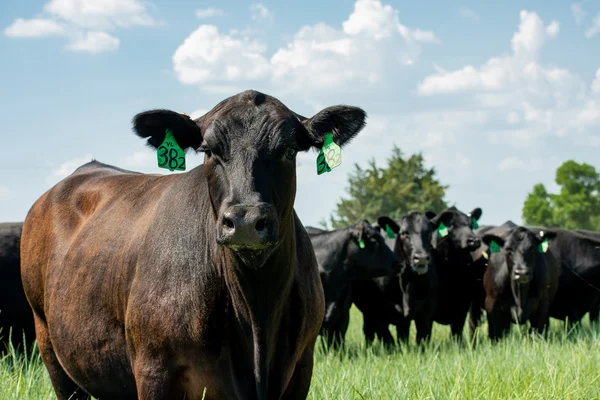

The cattle genetics industry has changed more in the last five years than it did in the previous twenty. Genomic selection tools that were once only accessible to the largest operations have become routine, sexed semen and IVF are scaling faster than most producers expected, and the companies behind these technologies are consolidating, partnering, and expanding into new markets at a pace that is hard to keep up with.
The numbers back this up. According to MarketsandMarkets, the global animal genetics market was valued at $2.97 billion in 2024 and is projected to reach $4.19 billion by 2029, growing at a 7.1% CAGR. The bovine segment is expected to register the highest growth rate within that market, driven by rising demand for high-quality dairy and meat products globally.
The impact of genomics on cattle breeding specifically has been well documented. A peer-reviewed study published in Frontiers in Genetics found that the U.S. genomic selection program for dairy cattle has doubled the rate of genetic gain since 2010, with more than 6.5 million genotypes submitted to the Council on Dairy Cattle Breeding as of 2022. Research published in Animal Frontiers (Oxford Academic) confirmed that genomic selection increased genetic gain by 50% to 100% for high-heritability traits like milk yield, and by 300% to 400% for low-heritability traits like fertility and health, making it one of the most consequential breeding advances in the modern era.
The practical takeaway: cattle genetic testing is no longer a tool reserved for elite seedstock herds. It is standard operating practice for operations serious about genetic improvement.
Whether you are running a seedstock program, managing a commercial cow-calf herd, or overseeing a dairy breeding operation, the companies on this list are shaping the genetics and data tools available to you. This guide profiles the top cattle genetics companies for 2026, covering what each one does, where they operate, what they have launched recently, and why it matters for your herd.
Company Profiles
1. Genus PLC
Headquarters: UK (founded 1933)
Genus is the largest publicly traded livestock genetics company in the world, operating through Genus PIC (pigs) and Genus ABS (cattle). ABS Global, their cattle division, provides AI services, bull genetics, and genomic selection tools to dairy and beef producers across roughly 35 countries and around 50,000 customers.
In 2024, Genus acquired De Novo Genetics, a U.S.-based dairy genetics operation, and partnered with 605 Sires + Donors to expand their beef genetics pipeline. They are one of the few companies in this space with the R&D budget to pursue long-term genomic research programs alongside their commercial semen business.
What to watch: Genus has been building out its beef portfolio more aggressively in the last two years, signaling that they see commercial beef genetics as a growth segment beyond dairy.
2. URUS
Headquarters: US (formed 2018, via Alta Genetics + CRI merger)
URUS was created when Alta Genetics and Cooperative Resources International merged in 2018, bringing together ten subsidiaries and a presence in over 100 countries. Their offerings span the full reproductive technology stack: AI services, sexed semen, IVF through Trans Ova Genetics, embryo transfer, and herd management tools.
Recent activity includes a 2023 partnership with Genetics Australia to expand GENEX and PEAK bull offerings in Australia, and a 2024 launch of the Africa Dairy Genetics Multiplication project for operations in Kenya, Tanzania, and Uganda.
What to watch: Their beef-on-dairy programs are expanding, and their IVF capacity through Trans Ova continues to scale.
3. CRV Holding
Headquarters: Netherlands (founded 1874)
CRV is a farmer-owned cooperative with roughly 23,000 members, primarily based in the Netherlands. They specialize in dairy cattle breeding, fertility programs, and herd health consulting, with semen exports reaching more than 50 countries. Active operations run in Belgium, New Zealand, Germany, South Africa, Brazil, the U.S., and Spain.
Their 2021 partnership with Nedap to market Oxalext heat detection technology shows how genetics companies are expanding into adjacent monitoring and data tools. CRV has historically been stronger on health and fertility indexing than pure production traits, which reflects the priorities of their cooperative owner base.
What to watch: CRV’s focus on functional traits (fertility, longevity, health) positions them well as the industry shifts toward total-merit selection indices.
4. Cattlytics (by Folio3 AgTech)
Headquarters: US
Cattlytics is not a semen or embryo supplier, so it occupies a different position in this list than the traditional genetics companies above. It is a herd management platform built to connect genetic and genomic data directly to on-farm breeding, health, and performance records. The reason it belongs in a conversation about cattle genetics companies is practical: genetics data is only useful if it is connected to the decision layer where breeding choices actually happen.
Cattlytics offers genetics and pedigree tracking as a core feature, allowing producers to store genomic test results, sire information, dam lineage, and EPD data alongside every animal’s health, weight, breeding, and calving records. Their dairy genetics and genomics integration connects with external genetics providers so that sire summaries, mating plans, and genomic profiles flow into the same system used for daily herd management.
For seedstock producers specifically, Cattlytics supports breeding management workflows that tie genetic selection to actual calving outcomes, progeny performance, and financial tracking. The platform runs on web and mobile with offline capability, which matters on ranches where connectivity is unreliable.
Cattlytics exhibited at NCBA CattleCon 2026 in Nashville and has been growing its user base across beef and dairy operations in the U.S., New Zealand, and other markets.
What to watch: As the gap between genetics data and on-farm record-keeping continues to close, platforms like Cattlytics that bridge both sides are increasingly relevant to how producers evaluate ROI on their breeding programs.
5. Zoetis Inc.
Headquarters: US (formed 2013, originally Pfizer Animal Health)
Zoetis is the world’s largest animal health company by revenue, and while genetics is not their historical core business, they are moving into it aggressively. Their primary business remains animal pharmaceuticals, vaccines, diagnostics, and parasiticides. But in 2026, Zoetis announced the acquisition of Neogen Corporation’s GeneSeek livestock genomics unit, which signals serious commitment to building a genetics and genomics division.
Zoetis already had diagnostic and data-driven health tools in their portfolio. Adding GeneSeek’s genotyping infrastructure and livestock genomics IP gives them the ability to offer predictive genetic testing alongside their existing animal health products. That combination of health data and genomic data in one company could be significant.
What to watch: The Zoetis-Neogen deal is the biggest consolidation move in cattle genomics in years. How they integrate GeneSeek will shape the competitive landscape.
6. Neogen Corporation (GeneSeek)
Headquarters: US (founded 1982)
Neogen’s GeneSeek division has been one of the most widely used cattle genotyping services in the world, with labs in the U.S., Brazil, Australia, China, and the UK serving operations in over 120 countries. Their Igenity Beef and Igenity Dairy profilers, GGP genotyping arrays, and Encompass data platform have become standard tools for seedstock producers and breed associations evaluating cattle breeding traits through data.
The company reported global genomics sales of approximately $90 million in fiscal year 2025. In 2026, Neogen agreed to divest the GeneSeek unit to Zoetis, allowing Neogen to refocus on its core food safety testing business.
What to watch: The transition to Zoetis ownership will determine whether GeneSeek’s independent lab infrastructure and breed association relationships continue as-is or get absorbed into a larger corporate structure.
7. Semex Alliance
Headquarters: Canada (founded 1969)
Semex is a farmer-owned cooperative with roughly 900 employees and annual revenue exceeding $180 million. They are represented in 80 countries through 110 distributors, making them one of the most globally distributed genetics cooperatives in the industry.
What sets Semex apart is their Immunity+ program, which selects for immune response traits, and their Boviteq IVF labs operating in Canada and through global licensees. In 2022, Semex introduced what is considered the dairy industry’s first methane efficiency index, a selection tool that identifies bulls whose daughters produce fewer methane emissions per unit of milk. That move aligns with the growing focus on sustainable livestock production across the dairy sector.
Semex also partnered with Recombinetics in 2018 to work on precision-bred polled (hornless) cattle, though commercial gene-edited animals are still pending regulatory clearance.
What to watch: Semex’s sustainability indexing could become a real competitive differentiator as carbon certification programs and emissions reporting become more relevant to dairy economics.
8. Vytelle
Headquarters: Lenexa, Kansas, US (founded 2015)
Vytelle is a precision livestock company that has grown quickly by combining IVF technology, on-animal performance data capture, and AI-driven genetic analytics into a single integrated platform. They have raised $33.2 million in funding across two rounds and now operate in 26 countries with 20 IVF labs and 190 SENSE installations globally.
Their platform consists of three connected products. Vytelle ADVANCE is a hormone-free bovine IVF service that reported 53% conception rates on fresh embryos and 48% on frozen embryos across seven countries in their 2024 global pregnancy summary. Vytelle SENSE is a feed intake and weight measurement system installed on-farm that captures individual animal performance data continuously. Vytelle INSIGHT is an AI-based genetic analytics engine that uses that performance data to inform mating decisions and genetic selection.
What makes Vytelle unusual in this space is their multi-breed feed efficiency database, which now includes over 320,000 genetic evaluations across 29 breeds from 190 locations. That dataset gives them a foundation for data-driven breeding recommendations that most traditional genetics companies cannot match, because it ties genetic potential directly to observed feed efficiency outcomes at the individual animal level. Vytelle also won a Sustainability Leadership Award in 2022 from the Business Intelligence Group for their work on producing more protein with fewer inputs.
What to watch: Vytelle’s growth rate and their expanding network of Powered by Vytelle partner labs across Latin America, Africa, Australia, and Asia position them as one of the most aggressive scalers in the cattle genetics space right now. Their integrated data approach, where IVF, performance testing, and genetic analytics all feed into each other, is a model that other companies are likely to follow.
Comparison Table
| Company | HQ | Type | Core Focus | Key Offerings | Global Reach |
|---|---|---|---|---|---|
| Genus PLC | UK | Public corporation | Dairy and beef genetics | AI services, genomic selection, bull genetics | 35 countries |
| URUS | US | Cooperative (merger) | Reproductive tech | AI, sexed semen, IVF, embryo transfer | 100+ countries |
| CRV Holding | Netherlands | Farmer cooperative | Dairy breeding, herd health | AI services, fertility/health indexing | 50+ countries |
| Cattlytics | US | Software platform | Genetics data management | Pedigree tracking, genomics integration, breeding records | US, CA, UK, NZ, global |
| Zoetis | US | Public corporation | Animal health + genomics | Pharma, diagnostics, genomics (via GeneSeek) | 100+ countries |
| Neogen (GeneSeek) | US | Public corporation | Livestock genotyping | Igenity profilers, GGP arrays, Encompass | 120+ countries |
| Semex Alliance | Canada | Farmer cooperative | Dairy and beef genetics | Immunity+, Boviteq IVF, methane index | 80 countries |
| Vytelle | US | VC-funded (Series B) | IVF, performance data, genetic analytics | ADVANCE (IVF), SENSE (data capture), INSIGHT (AI analytics) | 26 countries, 20 IVF labs |
Innovation Trends Shaping the Industry (2022 to 2026)
Precision Genomics
Whole-genome sequencing and high-density SNP panels are no longer reserved for research herds. Companies like Neogen/GeneSeek and Semex have built platforms that make predictive genomics routine for commercial producers. Genetic selection indices are getting more trait-specific with every evaluation cycle. Beyond the traditional production and type traits, indexes now exist for methane efficiency, heat tolerance, and feed efficiency, all of which carry real economic weight as input costs and regulatory pressures increase.
The USDA Agricultural Research Service continues to publish work on improving genomic evaluation accuracy, including research on inbreeding management and the integration of international clinical mastitis data into U.S. evaluation systems. University extension programs like the UT Beef and Forage Center are also producing practical guides that help commercial producers understand how to apply genomics to their own herds rather than treating it as a seedstock-only technology.
Understanding how crossbreeding strategies interact with genomic selection is becoming especially important for commercial producers running hybrid vigor programs alongside genotyped sires.
Reproductive Technology at Scale
IVF and sexed semen adoption has accelerated beyond what most projections predicted five years ago. Semex’s Boviteq labs and URUS’s Trans Ova services have both expanded capacity, and the cost per embryo has dropped enough to make IVF viable for mid-size operations. Select Sires and URUS are also pushing beef-on-dairy programs that use reproductive tech to diversify calf value for dairy herds.
Cattle breeding workflows now routinely integrate genotyping from the embryo stage forward. The operations getting the most value from these technologies are the ones connecting genetic data to their performance and herd analytics platforms so that breeding decisions are tracked alongside health, calving, and financial outcomes over time.
Gene Editing and Biomarkers
Semex’s partnership with Recombinetics on polled cattle remains the most visible gene-editing project in the cattle sector. The goal is to introduce naturally occurring hornless genes into dairy lines through precision breeding. Research on disease resistance and heat stress markers continues across multiple companies, though commercial gene-edited cattle remain pending regulatory approval in most markets.
Sustainability as a Product Category
Select Sires’ Low Carbon Technologies division and Semex’s methane efficiency index represent the clearest examples of sustainability moving from marketing language into actual products. Carbon certification programs are beginning to create economic incentives for lower-emission herds. The genetics companies that can validate their sustainability claims with real progeny data are positioned to capture that emerging value.
Making Genetics Data Work at the Ranch Level
The companies on this list produce a large amount of data: genomic profiles, EPDs, pedigree records, progeny performance, and trait indexes. That data is only valuable if it reaches the person making the breeding decision at the right time, in a format they can act on.
This is the gap that herd management platforms are designed to close. When your breeding records, calving data, health history, and genetic profiles live in the same system, you can evaluate bull selection criteria against actual outcomes in your own herd rather than relying on catalog numbers alone.
Cattlytics is built for this. It connects with genetics and genomics providers and brings that data into a single view alongside your daily operational records. The genetics keep getting better. The question is whether your record-keeping can keep up
FAQs
How Much Weight Should Cattle Gain During Backgrounding?
Most backgrounding programs target 1.5 to 2.5 lbs of average daily gain, depending on the ration and genetics. Over a 90-day program, that translates to roughly 135 to 225 lbs of total gain per calf, taking them from around 500 lbs to 625 to 725 lbs.
What Is the Best Time of Year to Start a Backgrounding Program?
Fall is the most common starting point because that’s when spring-born calves are weaned. Starting in October or November lets you background through winter and sell into the stronger spring market when feeder cattle demand typically increases.
Can Small-Scale Producers Make Money Backgrounding Cattle?
Yes, but your per-head costs will be higher without economies of scale. Tools like LRP insurance make price risk management accessible even if you’re backgrounding 20 to 50 head. The key is keeping your cost of gain below what the added weight and market timing are worth.
How Does Backgrounding Differ From Preconditioning?
Preconditioning is a component of backgrounding, not a separate program. Preconditioning refers specifically to the health protocols (vaccines, deworming, bunk training) performed in the first 30 to 45 days. Backgrounding is the full management and feeding phase that includes preconditioning plus continued growth.
What Records Should You Keep During a Backgrounding Program?
Track individual animal weights at arrival and sale, vaccination dates and products used, feed costs per head per day, treatment records for any sick animals, and death loss. These records let you calculate the true cost of gain, evaluate program performance, and build a health history that adds value at sale. Digital record-keeping tools make this process faster and more accurate.