
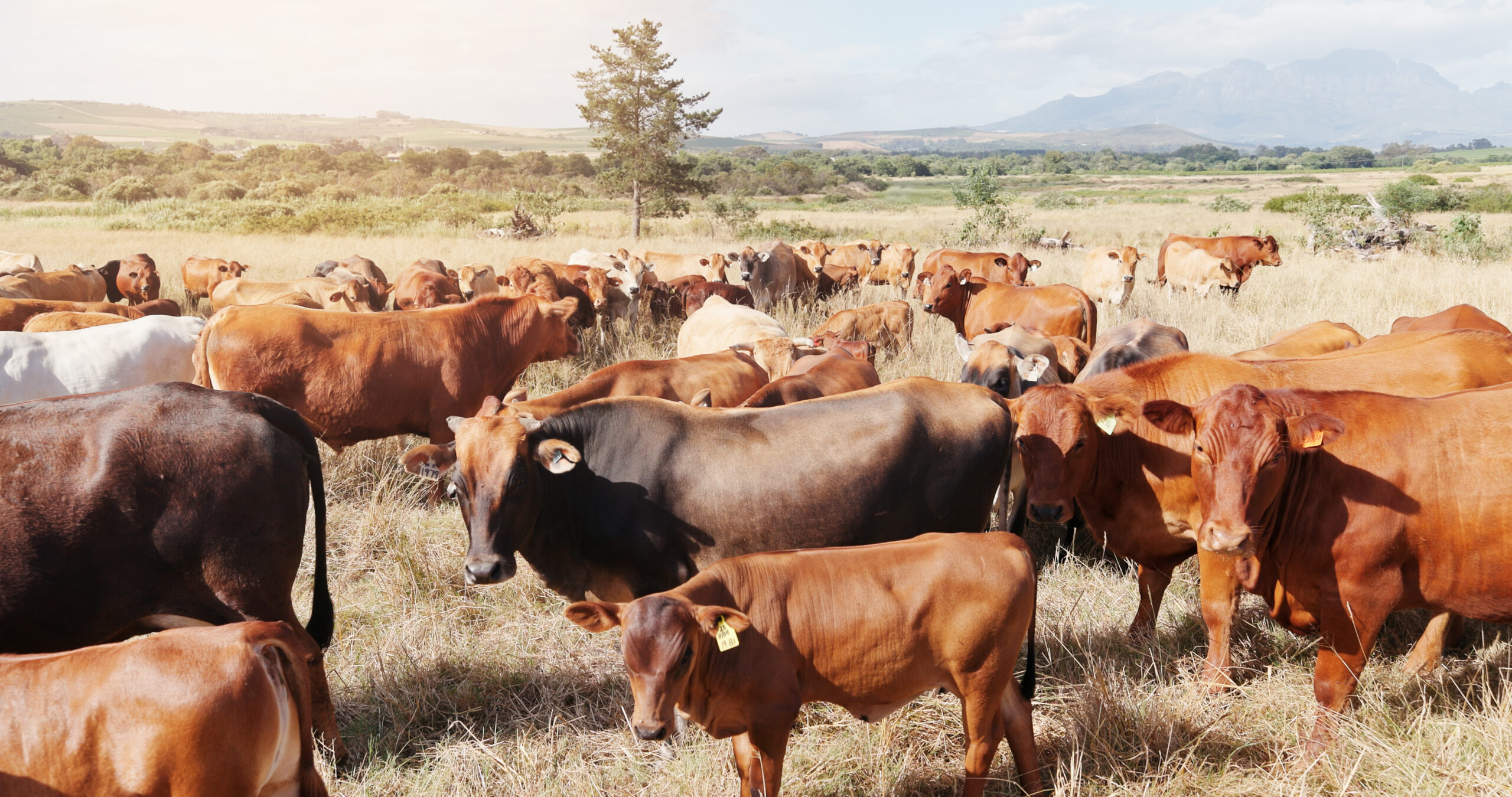

Managing cattle as one big group might feel efficient on the surface. But when animals with different feed needs, health risks, and breeding status share the same management plan, things break down fast. Thin cows fall further behind. High-risk arrivals spread disease. Bred heifers compete at the bunk with dominant mature cows.
Cattle herd segmentation is how you fix that. This guide walks through what it means, why it matters, and the core principles you can apply to build smarter group classifications across any type of operation.
What Is Cattle Herd Segmentation?
Cattle herd segmentation is the practice of dividing your herd into management groups based on shared needs. It is the foundation for better daily decisions in your operation.
A segment is not just a pen. It is a classification based on what a group of animals actually needs from you: feed requirements, health status, reproductive stage, age, weight, body condition, or location. Animals that belong in the same group share enough in common that they can be managed under the same feeding plan, health protocol, or breeding approach.
Done right, cattle herd segmentation gives everyone on your team a shared language for animal care. A group name carries information: it tells you what that animal needs today.
How Herd Segmentation Differs From Basic Sorting
Basic sorting is a physical task. You run cattle through a chute and separate them by appearance, weight, or sex on a given day. Herd segmentation is broader. It is a management system that includes classification, record keeping, monitoring, movement history, and ongoing group review. Sorting is a one-time action; segmentation is a continuous process.
Group labels help managers decide which animals need more feed, closer health checks, breeding attention, movement, or separate observation. Without a clear group structure, even experienced managers miss things and make slower decisions.
Why Cattle Herd Segmentation Matters
Poor grouping costs money and causes missed problems. When cattle with different nutritional needs, risk profiles, and production stages share a management group, the results show up in your records: feed costs climb, health issues surface late, breeding performance drops, and records become harder to trust.
Match Feed to Animal Needs
Not all cattle have the same nutritional requirements, and feeding them as if they do leads to waste and poor performance. A lactating cow needs far more energy than a dry mature cow. A thin cow approaching a BCS of 4 may need supplemental feed that a moderate-condition cow does not. Separating cattle by body condition and production stage lets you build feed plans that match what each group actually needs.
Improves Breeding and Reproductive Planning
Breeding efficiency depends on having the right animals in the right groups at the right time. Bred cows, open cows, first-calf heifers, replacement heifers, bulls, and exposed groups all require separate tracking through the breeding season.
Research shows that cows with a BCS between 5 and 6 at breeding had a pregnancy rate of 88%, while cows at a BCS of 4 had only a 69% pregnancy rate. Without proper segmentation, thin cows entering the breeding season may go undetected until it is too late to act.
Supports Faster Health Decisions
When a health issue arises, the fastest response comes from teams that already know which group an animal belongs to. Treated animals, newly arrived cattle, recovery groups, and hospital groups all need separate classification and close monitoring.
According to the USDA, an estimated 21.2% of beef cattle placed in feedlots are affected by bovine respiratory disease (BRD), the single costliest health condition in commercial finishing operations. Classifying high-risk arrivals as their own group from day one is one of the most direct ways to limit disease spread and treatment costs.
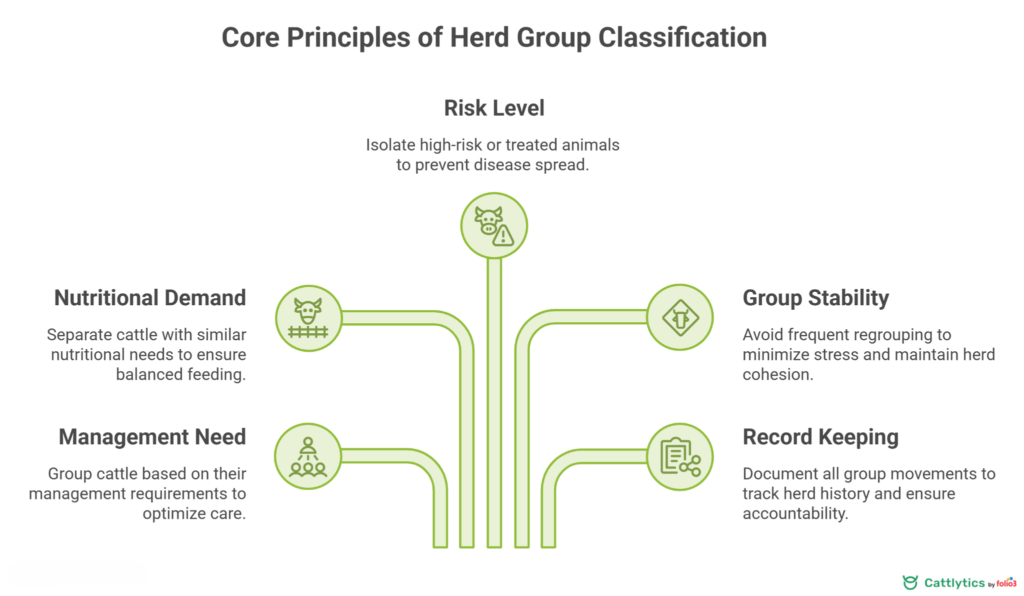
Core Principles of Herd Group Classification
Good group structure does not happen by chance. These principles help you make classification decisions that hold up in daily animal group management.
Group Cattle by Management Need First
Build your groups around management needs: feed requirements, health protocols, breeding stage, and handling frequency. Convenience can guide your logistics; needs should drive your classification.
Keep Nutritional Demand Groups Separate
Thin cows, lactating cows, growing heifers, and dry mature cows have meaningfully different feed requirements. Grouping them means some animals are over-conditioned and others fall short. Evaluate each nutritional class separately and build targeted feed plans.
Separate High-Risk or Treated Animals
Cattle that are sick, injured, recently transported, or newly received belong in clearly defined groups. This is not just about disease prevention. It ensures those animals get the closer monitoring and treatment follow-through they need, and that their records stay accurate.
Avoid Frequent Unplanned Regrouping
Every time you move cattle without a planned reason, social hierarchies reset, intake patterns shift, and records get harder to follow. Build movement into your management calendar and keep regrouping intentionally.
Record Every Group Movement
Every animal movement should carry five pieces of information: the reason, the date, the source group, the target group, and the location. Without those records, your group structure is mostly guesswork. See how structured cattle grouping strategies support better movement tracking across your operation.
Main Criteria Used for Cattle Herd Segmentation
These are the categories most operations use to build their group classifications. Understanding each one helps you decide which applies to your setup.
Age and Life Stage
Calves, weaned calves, yearlings, growing heifers, mature cows, aging cows, and bulls each carry different management needs. Mixing life stages without intention often leads to dominant animals outcompeting younger or lighter ones at the bunk and water.
Production Stage
Dry cows, lactating cows, bred cows, calving groups, weaning groups, and finishing cattle are all at different points in their productive cycle. Solid cow-calf records help keep production stages clearly separated so each group gets the nutrition and attention it needs.
Body Condition Score
Thin cattle (BCS 3 or below), moderate cattle (BCS 4 to 6), and over-conditioned cattle (BCS 7 and above) require different management responses. A thin cow in a group with dominant cattle will continue to lose condition unless separated. Evaluate BCS regularly and use it as a trigger to move animals between groups.
Weight and Frame Size
In feedlot operations, weight and frame size determine pen consistency, ration planning, and marketing readiness. Wide weight ranges in the same pen create intake competition and uneven days-on-feed. Sorting by weight at arrival keeps your groups better aligned with production targets.
Reproductive Status
Open cows, bred cows, exposed cows, replacement heifers, bulls, and cull candidates all need separate tracking through the breeding season. Replacement heifer management decisions are much easier to execute when heifers are tracked as a distinct group with their own records.
Health Status and Treatment History
Hospital groups, treated animals, cattle in withdrawal periods, and new arrivals all belong in separate classifications. A clear cattle health risk classification system is one of the most direct ways to reduce treatment costs, protect withdrawal records, and lower mortality.
Cattle Segmentation by Operation Type
Segmentation principles are consistent, but how you apply them depends on your operation type.
For Feedlot Managers
Feedlot segmentation centers on arrival risk, pen assignment, and treatment tracking. Classify incoming cattle by arrival weight, source, vaccination history, and transport stress. High-risk feeder cattle belong in their own receiving pens with enhanced health monitoring before integration into larger groups.
For Beef Cattle Producers and Ranch Owners
Ranch segmentation focuses on the cow-calf cycle. Your core groups typically include nursing cow-calf pairs, replacement heifers, bred cows, open cows, bulls, and calving groups. Pasture rotation management becomes more effective when each group is matched to the right pasture based on forage quality and proximity to key production dates.
For Livestock Operations Managers
Operations managers need a group structure for labor planning, inventory visibility, and location control. Clear group labels let you assign tasks by group, track which animals are at which location, and generate accurate inventory records without manual reconciliation.
For Herd Managers
Day-to-day herd management depends on group clarity. Treatment groups, observation lists, pasture move schedules, and feeding adjustments all flow from knowing which animals belong where and why. A well-maintained group structure makes it easier to identify when regrouping is needed and plan those moves.
Practical Cattle Group Classification Matrix
Use this table as a starting point for your own group structure. The best setup for your operation depends on size, production goals, facilities, and how often animals move between groups.
Example Grouping Matrix for Ranches and Feedlots
| Group Type | Classification Criteria | Management Action | Record to Maintain |
| Thin cows | BCS 3 or below | Separate feeding, increased supplementation | BCS, feed log, weight |
| First-calf heifers | Age, production stage, BCS | Separate from mature cows, close calving monitoring | Calving date, BCS, breeding date |
| High-risk feeder cattle | Light weight, long haul, commingled source | Enhanced health monitoring, delayed pen integration | Arrival weight, source, treatment history |
| Replacement heifers | Age, frame size, breeding weight target | Targeted nutrition, culling evaluation | Weight gains, BCS, breeding dates |
| Hospital group | Sick, injured, or recently treated | Close observation, withdrawal tracking | Treatment dates, drugs used, withdrawal periods |
| Breeding group | Reproductive status, BCS | Exposure dates logged, bull: cow ratio managed | Bull assignments, exposure dates |
| Weaning group | Age, lactation stage transition | Starter feed, stress illness monitoring | Weaning weight, health events |
| Finishing group | Days on feed, weight, frame size | Ration adjustment, sort of monitoring | Daily gain, days on feed, marketing target |
Common Herd Segmentation Mistakes to Avoid
These are the grouping errors that come up most often and cost the most to fix.
Grouping Only by Weight
Weight matters, especially in feedlots, but it should not be the only factor. An animal can be within your target weight range and still carry a high disease risk, a low BCS, or a treatment history that requires separate management.
Leaving Thin Cows With Dominant Cows
When thin cows share a group with dominant, heavy-condition cows, the thin animals consistently lose out at the feed bunk and water. Their condition drops further while stronger animals hold ground. Thin cows need their own group with uncompeted access to supplemental feed.
Mixing High-Risk Cattle Too Soon
Newly received cattle need a defined health monitoring period before joining established groups. Moving them in too quickly increases transmission risk and makes it harder to track which animals were exposed. Let your receiving protocol run before integrating new arrivals.
Not Tracking Group Movement History
Missing movement records create compounding problems. Without knowing when an animal moved and where it came from, you cannot reliably reconstruct treatment exposure, breeding history, or feeding group membership. Review common cattle management mistakes that build up when movement records fall through the cracks.
How Digital Animal Group Management Improves Herd Segmentation
Manual records work until they break down. Paper logs get lost, notepads go missing, and memory is unreliable when you manage hundreds of animals across multiple locations.
Clear Group Records
Digital records show which animals belong to each group, when they were placed there, and why. Every animal’s group history is attached to its record, which makes daily decisions faster and reduces errors at treatment, processing, and sale time.
Controlled Movement Across Pens, Pastures, and Locations
Every move should capture the source group, target group, date, location, and reason. A digital system makes it easy to log at the time of the move rather than reconstructing it later from memory.
Fewer Mixing Errors
Structured movement records prevent animals from being placed in the wrong breeding, feeding, treatment, or location group. Each move becomes a deliberate action with a full paper trail behind it.
Where Cattlytics Fits
Cattlytics is built for structured group management. You can create custom groups, move animals individually or in bulk, log the reason and date for every move, track location changes, and review the full group history for any animal in your herd. It keeps your group records organized in one place and connected to the treatment, breeding, and weight data, which makes segmentation useful in practice.
FAQs
How Many Groups Should a Beef Cattle Operation Have?
There is no fixed number. A small cow-calf ranch might manage well with four to six groups: bred cows, open cows, replacement heifers, a calving group, and nursing pairs. A larger feedlot may need ten or more. Start with the groups your operation genuinely needs, then expand as your records improve.
Can Cattle Carry More Than One Group Classification at the Same Time?
Yes, depending on your system. An animal can carry both a health status classification and a production stage classification. The key is making sure your records can reflect both and that the two classifications do not create conflicting management instructions.
How Often Should You Reassign Cattle to New Groups?
Group reassignment should be based on changes in management need, not a fixed schedule. Common triggers include a shift in body condition score, a health event, calving or weaning, a change in reproductive status, or a production stage transition.
What Is the Difference Between a Group and a Location?
A group is a classification based on shared management needs. A location is where those animals are physically. The same group can span multiple locations, and one location can hold animals from different groups. Keeping these concepts separate is important for accurate tracking in multi-pasture or multi-site operations.
How Does Cattle Herd Segmentation Affect Traceability?
It improves it significantly. When every animal has a clear group history with logged movement records, you have a structured account of where that animal has been, which groups it shared with others, and what management it received. That record supports health investigations, sales documentation, and supply chain verification.