


Few things hit harder during calving season than watching a newborn calf go downhill fast. Calf scours can drain your time, your treatment budget, and your calf crop in a matter of days.
Calf scours is the clinical term for neonatal diarrhea in calves. It is not a single disease but a symptom of intestinal failure caused by infectious pathogens, nutritional stress, or environmental breakdowns that overwhelm a young calf’s gut.
According to NAHMS data, 57% of pre-weaning calf mortality in U.S. dairy herds was attributed to diarrhea, with most cases hitting calves under one month old. That makes scours the single biggest killer of young calves on most operations.
This guide walks you through the root causes of calf scours, how to recognize symptoms before it is too late, what manure color tells you, proven treatment protocols, and the biosecurity systems that stop scours before calving season starts.
What Are the Root Causes and Types of Calf Scours?
Understanding what causes calf scours starts with separating infectious from non-infectious triggers. Once you know which category you are dealing with, your treatment response changes entirely.
Infectious Causes: The Deadly Pathogens
Over 95% of infectious scours cases in calves under 3 weeks old are driven by four main pathogens. Each one targets a specific age window, and knowing that timeline is your first advantage.
- E. coli (K99): Strikes within the first 1 to 4 days of life. This bacterium produces toxins that cause rapid, severe watery diarrhea. Calves can go from alert to critical within hours. It is especially dangerous for calves that missed early colostrum.
- Rotavirus and Coronavirus: Typically appear between days 5 and 14. These viruses destroy the absorptive lining of the small intestine, which means the calf cannot process nutrients or fluids properly. The result is severe malabsorption diarrhea that can persist for days.
- Cryptosporidium (Crypto): A protozoan that usually shows up between day 7 and 21. Crypto is resistant to standard antibiotics, extremely persistent in ranch environments, and difficult to eliminate from contaminated pens. It often shows up alongside viral infections, compounding the damage.
- Salmonella and Coccidiosis: These generally affect older calves from 2 to 6+ weeks of age. They often present with dark, blood-tinged, or mucosal diarrhea and can spread rapidly in confined or overcrowded environments. If you are seeing bloody stool in older calves, coccidiosis should be near the top of your list.
Non-Infectious Causes
Not every case of calf scours involves a pathogen. Non-infectious scours, sometimes called “milk scours” or nutritional scours, develops when something disrupts the calf’s digestion without an underlying infection.
- Common Drivers: Sudden changes in milk replacer concentration, overfeeding, maternal mastitis, heavy-milking dams, or calves ingesting rich spring grass too early. When undigested milk fat passes straight through the gut, you get the classic pasty yellow stool that many producers see in otherwise healthy calves.
- Environmental Stressors: Cold stress, mud, overcrowding, and severe weather swings all compromise a calf’s basal immune defenses. A calf burning energy just to stay warm has less reserve to fight off even mild gut disruptions. Recognizing signs of stress in cattle early can help you intervene before nutritional scours becomes infectious.
Signs of Scours in Calves: Recognizing Core Calf Scours Symptoms
Catching calf scours symptoms early is the difference between a quick recovery and a dead calf. Your job is to look beyond loose manure and identify dehydration before the calf goes down.
Behavioral and Physical Symptoms to Watch For
Early Warning Signs:
- Drooping ears and dull or sunken eyes
- Lethargy or isolation from the dam
- Reluctant nursing (slack udders on the cow are a prime indicator the calf is not nursing)
- Reduced activity compared to pen or pasture mates
Advanced Symptoms:
- Rapid or labored breathing, which is a compensatory response to metabolic acidosis
- Inability to stand (recumbency)
- Cold extremities, especially ears and hooves
- Loss of suckle reflex, meaning the calf will not latch even when guided to the teat
If you are tracking newborn calf health closely, these behavioral shifts should trigger an immediate hands-on assessment.
The Dehydration Pinch Test to Assess Clinical Risk
The skin-fold pinch test is your fastest field diagnostic for estimating how dehydrated a scouring calf really is. Here is how to read the results and act accordingly:
| Dehydration % | Visual & Physical Symptoms | Skin Fold Pinch Test | Clinical Action Required |
| < 6% (Mild) | Alert, normal posture, active nursing | Skin tent flattens in < 2 seconds | Monitor closely; administer oral electrolytes |
| 6% to 8% (Moderate) | Sunken eyes, droopy ears, dry gums, weak suckle | Skin tent stands for 2 to 4 seconds | Immediate oral electrolyte therapy (staggered with milk) |
| 8% to 10% (Severe) | Depressed, cold ears/legs, unable to stand | Skin tent stands for 5 to 10 seconds | Urgent veterinary intervention; IV fluids likely needed |
| > 10% (Critical) | Comatose, severe hypothermia, shock | Skin tent remains > 10 seconds | Immediate emergency IV fluid therapy or euthanasia |
Dehydration, not the pathogen itself, is what kills most scouring calves. Getting fluids into the calf at the right stage is everything.
The Calf Scours Color Chart: Mapping Manure Consistency and Color
A calf scours color chart is not a lab test, but it gives you critical field triage information. While only laboratory PCR testing can confirm a pathogen 100%, visual color, consistency, and calf age narrow down probable causes fast.
Visual Manure Triage Table
| Manure Color & Consistency | Typical Age of Onset | Probable Cause | Urgent Triage & Action Plan |
| Bright Yellow / White (Pasty to Loose) | Any age (often 1 to 3 weeks) | Nutritional / Milk Scours: Undigested milk fat passing through due to overfeeding or diet shifts. | Check dam’s milk flow. If calf is bright and alert, adjust feeding consistency; monitor closely. |
| Watery Brown / Yellow-Grey (Foul odor) | 1 to 4 days old | E. coli (K99): Rapid bacterial toxin buildup causing hyper-secretory diarrhea. | Administer oral electrolytes immediately. Isolate calf and dam. Consult vet for anti-toxin/antibiotics. |
| Yellow to Green (Watery, slimy, or mucous) | 5 to 21 days old | Rotavirus, Coronavirus, or Crypto: Viral/protozoal destruction of intestinal villi. | Focus on aggressive oral rehydration. Stagger electrolytes with milk feedings. Administer pain relief. |
| Dark Brown to Black (Tarry) or Red-Tinged | 2 to 6+ weeks old | Coccidiosis or Salmonella: Severe intestinal mucosal damage and hemorrhaging. | Immediate Vet Care: Requires targeted anti-coccidial treatments or veterinary-prescribed therapy. |
Cross-referencing the calf’s age with manure color gives you a working hypothesis to guide your treatment response while you wait on lab results. Keep a record of each case. Tracking cattle health and treatment data digitally helps you spot herd-wide patterns faster than paper logs ever could.
How to Treat Calf Scours: Proven Treatment and Remedies
Effective calf scours treatment follows a step-by-step protocol. Skip a step or follow old myths like starving the calf to “dry up” the gut, and you will lose calves that could have been saved.
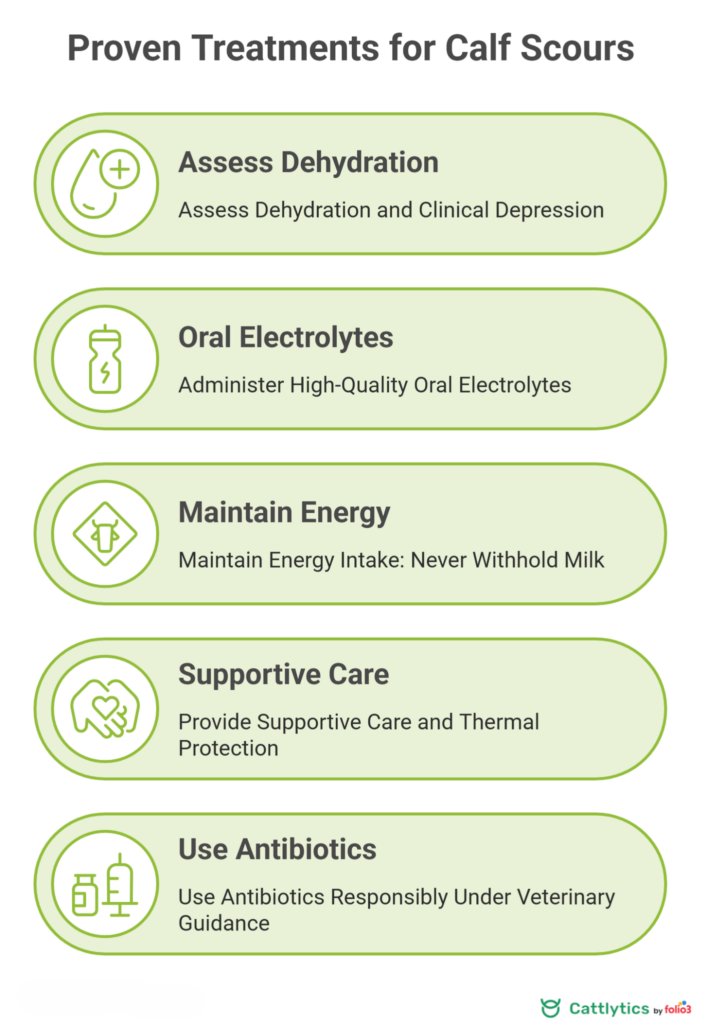
1. Assess Dehydration and Clinical Depression
Perform the skin-fold pinch test and check gum moisture. If the calf can stand and suckle, proceed with oral electrolyte feeding. If the calf is recumbent, comatose, or severely hypothermic, oral fluids will sit in the rumen and ferment. Call your veterinarian immediately for IV fluid and bicarbonate therapy.
2. Administer High-Quality Oral Electrolytes
Feed a scientifically formulated oral electrolyte solution containing sodium, glucose (for energy and sodium absorption), glycine, and alkalizing agents like bicarbonate or acetate to correct metabolic acidosis.
Critical Rule: Never mix electrolytes directly into whole milk or milk replacer. Mixing alters curd formation in the abomasum and actually worsens diarrhea. Always separate electrolyte feedings from milk by at least 2 hours.
3. Maintain Energy Intake: Never Withhold Milk
This is where many producers get it wrong. Do not starve a scouring calf. Withholding milk deprives the calf of essential energy and protein needed to regenerate damaged intestinal lining.
Keep the calf with its mother or continue feeding standard milk replacer meals. Interleave electrolyte feedings in between. For example: milk at 7 AM, electrolytes at 11 AM, milk at 3 PM, electrolytes at 7 PM. This keeps calories flowing while addressing dehydration.
4. Provide Supportive Care and Thermal Protection
Scouring calves lose body heat rapidly. Move the calf and dam to a clean, deeply bedded, draft-free area. Use straw bedding or heat lamps if necessary.
Consult your veterinarian about systemic anti-inflammatories (NSAIDs like meloxicam or flunixin meglumine) to reduce gut pain, lower fever, and encourage nursing. Pain management is an often-overlooked part of scours treatment that can significantly improve recovery rates.
5. Use Antibiotics Responsibly Under Veterinary Guidance
Here is the reality: roughly 95% of young calf scours cases are viral or protozoal in origin. Antibiotics do not kill viruses or Cryptosporidium. Pumping scouring calves with oral antibiotics without a confirmed bacterial diagnosis can actually destroy beneficial gut flora and worsen outcomes.
Use targeted, veterinary-prescribed systemic antibiotics only when there is fever, concurrent respiratory infection, or confirmed bacterial involvement such as E. coli or Salmonella. Following proper beef cattle vaccination protocols before calving season reduces the need for antibiotic intervention altogether.
Finding a Permanent Calf Scours Solution with Biosecurity and Herd Management
Treating individual calves is necessary, but it is not a long-term solution. The ranches with the lowest scours rates are the ones that invest in prevention systems before calving season begins.
Colostrum Management: The 2-Hour Window of Life
Calves are born with virtually no immune protection. They rely entirely on maternal antibodies absorbed from colostrum in their first hours of life.
The rule of thumb: calves must receive 10% of their body weight (roughly 3 to 4 quarts) of clean, high-quality colostrum within the first 2 hours of life. By 24 hours, gut closure is complete, and antibody absorption drops to near zero. Every hour of delay reduces passive immunity transfer.
Keep certified bovine colostrum replacer (not just “supplement”) on hand for weak calves, twins, or heifers with poor maternal instinct. This single step prevents more scours cases than any treatment protocol ever will.
Maternal Vaccination Protocols (Scours Vaccines)
Vaccinating pregnant cows and heifers 30 to 90 days prior to calving boosts specific antibodies against Rotavirus, Coronavirus, E. coli, and clostridium in their colostrum. When the calf nurses within that critical window, it receives targeted protection against the most common scours pathogens.
But here is the catch: maternal vaccination is completely useless if colostrum intake is delayed or inadequate. The vaccine is only as good as the delivery system, and the delivery system is timely, quality colostrum intake.
The Sandhills Calving System to Break the Pathogen Cycle
Traditional dry-lot calving pastures become lethal “pathogen sinks” as calving progresses. Older calves shed and multiply pathogens that vulnerable newborns then pick up from contaminated ground.
The Sandhills Calving System, developed by researchers, breaks this cycle with a simple rotation:
- Turn cows out into a clean Pasture 1 for calving.
- After 2 weeks, move all remaining pregnant cows to a clean Pasture 2. Leave cow-calf pairs behind in Pasture 1.
- Repeat every 7 to 14 days throughout calving season.
It segregates calves by age, preventing cross-contamination from older, asymptomatic carriers to defenseless newborns. For operations with enough pasture, it remains one of the most effective prevention tools available. Combining this with strategic pasture rotation an herd segmentation makes the system even stronger.
Conclusion: Protect Your Calf Crop and Partner with Our Ranch Experts
Calf scours is an inevitable challenge during calving season, but it does not have to decimate your bottom line. Success comes from shifting your approach: correct fluid therapy, responsible antibiotic use, timely colostrum delivery, and systematic biosecurity built around your specific operation.
Every ranch’s environment, pasture layout, and herd genetics are unique. Take the guesswork out of herd health by partnering with experts who understand your operation from the ground up. Book a personalized consultation with our AgTech team to design a customized prevention and herd management system that maximizes calf survival and weaning weights.
FAQs
How Long Does Calf Scours Typically Last?
Most cases of calf scours run their course in 3 to 7 days when treated promptly with oral electrolytes and continued milk feeding. Viral and protozoal cases like Crypto may take longer. If a calf shows no improvement after 48 hours of treatment, contact your veterinarian for further evaluation.
Can You Prevent Calf Scours Entirely?
You cannot eliminate every case, but you can reduce incidence dramatically. A combination of timely colostrum delivery, maternal vaccination, clean calving environments, and the Sandhills Calving System has been shown to virtually eliminate scours-related deaths in well-managed herds.
Is Calf Scours Contagious to Other Calves?
Yes. Infectious calf scours spreads rapidly through direct contact, contaminated bedding, water sources, and shared equipment. Isolating sick calves and their dams immediately is critical to preventing a herd-wide outbreak during calving season.
What Is the Best Electrolyte for Scouring Calves?
Look for an oral electrolyte solution that contains sodium, glucose, glycine, and an alkalizing agent like acetate or bicarbonate. Avoid products with high lactose content, and never mix electrolytes directly into milk. Stagger electrolyte and milk feedings at least 2 hours apart.
Should You Pull a Scouring Calf Off Its Mother?
Not unless the calf requires intensive care or IV fluids. Keeping the calf with its dam encourages nursing, maintains energy intake, and reduces handling stress. Only isolate the pair from the rest of the herd to prevent pathogen spread.
At What Age Are Calves Most Vulnerable to Scours?
Calves are most vulnerable during their first 21 days of life, with peak risk between days 5 and 14 when viral and protozoal pathogens are most active. Calves that received inadequate colostrum within the first few hours of birth face the highest risk of severe illness.