

Stress costs the U.S. livestock industry billions of dollars every year. For dairy operations alone, heat stress accounts for roughly $1.5 billion in annual losses, and that number only covers one type of stressor in one sector.
But this is not just about money. A stressed cow eats less, breeds poorly, gets sick faster, and produces less milk or gains less weight. The damage compounds quietly until it shows up in your bottom line or your vet bills.
The good news? Most stress-related losses are preventable when you know what to look for. This guide walks you through the causes of stress in cattle, how to recognize the physical and behavioral signs early, what makes heat stress especially dangerous, and practical strategies you can put to work today. Whether you run a dairy, a cow-calf operation, or a feedlot, understanding stress gives you a direct edge in protecting your herd and your revenue.
What Causes Stress in Cattle?
Cattle stress comes from many directions. Knowing the root triggers helps you fix problems before symptoms appear.
Stress is any factor that pushes a cow outside its normal state of balance. When that happens, the body releases cortisol and adrenaline to cope. A brief spike in these hormones is normal and even helpful. When stressors pile up or persist, the response becomes chronic, and that is when immunity breaks down, reproduction suffers, and performance drops.
Environmental and Physical Stressors
The environment your cattle live in is often the first place stress starts. Common physical stressors include:
- Temperature extremes, both heat and cold, especially when combined with high humidity or wind chill
- Poor ventilation in barns that traps ammonia and moisture
- Excessive noise from machinery, handling equipment, or frequent human traffic
- Handling, restraint, and transportation, particularly when done roughly or during peak heat
- Unfamiliar environments, objects, or sudden changes in routine
One stressor that often flies under the radar is endophyte-infected fescue. Cattle grazing on toxic fescue pastures experience vasoconstriction, where blood vessels narrow and the animal loses its ability to dissipate heat effectively. This makes an already hot day far more dangerous.
Nutritional and Social Stressors
Feed and social dynamics play a bigger role in cattle stress than many producers realize.
- Inconsistent feeding schedules or sudden ration changes
- Poor-quality forage or lack of access to clean, cool water
- Mineral deficiencies, particularly magnesium and calcium, can trigger metabolic disorders
- Overcrowding disrupts the natural herd hierarchy and increases competition at the bunk and water trough
- Abrupt introductions of new animals into established groups
Heat-stressed cattle also develop a dangerous feeding pattern called slug feeding. When it is too hot to graze during the day, they compensate by eating large amounts at night. It overloads the rumen with fermentable feed at once, dropping rumen pH and increasing the risk of acidosis, a condition that can lead to bloat, laminitis, or even death.
How to Recognize Signs of Stress in Cattle
Catching stress early is the difference between a quick fix and a costly problem. Here is what to watch for in your herd.
Physical Symptoms to Watch For
Physical signs of stress in cattle are usually the first things you will notice, especially during routine checks or when moving animals through a chute.
- Rapid or labored breathing, including open-mouth panting
- Excessive drooling or slobbering
- Trembling, poor posture, or an arched back
- Noticeable weight loss over a short period
- Deteriorating hair coat or poor grooming
- Frequent urination and elevated heart rate
When you see chronic panting and slobbering specifically, that is a strong signal that heat stress is at play. These signs often show up hours before more severe symptoms develop, so they give you a window to act.
Behavioral Red Flags
Behavioral changes can be harder to spot, but they are just as telling as physical symptoms. A stressed cow does not always look sick. Sometimes she just acts differently.
- Increased aggression or irritability, especially in normally docile animals
- Restlessness, pacing, or standing when the rest of the herd is lying down
- Frequent vocalization or withdrawal from herd mates
- Reduced rumination, which you may notice as less cud-chewing during rest periods
- Dominant cows bullying others at feed bunks or water troughs
Usually, cattle exhibit two distinct coping styles under stress. Some become proactive, showing agitation and restlessness. Others become reactive, going quiet and withdrawing from the group. Both responses matter, so do not assume a quiet cow is a comfortable one.
Calves vs. Adult Cattle
Calves show stress differently from mature cows. Instead of behavioral shifts, you are more likely to see scours (diarrhea), poor weight gain, reduced suckling, lethargy, or respiratory issues. Younger animals are also more sensitive to environmental changes and handling, which makes early socialization and consistent care critical. If you are managing young stock, our guide on how to manage the health of newborn calves covers the essentials.
Heat Stress in Cattle: Causes, Signs, and Stages
Heat stress is the most common and costly form of cattle stress. Understanding how it develops helps you intervene before it turns dangerous.
What Triggers Heat Stress?
Cattle begin to struggle with heat at temperatures as low as 22°C (about 72°F), especially when humidity is high. Unlike humans, cows do not sweat efficiently. Their rumen generates significant internal heat during digestion, which makes them more vulnerable than you might expect. Cattle reduce feed intake by 3 to 5% for every additional degree of temperature above their comfort zone.
The Temperature Humidity Index (THI) is the standard metric for predicting risk. At 80°F, cattle are at moderate risk. At 90°F, they are in the high-risk category. But temperature alone does not tell the full story. Factors that make individual animals more susceptible include:
- Dark-colored hides that absorb more solar radiation
- Heavy body weight or high levels of body condition
- Current illness or recent recovery
- High-producing dairy cows with greater metabolic heat output
The 6 Stages of Heat Stress
The USDA Agricultural Research Service defines six stages of heat stress based on observable signs. This table gives you a quick reference to assess where your cattle stand:
| Stage | Breathing Rate | Observable Signs |
| 1 | Normal (<90/min) | Elevated breathing, restlessness, more time standing |
| 2 | Alert (90-110/min) | Slight drooling, most cattle standing and restless |
| 3 | Danger (110-130/min) | Excessive drooling or foaming, animals may group together |
| 4 | Danger (110-130/min) | Open-mouth breathing, drooling, cattle bunching near water |
| 5 | Emergency (>130/min) | Tongue protruding, flanks pushing, cattle standing but distressed |
| 6 | Emergency (>130/min) | Labored breathing, head down, isolation from herd; life-threatening |
If you see cattle at Stage 3 or above, take immediate action. Early intervention during the evening when cattle are trying to cool down from the day is the key to preventing losses.
Effects of Heat Stress on Dairy Cattle vs. Beef Cattle
Heat stress does not hit all cattle the same way. Dairy and beef operations face different risks and need different responses.
Impacts on Dairy Herds
Dairy cows are especially vulnerable because high milk production generates significant metabolic heat. When a dairy cow is heat-stressed, her body redirects energy from production to thermoregulation.
Beyond milk volume, heat stress leads to:
- Lower milk fat and protein content
- Reduced conception rates and early embryonic death
- Higher incidence of mastitis, ketosis, and displaced abomasum
If you manage a dairy herd, tracking your cattle breeding cycle closely during summer months can help you spot reproductive declines tied to heat stress before they compound.
Impacts on Beef and Feedlot Cattle
In beef operations, the effects of stress on cattle show up primarily in performance metrics:
- Reduced feed intake that lowers Average Daily Gain (ADG)
- Weakened immune systems increase susceptibility to bovine respiratory disease (BRD)
- Diminished carcass quality at harvest
- Stressed cows produce calves that are born small or premature
Feedlot cattle with dark hides and heavy finish weights are at the highest risk. When you combine heat with the stress of a new environment and commingling, the results can be devastating. Improving feed efficiency in your cattle production becomes even more critical during these high-risk periods.
How to Prevent and Reduce Stress in Cattle
Most stress-related losses are preventable. These are practical strategies that work across dairy, beef, and cow-calf operations.
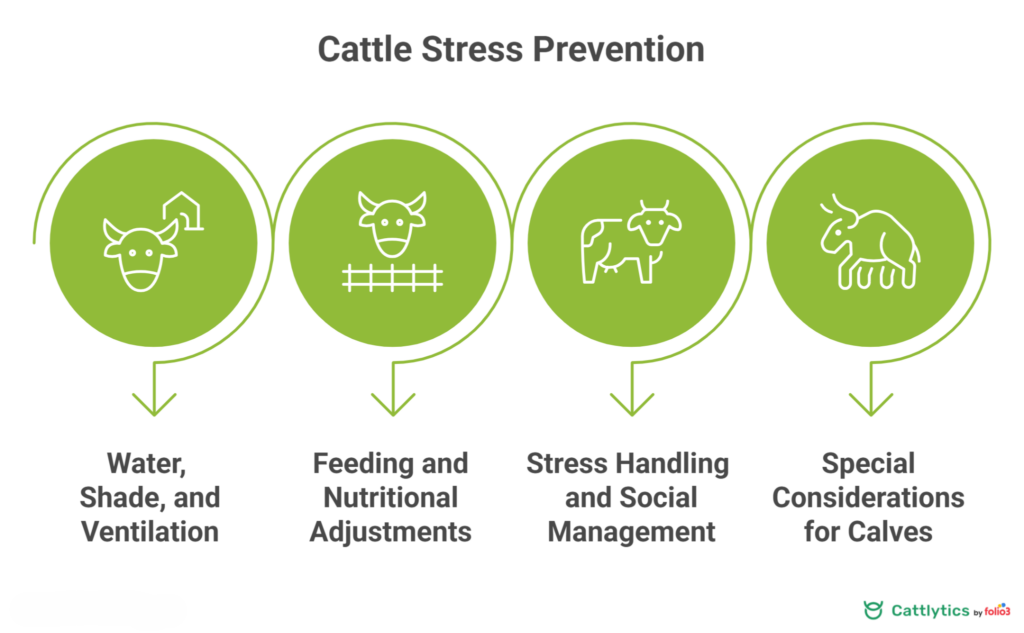
Water, Shade, and Ventilation
Water is the single most important tool for preventing heat stress in cattle. Spread out multiple clean water sources to prevent crowding and competition. Cattle prefer water between 40 and 65°F, and water intake drops significantly when water temperatures exceed 80°F.
For shade, use structures that are at least seven feet tall to allow airflow underneath. Trees, tarps, or open-sided shelters all work. Lowering the shade structure traps heat and defeats the purpose.
In enclosed barns, use fans to push air through the building or open the sides. Avoid using sprinklers in barns without proper ventilation. The added humidity without air movement makes the situation worse, not better. Keep buildings filled to no more than 80% capacity to give each animal enough space to cool down.
Feeding and Nutritional Adjustments
Shift your feeding schedule so the largest meal happens in the evening. Digestion produces metabolic heat, and by moving the heaviest feeding to cooler hours, you help your cattle avoid a double hit of environmental heat plus internal heat from fermentation.
During extreme heat, reduce overall feed volume slightly to lower metabolic heat load. Make sure rations are balanced and consistent. Sudden changes in feed, or deficiencies in minerals like magnesium and calcium, can trigger metabolic disorders that compound the effects of stress. If you are exploring supplementation options, our overview of liquid feed for cattle covers how liquid supplements can support rumen function during challenging conditions.
Low-Stress Handling and Social Management
Handle cattle early in the morning when temperatures are lowest. Move them slowly, keep noise down, and avoid rushing them through chutes. If working cattle during summer, reduce the time they spend in holding pens and provide shade in those areas.
When introducing new animals, do it gradually. Sudden changes to group structure create social stress that disrupts feeding, resting, and the herd hierarchy. Our article on cattle grouping strategies explains how to structure groups for less conflict and better performance.
Small additions like brushes or scratchers in pens also help. They reduce boredom, improve coat condition, and give cattle a low-effort way to self-soothe.
Special Considerations for Calves
Calves are more vulnerable to stress than adult cattle, especially around weaning. Provide accessible shelter that protects them from heat, cold, and storms. When it is time to wean, reduce stress by using fence-line weaning, timing it during seasons with stable temperatures, and making sure vaccination programs for clostridial diseases, pasteurellosis, and parasites are up to date.
Research suggests that weaning calves at either under four months or around seven months old tends to produce less stress response. Avoiding weaning during temperature extremes also helps protect immune function when calves need it most. You can find more on this in our guide to Clostridium prevention in calves.
Monitoring Cattle Stress: Tools That Catch Problems Early
Visual observation is still important, but technology is giving producers a significant head start on catching stress before it costs them.
- Wearable devices like smart collars and ear tags now track rumination minutes, activity levels, and body temperature around the clock.
- Thermal imaging cameras can scan groups of cattle and identify animals with elevated body temperatures without requiring any handling.
- Integrated herd management platforms pull data from these sensors and use predictive algorithms to spot patterns across your herd, giving you early warnings that allow you to act proactively.
- Even simple changes, like a drop in brush usage or decreased rest time, can signal emerging health issues when tracked digitally.
If you are looking to bring data into your herd decisions, tools like Cattlytics can help you centralize animal records, track health events, and make management decisions backed by real numbers.
Conclusion
Recognizing the signs of stress in cattle early gives you the power to act before small problems become expensive ones. Every dollar spent on prevention, whether it is better shade, cleaner water, adjusted feeding times, or gentle handling, pays back in healthier animals, stronger reproduction, and higher yields.Start by observing your herd more closely. Use the heat stress stages table as a quick reference during the summer months. Consider adding monitoring technology to catch what your eyes might miss, and when symptoms persist, bring in your vet. Your herd depends on you to read the signals, and now you have the playbook to do it. For a centralized way to track health events and performance across your operation, consult with our experts to explore what Cattlytics can do for your herd.
FAQs
What Are The First Signs Of Stress In Cattle?
The earliest signs include elevated breathing rate, restlessness, reduced feed intake, and standing when the rest of the herd is lying down. In calves, look for scours, poor suckling, and lethargy.
At What Temperature Do Cattle Experience Heat Stress?
Cattle can begin experiencing heat stress at temperatures as low as 72°F (22°C), especially when humidity is high. Risk increases significantly above 80°F and becomes severe above 90°F. Use the Temperature Humidity Index (THI) to assess real-world risk more accurately than temperature alone.
How Does Stress Affect Milk Production?
Stressed dairy cows redirect energy from milk production to coping mechanisms like thermoregulation. Research shows that for every unit increase in THI, energy-corrected milk yield drops by approximately 3.25% in mid-lactation cows. Milk fat and protein content also decline.
When Should I Call A Vet For A Stressed Cow?
Contact your veterinarian when physical or behavioral symptoms persist despite management changes, or when you see signs of secondary conditions like ketosis, mastitis, respiratory illness, or displaced abomasum. These stress-related diseases require professional diagnosis and treatment.