
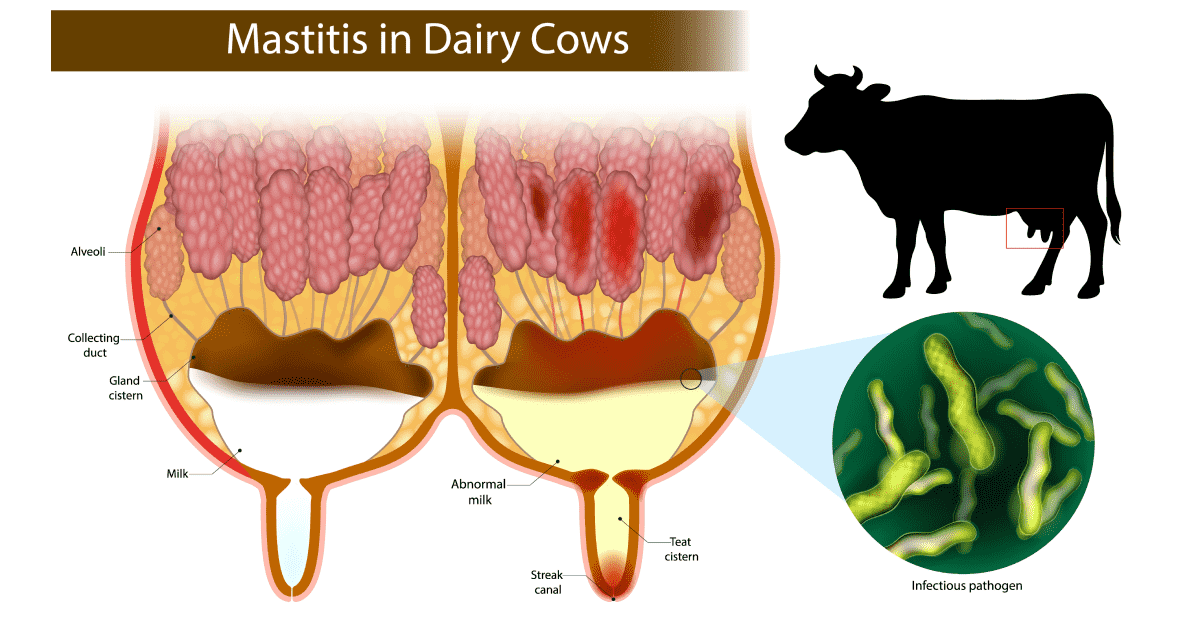

Mastitis does not just affect one quarter of one cow. Poorly managed cases ripple across milk yield, milk quality, treatment costs, discarded milk, labor, and future cow performance.
Effective dairy cow mastitis treatment depends on early detection, accurate diagnosis, the right veterinary protocols, and complete records. The quality of your treatment decisions is only as good as the information you have about each animal.
| Dairy cow mastitis treatment aims to control infection, protect cow welfare, restore milk quality, and reduce future production losses. The right response depends on mastitis severity, pathogen information, cow history, stage of lactation, previous cases, and the treatment protocol developed with your herd veterinarian. |
What Does Effective Dairy Cow Mastitis Treatment Need to Accomplish
Successful treatment should resolve the active infection, reduce pain, return the cow to normal production, and prevent the case from becoming chronic or spreading. Every decision you make should account for the immediate problem and the cow’s future in the herd.
Why Mastitis Is More Than an Udder Infection
Mastitis is inflammation of the mammary tissue, usually driven by bacterial infection, and it ranks among the most common cow diseases dairy producers deal with. But its damage goes well beyond the udder. It affects cow comfort, welfare, and behavior. It changes milk composition and lowers yield. If the infection persists, the cow can develop chronic damage that reduces production for the rest of her lactation or even permanently. Depending on the pathogen involved, there is also the risk of spreading infection to other cows during milking.
Clinical, Subclinical, and Chronic Mastitis Require Different Decisions
Clinical mastitis produces visible abnormalities you can spot in the parlor, such as clots, flakes, or a swollen quarter. Subclinical mastitis shows no visible signs but quietly drives up somatic cell count (SCC) and reduces milk production behind the scenes. Chronic mastitis involves persistent or recurring infection in the same cow or quarter.
The key point here is that treating every case the same way leads to poor outcomes, and it is one of the common herd health management mistakes that costs producers money. A mild clinical case in a first-lactation cow needs a completely different response than a chronic, high-SCC cow in her fourth lactation. Matching your response to the type of mastitis is where better treatment decisions start.
How Do Dairy Farmers Detect Mastitis Early Enough to Improve Treatment Decisions
Catching mastitis early gives you more options. Waiting too long costs you milk, money, and sometimes the cow.
Recognize Clinical Signs Before Production Losses Grow
Watch for abnormal milk (flakes, clots, watery appearance), udder heat, swelling, or pain response during milking. Reduced yield, appetite changes, and unusual behavior can all signal a clinical case. Severe systemic signs like fever, dehydration, or going off feed require prompt veterinary attention.
Compare the Main Mastitis Testing Methods
Here is how the most common testing approaches compare:
| Test | What It Detects | Best Use | Speed | Main Limitation |
| Clinical examination | Visible abnormalities | First-line detection in parlor | Immediate | Misses subclinical cases |
| California Mastitis Test (CMT) | Elevated SCC at cow or quarter level | Quick cowside screening | Minutes | Does not identify the pathogen |
| Individual cow SCC | Inflammation level per cow | Monthly monitoring through DHIA | 1-2 weeks (lab) | Does not identify the pathogen |
| Bacterial culture | Specific pathogen identification | Treatment and herd health decisions | 24-48 hours | Requires lab access |
| On-farm culture | Pathogen identification without a lab | Faster treatment decisions on farm | 18-24 hours | Limited pathogen range |
| PCR testing | Pathogen DNA detection | Rapid, sensitive identification | Hours | Higher cost per sample |
Choosing the right test depends on your herd’s risk level and what you need the result to do. Bulk tank SCC, bulk tank culture, individual culture, and PCR are all useful screening tools, but each serves a different purpose.
Testing Should Inform Treatment Instead of Simply Confirming Mastitis
There is an important three-step distinction that can change how your team handles every case:
- Detection identifies that inflammation is present.
- Diagnosis determines the likely cause.
- Treatment decision uses both of those to decide what makes sense for that specific cow.
Too many farms stop at detection. Moving through all three steps is what separates reactive treatment from smart mastitis control.
How Is Mastitis in Dairy Cows Treated on Modern Dairy Farms
Treatment protocols are shifting toward more targeted, cow-specific decisions. A one-size-fits-all approach does not work.
There Is No Single Best Treatment for Every Mastitis Case
Your treatment decision should depend on the severity of the case, pathogen identification (if available), the cow’s history, her SCC trends, previous mastitis episodes, stage of lactation, number of affected quarters, expected likelihood of recovery, and your veterinarian-approved herd protocol.
Use a Mastitis Treatment Decision Framework
Rather than relying on memory or individual judgment, build a structured approach your whole team can follow. A treatment decision matrix might look like this:
| Case Type | Severity | Pathogen Info | Typical Action | Follow-Up |
| Mild clinical | Low | Pending or Gram-negative | Supportive care, monitor | Recheck in 24-48 hrs |
| Moderate clinical | Medium | Culture-guided if available | IMM therapy per vet protocol | Recheck, track SCC |
| Severe systemic | High | Begin treatment immediately | IV fluids, anti-inflammatories, vet contact | Daily monitoring |
| Subclinical high SCC | None visible | Culture recommended | Decision based on pathogen and history | Track SCC over 2-3 tests |
| Recurrent case | Variable | Review previous culture results | Evaluate treatment response history | Consider chronic status |
| Chronic case | Ongoing | Known pathogen | Assess economic viability | Cull decision may apply |
Matching each case to a framework like this reduces guesswork and keeps treatment consistent across your team.
When Should Antibiotics Be Considered for Mastitis
Antibiotics should not be the automatic response to every case. Culture-guided treatment helps you use the right drug for the right pathogen instead of treating unquestioningly. Severity changes urgency. In many nonsevere cases, waiting for diagnostic results before starting antibiotic therapy can reduce unnecessary use without hurting outcomes, provided your veterinary protocol supports it. All antibiotic decisions should involve veterinary oversight.
Measure Treatment Success Beyond Visible Recovery
Milk looking normal again does not mean the infection is gone. Track clinical recovery, SCC trends over the following weeks, repeat cases, milk production recovery, and whether the cow eventually gets classified as chronic. Record every outcome so your team can spot patterns on the next case.
How Should Clinical, Subclinical, and Recurring Mastitis Be Managed Differently
Different types of mastitis need different management playbooks. What works for a mild clinical case will not work for a chronic cow.
Clinical Mastitis Requires Severity-Based Response
Mild clinical cases may respond to supportive care alone, depending on pathogen and protocol. Moderate cases often call for intramammary therapy under your veterinarian’s guidance. Severe systemic disease requires immediate veterinary attention. A clear, written mastitis SOP available to every employee in the parlor and treatment area is one of the most effective steps you can take.
Subclinical and Chronic Cases Require More History
Subclinical and chronic mastitis decisions cannot be made from a single test result. You need SCC history, previous culture results, past treatment responses, lactation stage, parity, affected quarters, and historical production data.
That’s where cow-level longitudinal data becomes critical. Without it, you are guessing. With it, you can make informed decisions about treatment, continued milking, or culling.
What Is the Impact of Mastitis on Milk Production and Dairy Profitability
The financial damage is bigger than most farms realize. Understanding it helps justify better detection, records, and prevention.
Mastitis Can Reduce Milk Yield and Milk Quality
Infected cows produce less milk. Individual cow yield drops, SCC rises, milk composition changes, and you lose additional milk during treatment discard periods. Chronic udder damage can reduce production for the remainder of the lactation. Research shows that herds with bulk tank SCC above 500,000 cells/mL can experience production losses of 6% or more compared to herds at 200,000 cells/mL.
Calculate the Full Economic Impact of Mastitis
Mastitis costs extend far beyond the cost of medicine. Here is what a complete cost picture looks like:
| Cost Category | What It Includes |
| Lost milk production | Reduced yield from infected and recovering cows |
| Discarded milk | Milk withheld during treatment and withdrawal |
| Diagnostics | Culture, SCC testing, CMT supplies |
| Medicines | Intramammary tubes, anti-inflammatories, supportive therapy |
| Veterinary costs | Consultations, severe case management |
| Labor | Extra time for treatment, monitoring, record-keeping |
| Premature culling | Removing cows that would otherwise remain productive |
| Replacement costs | Purchasing or raising replacement animals |
| Reduced quality premiums | Lower milk price due to elevated SCC |
One economic model estimated the average cost of a clinical mastitis case occurring during the first 30 days in milk at approximately $444, with indirect costs like future milk loss and premature culling making up 71% of the total.
For the record, annual mastitis-related losses in the U.S. dairy industry have been estimated at roughly $2 billion.
Better Treatment Decisions Protect More Than the Current Lactation
Recurring mastitis does not just affect today’s milk check. It shortens the cow’s productive life, increases culling risk, and lowers her long-term value to the herd. Tracking these costs against dairy herd benchmarks helps you see whether a case is a one-off or part of a bigger pattern worth addressing.
How Can Dairy Farms Reduce Recurring Mastitis Across the Herd
Prevention and treatment are two sides of the same coin. You cannot fix a recurring problem without understanding where infections come from.
Match Mastitis Control to the Source of Infection
Contagious and environmental pathogens require different control strategies:
Contagious mastitis (Staphylococcus aureus, Streptococcus agalactiae, Mycoplasma) spreads cow to cow during milking. Control focuses on milking hygiene, teat disinfection, milking order, equipment function, and strategic culling of chronic carriers.
Environmental mastitis (E. coli, Klebsiella, environmental streptococci) comes from the cow’s surroundings. Control focuses on clean, dry bedding, cow cleanliness, and reducing exposure between milkings.
Understanding which pathogens your herd is dealing with shapes every decision from milking practices to cattle grouping strategies.
Build Prevention Into Daily Dairy Management
Prevention is built into what your team does every day. Here is a practical mastitis control checklist:
- Clean, dry bedding maintained consistently
- Proper pre-milking teat preparation
- Post-milking teat disinfection
- Milking equipment tested and functioning correctly
- Cow cleanliness monitored regularly
- Fresh cow monitoring protocols in place
- Dry cow therapy and management programs
- Regular SCC monitoring at cow and herd level
- Prompt milk sampling when cases occur
- Employee training on detection and treatment SOPs
- Consistent use of written protocols across all shifts
Identify Repeat Cases Before They Become a Herd Cost Problem
Consistent cattle tracking records make it easy to flag cows with multiple clinical cases, persistently elevated SCC, repeated treatments that have not resolved the infection, poor production recovery, or known chronic pathogens. Catching these patterns early lets you act before costs compound.
Why Mastitis Treatment Records and Withdrawal Tracking Matter
Incomplete records create compliance risk, treatment errors, and missed patterns. This is one of the biggest gaps in how most farms manage mastitis.
What Should a Mastitis Treatment Record Include
Every mastitis treatment event should be documented with:
- Animal identification (visual ID, EID, or both)
- Date of detection and treatment
- Diagnosis and affected quarter
- Severity classification
- Test result (if available)
- Medication name, dose, and route of administration
- Person administering treatment
- Veterinarian protocol reference
- Follow-up date
- Withdrawal period and withdrawal end date
- Treatment outcome
The FDA encourages food animal producers to maintain treatment records that cover animal identity, drug administered, administration date, dose, who administered it, withdrawal period, and withdrawal completion date (FDA).
Accurate Withdrawal Tracking Protects Milk Safety
Milk from treated cows must be withheld from the saleable supply until the withdrawal period is complete. Different treatments carry different withdrawal timelines, and the FDA explains that these periods allow drug residues to decline to permitted levels before milk enters the food supply.
When withdrawal tracking relies on paper notes or disconnected spreadsheets, the risk of treated milk entering the bulk tank increases. Every person who handles treated cows needs to see the same, current status for every animal.
How Better Herd Records Support Mastitis Treatment and Milk Production Decisions
Better records lead to better decisions. And better decisions lead to healthier cows and more milk in the tank.
Connect Mastitis Events With the Complete Cow History
Mastitis cases, SCC records, culture results, treatment history, medication logs, milk production data, lactation stage, veterinary notes, and withdrawal status should all live in the same place, connected to the same animal. When these sit in separate systems, you lose the context that makes each piece useful.
Cattlytics dairy management software organizes dairy health records, diagnoses, treatments, veterinary information, and milk production around individual animal histories, so your team always works from one complete picture.
Use Herd Data to Move From Individual Cases to Mastitis Control
Managing mastitis at the herd level requires more than treating one cow at a time. With connected records in Cattlytics, your dairy team can review complete treatment histories, track recurring health events, compare health data with milk production trends, keep every team member on the same page, and reduce missed follow-ups with smarter monitoring alerts.
Cattlytics dairy integrations connect health data, SCC measurements, production events, and treatment records to the appropriate animal profile, giving you the visibility that drives better mastitis decisions.
Conclusion
Good mastitis management depends on good treatment decisions. And good treatment decisions depend on accurate, accessible herd information. Every step, from detection to treatment to withdrawal compliance, works better when your team has the right data at the right time.
Book your consultation with our experts to discover how Cattlytics connects cow health, treatment history, and production data to strengthen your mastitis control.
FAQs
How Long Does It Take for a Dairy Cow to Recover From Mastitis?
Recovery time depends on severity, pathogen, and how quickly treatment began. Mild clinical cases may resolve in 3 to 5 days. Moderate and severe cases can take one to two weeks or longer, and some cows never fully return to pre-infection production levels.
Can Subclinical Mastitis Go Away Without Treatment?
Some subclinical infections resolve on their own, especially with strong cow immunity and good management. However, many subclinical cases persist and cause ongoing production loss. Regular SCC monitoring is the best way to identify cows that need intervention.
Does Mastitis Affect Milk Quality for the Entire Herd?
Yes. Even a few high-SCC cows can raise your bulk tank SCC, which affects milk quality premiums and can trigger penalties. Managing individual cow SCC is essential to protecting herd-level milk quality.
How Often Should Dairy Farms Culture Milk for Mastitis Pathogens?
Culture frequency depends on your herd’s mastitis rate and goals. Many farms culture all clinical cases. Others add periodic bulk tank cultures and fresh cow screening. Work with your veterinarian to build a sampling protocol that fits your operation.
What Role Does Dry Cow Therapy Play in Mastitis Prevention?
Dry cow therapy treats existing subclinical infections and helps prevent new ones from establishing during the dry period. It remains one of the most effective tools for reducing mastitis prevalence at the start of the next lactation.
Is There a Connection Between Parlor Hygiene and Recurring Mastitis?
Absolutely. Inconsistent pre-dip application, improperly functioning liners, wet udders at attachment, and skipped post-dip all increase contagious and environmental mastitis risk. Consistent parlor hygiene is one of the most cost-effective prevention steps any dairy can take.