
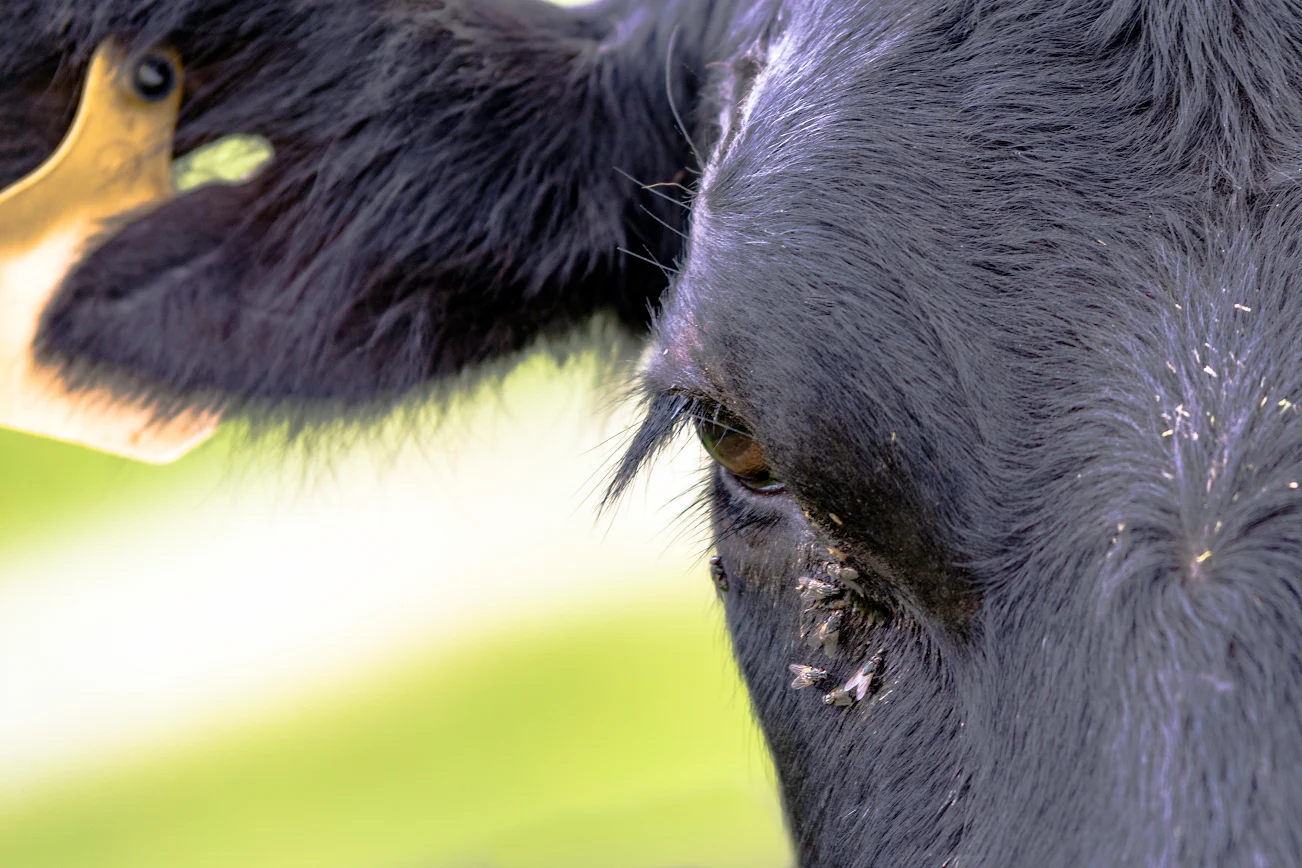

Pink eye in cattle is one of the most common and costly bacterial infections in beef and dairy operations across the United States. According to the USDA Agricultural Research Service, the disease costs the U.S. cattle industry an estimated $150 million annually in treatment costs, reduced weight gains, and lowered milk production. It can affect up to 80% of a herd if left unchecked, and calves are especially vulnerable, sometimes losing up to 10% of body weight during an active infection.
If you raise cattle, you have either dealt with pink eye or you will. The challenge is that it moves fast, spreads easily, and can go from a watery eye to permanent blindness in a matter of days if you miss the early signs.
This guide covers everything you need to know about pink eye in cattle: what causes it, how cows get it, the four stages you need to recognize, how to treat pink eye in cows at each stage, and what you can do to prevent it from tearing through your herd.
What Is Pink Eye in Cattle?
Pink eye in cattle, clinically known as infectious bovine keratoconjunctivitis (IBK), is a bacterial infection of the eye. It starts with inflammation of the cornea and conjunctiva, and without treatment, it can progress to ulceration and vision loss.
The condition is painful. Affected animals often lose interest in grazing, which directly impacts weight gain. In calves, this can show up at weigh-in time and cut into your profitability. In cows, it can affect milk output and reproductive performance.
Pink eye cattle cases peak during summer months when flies are most active and UV exposure is highest, but outbreaks can happen any time conditions favor transmission.
What Causes Pink Eye in Cattle?
The primary cause of pink eye in cattle is the bacterium Moraxella bovis (M. bovis). This organism has tiny hair-like structures called pili on its surface. These pili help it attach directly to the cornea, which allows it to bypass the eye’s normal defenses and colonize the tissue. Once attached, it produces a toxin that causes cell damage and triggers the inflammatory response you see as redness and cloudiness.
What causes pink eye in cattle beyond M. bovis? A few secondary pathogens can complicate or worsen infection:
Moraxella bovoculi – a closely related organism that can act alongside M. bovis
Mycoplasma bovis – often present in respiratory infections, can contribute to eye disease
Infectious bovine rhinotracheitis (IBR) virus – can damage the eye’s surface and open the door for bacterial invasion
Chlamydia species – less common but can increase severity
Beyond the bacteria themselves, several environmental and management factors raise the risk of pink eye cattle infections:
| Risk Factor | Why It Matters |
| Face flies | Feed on ocular secretions and carry M. bovis directly from animal to animal |
| UV light exposure | Damages corneal surface, making it easier for bacteria to attach |
| Tall grass and seed heads | Physically irritate the eye and create entry points for pathogens |
| Dust and pollen | Cause eye irritation that promotes tearing and bacterial spread |
| Overcrowding | Increases animal-to-animal contact and fly density |
| Nutritional deficiency | Weakens immune response, especially vitamin A deficiency |
| Stress | Suppresses immunity in calves during weaning or transport |
How Do Cows Get Pink Eye?
Understanding how do cows get pink eye helps you build a real prevention plan rather than just reacting after animals are already infected.
The main route of transmission is face flies. These flies feed on the eye secretions of infected animals, pick up M. bovis, and then deposit it when they move to a healthy animal. A single fly can travel significant distances, which is why you can see pink eye in cattle spread across a pasture rapidly even when animals aren’t in direct contact.
Direct contact is another major route. When cattle crowd together at water sources, feed bunks, or in handling facilities, infected animals can pass the bacteria through direct eye-to-eye or nose-to-eye contact. Nasal secretions can also carry M. bovis, so even a sick animal rubbing its nose on a fence post creates a contaminated surface that others touch.
Carrier animals make pink eye especially difficult to control. An animal can carry M. bovis in its eye or nasal passages for up to a year without showing any symptoms. These silent carriers continuously seed the environment and infect susceptible herd mates. This is one reason why pink eye cattle cases often seem to come out of nowhere, even in herds where no obvious sick animals were present.
Young calves, newly weaned animals, and cattle with white or light-colored faces are more susceptible. The lack of facial pigmentation around the eye means less protection from UV radiation, which is a known trigger for corneal damage and infection.
If you want to track which animals in your herd have a history of eye infections, maintaining accurate health records per animal makes pattern recognition much easier. A tool like cattle health management software allows you to log treatments, monitor repeat cases, and flag animals that may be acting as chronic carriers.
The 4 Stages of Pink Eye in Cattle
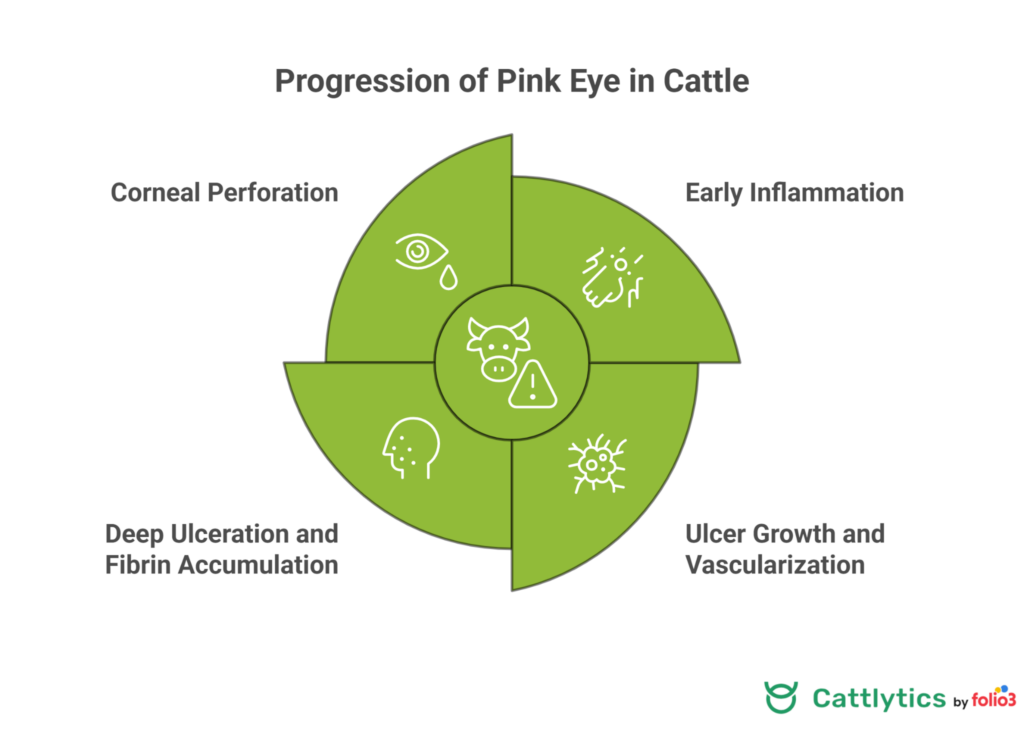
Knowing the stages of pink eye in cattle is critical. The difference between stage one and stage four is the difference between a quick antibiotic treatment and a potential enucleation (surgical eye removal). Early identification is everything.
Stage 1: Early Inflammation
This is where pink eye in cattle begins. The eye starts producing excess fluid, and you will notice watery discharge running from one or both eyes. The animal becomes sensitive to light (photophobia) and will often seek shade, blink more frequently, and appear uncomfortable.
On close inspection, the eye looks red and irritated. You may notice a small white dot in the center of the cornea. This is the beginning of a corneal ulcer, and it is the most important early warning sign. The eye may also look slightly hazy or have a faint cloudiness beginning around the ulcer.
At this stage, pink eye in cattle is highly treatable. An antibiotic injection at stage one typically resolves the infection with minimal permanent damage.
Stage 2: Ulcer Growth and Vascularization
In stage two, the ulcer you spotted in stage one has grown and now covers a wider area of the cornea. The cloudiness of the eye increases as the body responds to the tissue damage. Blood vessels begin growing across the cornea in an attempt to supply healing resources. This gives the eye a distinctly pink or red appearance, which is where the name pink eye in cows comes from.
The animal is now dealing with real pain. You may notice it eating less, lagging behind the herd, or losing condition faster than expected. For calves, every day at stage two translates into weight loss that shows up at sale time.
Treatment is still effective at stage two, but you will likely need a more targeted antibiotic protocol. Work with your vet on the right injectable option for your situation.
Stage 3: Deep Ulceration and Fibrin Accumulation
Stage three is where pink eye cattle infections become serious. The ulcer has now spread across most of the cornea. The interior of the eye fills with a pus-like material called fibrin, and the eye may appear yellow or greenish rather than the pink or red seen in stage two.
Vision is severely compromised at this point. The animal may be effectively blind in the affected eye. The risk of permanent scarring is high, and even if the infection resolves, a degree of visual impairment often remains.
Treatment at stage three typically requires a subconjunctival injection (an injection directly beneath the membrane covering the eyeball) in addition to systemic antibiotics. Your veterinarian may also recommend an eye patch to reduce UV exposure and fly irritation while the cornea attempts to heal.
Stage 4: Corneal Perforation
Stage four is the most severe form of pink eye in cattle. The ulcer has now penetrated completely through the cornea, and the iris (the colored part of the eye) protrudes through the opening. The eye cannot heal from this stage through conventional treatment alone.
In many stage four cases, veterinarians recommend surgical removal of the eye (enucleation) to prevent the infection from spreading into the skull and causing further complications. An animal that loses an eye can still be productive, but its sale value and long-term performance will be affected.
After stage four, even if the animal recovers, adhesions form between the iris and cornea. The scarring is permanent and the eye will never return to normal function.
Getting familiar with the signs at each stage of pink eye in cattle can mean the difference between a $10 antibiotic injection and a $500 surgical procedure, or worse, losing a productive animal entirely.
How to Treat Pink Eye in Cows
When you spot pink eye in cattle, early and accurate treatment is key. The right approach depends on the stage and how many animals are affected.
Antibiotic Injections
Injectable antibiotics are the most effective treatment for pink eye in cattle, especially at stages one and two. Your vet will typically recommend one of the following options based on your specific situation:
• Oxytetracycline – a long-acting option that can be given intramuscularly or subcutaneously
• Tulathromycin – a single injection option with a long residual effect
• Florfenicol – effective against a broad range of pathogens including those that may contribute to eye disease
• Ceftiofur – another injectable option sometimes used in dairy settings with withdrawal considerations
Always work with a licensed veterinarian for any injectable antibiotic treatment. Withdrawal times vary by product and class of animal, and using the wrong dose or route can reduce effectiveness or create drug resistance issues.
Subconjunctival Injections
For stage two or three infections, your vet may recommend injecting antibiotic directly under the conjunctiva. This delivers a high concentration of the drug right to the site of infection and can be used alongside systemic treatment.
Eye Patches and Topical Care
Eye patches are a practical addition to any pink eye cattle treatment plan. They block UV light, reduce fly access to the affected eye, and protect the cornea from further irritation. Topical sprays formulated for eye care can also support healing and keep the area clean during recovery.
If you are using topical treatment as a standalone approach, note that it works best at stage one and generally requires multiple applications per day. For anything beyond early stage infection, topical treatment alone is rarely sufficient.
Isolation and Monitoring
Once you identify pink eye in cattle, move affected animals away from the rest of the herd when practical. This reduces the chance of flies spreading the infection to healthy animals. Monitor isolated animals closely and recheck eyes every 24 to 48 hours during treatment.
Logging treatment dates, antibiotic used, and response to treatment per animal is important for both herd health management and regulatory compliance. If you have multiple animals affected at once, keeping detailed records helps you identify which treatment protocol is working and which animals need follow-up. Tracking this in a cattle management platform gives you a searchable health history for every animal rather than relying on paper logs or memory.
Pink Eye Prevention: Building a Year-Round Strategy
Prevention is cheaper than treatment. A targeted prevention program reduces both the frequency of outbreaks and the cost per animal when cases do occur.
Fly Control Is Non-Negotiable
Face flies are the single biggest driver of pink eye transmission in cattle herds. According to the University of Illinois Extension, pinkeye incidence reaches 14% in herds averaging 6 to 10 flies per head and jumps to 26% when fly pressure increases to 16 to 20 flies per head. The math is straightforward: lower your fly count, lower your pink eye risk.
An effective fly control plan for pink eye prevention typically includes:
• Insecticide ear tags applied at the start of fly season
• Pour-on insecticide treatments at regular intervals
• Fly larvicides added to mineral feeders or supplements before fly season begins
• Dust bags or cattle rubs placed in high-traffic areas
• Proper manure management to reduce breeding habitat
Rotate your insecticide classes from season to season to avoid building resistance in your local fly populations.
Nutrition and Mineral Supplementation
Nutritional deficiencies, particularly vitamin A deficiency, are linked to increased susceptibility to pink eye in cattle. Vitamin A plays a direct role in maintaining the mucosal linings of the eye and supporting immune function. Cattle on dry summer pastures with limited green forage are especially at risk.
Make sure your herd has access to a balanced mineral program that covers vitamin A, selenium, and zinc. These nutrients support immune response and reduce the severity of infections when they do occur. Your vet or nutritionist can help you evaluate whether your current supplement program is adequate based on your forage quality and region.
If you’re tracking body condition scores, calving intervals, and feed inputs alongside health events, it becomes much easier to connect nutritional gaps to health outcomes over time. This kind of integrated record is exactly what herd management software is built for.
Vaccination
Commercial vaccines against M. bovis exist, but their effectiveness is inconsistent. The primary challenge is that M. bovis exists in many strains, and a vaccine targeting one strain may offer limited protection against others. Despite this limitation, vaccination can provide some degree of protection, particularly in herds with a history of recurring outbreaks.
Keep your herd current on vaccines for infectious bovine rhinotracheitis (IBR) and bovine viral diarrhea (BVD). These viruses can damage the cornea and mucous membranes, creating conditions that make M. bovis infection more likely. Controlling these underlying viral risks as part of your beef cattle vaccination protocol is an important layer of pink eye prevention.
Environmental Management
The physical environment plays a real role in pink eye cattle risk. Tall, mature grasses with seed heads are a mechanical irritant to eyes. When cattle graze or move through overgrown pastures, seed heads contact the cornea directly, scratch the surface, and create the entry point bacteria need. Clipping pastures before cattle graze them reduces this risk.
Providing adequate shade is important for two reasons: it reduces UV light exposure on the eye, and it gives light-faced cattle (Herefords, Simmentals, Charolais) a natural way to limit their sun exposure. UV radiation is a confirmed trigger for corneal damage that predisposes cattle to infection.
Avoid overcrowding, especially at water and feed points. High-contact areas where flies congregate and animals crowd together are the highest-risk spots for pink eye spread. Spreading out feeding stations and water access reduces contact density and lowers transmission risk.
Monitoring as a Prevention Tool
Early detection is itself a form of prevention. Every day an infected animal goes unnoticed, the bacteria spread to more herd mates through fly activity and direct contact. Building daily or at least every-other-day visual observation into your routine during peak season is worth the time.
Watch for animals standing alone in shade, excessive blinking or squinting, and watery discharge from one or both eyes. These behavioral cues often appear before visible eye changes are obvious, especially in range cattle where you are observing from a distance.
Consistent observation records let you identify seasonal patterns and herd-specific vulnerabilities. If you notice that your Hereford-cross calves are hit first every August, you know where to concentrate your fly control and supplementation efforts before the following summer.
Producers who stay on top of common herd health management mistakes are more likely to catch pink eye at stage one rather than stage three.
Pink Eye in Cattle: What It Costs You
Let’s put the financial reality in plain terms. A single pink eye case caught at stage one might cost you $10 to $20 in antibiotic. A stage three case involves vet call, subconjunctival injection, systemic antibiotics, and labor, and can easily run $150 to $200 per animal. If that animal ends up with permanent eye damage, its resale or culling value drops further.
Weaning weight losses from pink eye in calves are significant. Research cited by the Oklahoma State University Extension confirms industry losses exceeding $150 million annually. Even if you only have a modest outbreak affecting 10% of your calf crop, the weight loss and treatment costs add up fast.
Beyond direct costs, there is the time factor. Handling, treating, and monitoring infected animals pulls labor away from other tasks on the operation. Outbreaks during busy seasons like calving or branding create compounding problems.
Producers who track health events per animal are better positioned to calculate their true cost of pink eye over multiple years and justify the investment in a stronger prevention program. Detailed cattle records, treatment outcomes, and cost tracking all feed into that analysis.
Whether you manage a small cow-calf operation or a larger backgrounding program, the signs of stress in cattle often coincide with periods of elevated disease risk, including pink eye outbreaks. Weaning stress, transport, and overcrowding all create windows where your herd is more vulnerable.
It is also worth noting that pink eye can overlap with other cattle health challenges. For example, if you are dealing with a respiratory outbreak, the same viral pathogens that affect the lungs can also damage the eye surface and set the stage for pink eye in cattle. Producers managing multi-disease situations benefit from keeping clear, organized health records that separate each condition and treatment for every animal.
If you are raising calves through backgrounding and into finishing, coccidiosis in cattle and pink eye can co-occur in stressed young animals, compounding production losses.
And for producers concerned about longer-term animal health and traceability, having complete treatment records for common cow diseases including pink eye builds the kind of documentation that matters when animals change hands or when you are auditing your herd health program for the season.
Conclusion
Pink eye in cattle is manageable, but only if you take it seriously early. The four stages of pink eye move faster than most producers expect, and by the time stage three sets in, your options and your outcomes narrow considerably.
The core takeaways are straightforward. Know what causes pink eye in cattle so you can address the risk factors on your operation. Learn the four stages so you can recognize infection at stage one rather than stage three. Build a fly control and nutrition program that reduces your herd’s baseline risk. And when cases do occur, treat fast and keep records.
Pink eye in cows is not a disease you can afford to ignore until it gets bad. The earlier you catch it, the faster it resolves, the lower your treatment cost, and the less chance of permanent damage to an animal. Check your herd regularly, especially during summer months, and take any watery eye seriously until you have ruled out pink eye as the cause.
Better records, faster response times, and a clear picture of your herd’s health history make a real difference in how you manage diseases like pink eye. If you are still relying on paper logs or mental notes, it might be time to look at digital cattle records management to tighten up your operation.
For producers looking at the broader picture of cattle care through the different seasons and life stages, building strong habits around cattle handling and herd management creates the foundation that makes disease management easier year-round.
Pink eye in cattle will always be a risk on any operation. But with the right prevention strategy, early recognition, and timely treatment, it does not have to be a consistent drain on your productivity.
FAQs
Is Pink Eye in Cattle Contagious to Other Animals or Humans?
Pink eye in cattle is contagious to other cattle. M. bovis, the bacterium responsible for most cases, does not spread to humans or other livestock species. However, it can spread rapidly within a cattle herd through direct contact and face fly activity.
How Long Does Pink Eye Last in Cattle?
With prompt antibiotic treatment at stage one or two, most cases of pink eye in cattle resolve within 7 to 14 days. Without treatment, the infection can persist for several weeks and progress through all four stages. Some animals may carry M. bovis asymptomatically for up to a year after recovery.
Can Pink Eye in Cattle Cause Permanent Blindness?
Yes. If pink eye cattle infections reach stage three or four without treatment, the corneal ulceration can cause permanent scarring and loss of vision in the affected eye. Stage four infections, where the ulcer perforates the cornea, often result in complete and permanent blindness in that eye.
What Is the Best Antibiotic for Pink Eye in Cattle?
The most commonly used antibiotics for pink eye in cattle include oxytetracycline, tulathromycin, florfenicol, and ceftiofur. The best choice depends on the animal class, stage of infection, withdrawal requirements, and your veterinarian’s recommendation. Always treat under veterinary guidance to ensure the right dose and route of administration.
When Is Pink Eye in Cattle Most Common?
Pink eye in cattle is most common during summer months, typically from June through September in the U.S., when face fly populations peak and UV light exposure is highest. Outbreaks can occur year-round, especially in housed cattle or during periods of stress, but summer is consistently the highest-risk season.
Does a Vaccine Prevent Pink Eye in Cattle?
Commercial vaccines against M. bovis exist but offer inconsistent protection because the bacterium has many strains and vaccines do not cover all of them. Vaccination may help reduce the severity or frequency of outbreaks in herds with a history of recurring pink eye, but it should not replace fly control, nutrition programs, and early treatment as your primary management tools.