
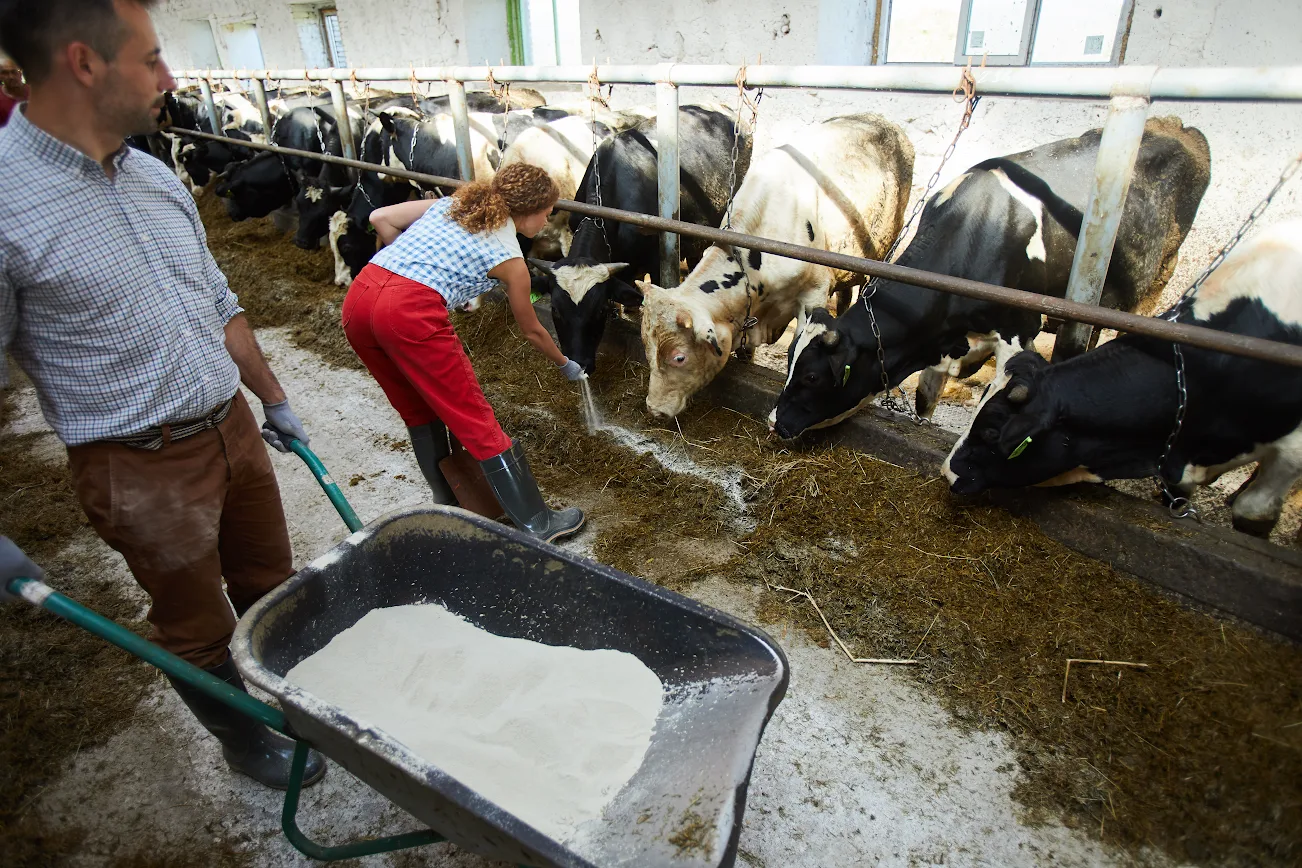

Mineral problems in cattle rarely show up as one clear symptom. Instead, they show up as poor conception rates, weak calves at birth, rough hair coats, slower weight gain, and higher treatment rates. These problems cost you money long before you connect them to what is in the mineral tub.
Forage alone almost never covers every mineral your cattle need. Soil type, forage species, pasture maturity, and water quality all shift the mineral profile your herd is actually getting.
This guide covers the minerals cattle need, how to choose the right supplement, how to feed it, what deficiencies look like, and how to avoid common mistakes.
What Are Minerals for Cattle and Why Do They Matter?
Minerals are inorganic nutrients your cattle need for bone development, muscle function, nerve signaling, reproduction, immunity, growth, milk production, and rumen function. They do not supply energy or protein, but without them, cattle cannot use energy and protein efficiently. Even small shortfalls can quietly drag down performance across your operation.
Macrominerals vs. Trace Minerals
Macrominerals are required in larger quantities, measured as a percentage of the diet. Trace minerals are needed in much smaller amounts, measured in parts per million.
Calcium, phosphorus, magnesium, potassium, sodium, and sulfur are identified as macrominerals, and copper, cobalt, iron, iodine, manganese, selenium, and zinc as key trace minerals.
Why Mineral Needs Change by Season and Stage
Your herd’s mineral requirements shift based on age, production stage, breeding season, forage quality, stress events, and water quality. A dry cow in mid-gestation has different needs than a first-calf heifer 30 days before breeding.
Mineral deficiencies are often hidden until they cost real money. One open cow in today’s market can represent a loss of $2,000 or more at current record-level prices. That makes getting the mineral program right a business decision, not just a nutrition exercise.
Essential Minerals Cattle Need
Every mineral in the program plays a role. Some support structure and metabolism. Others protect immunity and reproduction.
Macrominerals Cattle Need
These are the minerals your cattle need in larger amounts:
| Mineral | Primary Roles | Traits |
| Calcium | Bone strength, muscle function, milk production | Especially important in grain-heavy rations |
| Phosphorus | Bone development, energy transfer, reproduction | Often low in mature or weathered forage |
| Magnesium | Nerve and muscle function | Critical during grass tetany risk periods |
| Potassium | Water balance, muscle function | Often high in lush spring forage |
| Sodium and Chlorine | Appetite, water intake, nerve signaling | Usually supplied through salt |
| Sulfur | Rumen microbe function, amino acid synthesis | Excess sulfur can block copper absorption |
Trace Minerals Cattle Need
These minerals are needed in smaller amounts but are no less important:
| Mineral | Primary Roles | Traits |
| Copper | Fertility, immunity, hair coat color, growth | Antagonists like sulfur and molybdenum can block absorption |
| Zinc | Hoof health, skin, immunity, growth | Important for calves and breeding animals |
| Selenium | Muscle function, antioxidant support, reproduction | Has legal limits and toxicity risk |
| Cobalt | Vitamin B12 synthesis in the rumen | Supports appetite and rumen efficiency |
| Iodine | Thyroid function | Deficiency can cause goiter in calves |
| Manganese | Reproduction, bone development, enzyme function | Usually included in trace mineral mixes |
| Iron | Blood formation, oxygen transport | Often supplied by forage and soil |
Minerals Most Likely to Be Deficient on Pasture
Not every mineral is equally at risk. However, copper, zinc, and selenium are the trace minerals most likely to be deficient in grazing beef cattle diets. If you only focus on three trace minerals, start there.
Why Minerals Matter for Herd Health and Performance
Mineral status affects nearly every metric that drives your bottom line. Gaps in the program rarely stay hidden for long.
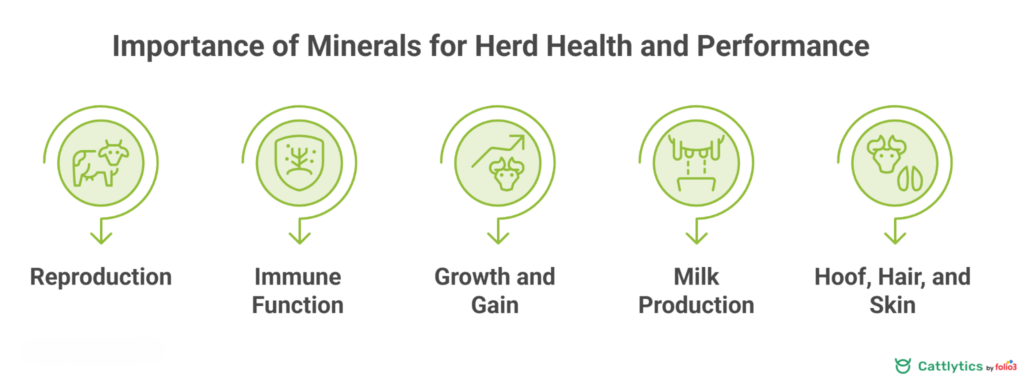
Reproduction and Conception
Mineral status directly affects cycling, conception, pregnancy maintenance, and calf development. Copper plays a critical role in reproductive success, and its deficiency at pasture turnout has been linked to reduced conception rates in young cows.
Immune Function and Calf Health
Copper, zinc, and selenium all support the immune system. Deficiencies can lead to higher rates of scours, respiratory illness, and slower recovery from stress events. Building strong immunity through vaccination and mineral support gives calves the best start.
Growth, Gain, and Feed Efficiency
When cattle are short on key minerals, feed intake drops and average daily gain suffers. Your feed efficiency is only as good as the foundation under it. Minerals drive the enzymes that convert feed into muscle and frame.
Milk Production and Calf Performance
Lactating cows pull heavily from mineral reserves. If those reserves are low, milk quality and volume decline, which directly affects calf weaning weights.
Hoof, Hair Coat, and Skin Quality
Zinc and copper play important roles in hoof integrity and hair coat condition. If you are dealing with lameness in your herd or rough, discolored hair coats, check mineral status first.
What Is the Best Mineral Supplement for Cattle?
There is no single product that works for every herd. The best supplement matches your forage, water, and production stage.
The Best Mineral Depends on Your Herd, Not the Bag
The best mineral for cattle is the one that fills the gap between what your herd needs and what your forage, feed, and water already provide. A product that works well in the Fescue Belt may be wrong for cattle on native range in the Sandhills. Your region, soil, and water source all shape what your cattle are getting.
Start With Forage and Water Testing
Forage mineral content changes with species, maturity, soil type, and season. A forage test tells you what is available. A water test catches hidden issues like high sulfur or iron that interfere with absorption. Testing is the best way to stop guessing and save money.
Match the Mineral to Production Stage
A single formula rarely fits the entire herd. Dry cows, late-gestation females, lactating cows, bulls, calves on creep feed, and stockers all have different requirements. Matching mineral to the production group improves results and reduces waste.
Organic vs. Inorganic Minerals and Bioavailability
Not all mineral sources are absorbed equally. Sulfates and chlorides are moderately available. Oxides, particularly copper oxide, are poorly absorbed and should be avoided as a primary trace mineral source.
Organic sources like chelates and amino acid complexes offer higher bioavailability. They cost more per ton but can pay for themselves during late gestation, breeding, and weaning when absorption matters most.
Avoid Choosing by Price Alone
A cheaper mineral can cost more if intake is poor, the sources are weak, or the formula does not match your forage base. Price per bag is not the same as cost per head per day of effective delivery. Compare cost against intake target, source quality, and production fit.
How to Feed Minerals to Cattle
Even the best mineral program fails if cattle cannot or will not eat it. Delivery method and management matter as much as what is in the bag.
Loose Free-Choice Mineral
Loose mineral in a covered feeder is the most common method for cow herds on pasture. It is preferred for brood cows, while cattle on complete diets are best supplied through a mixed ration.
Mineral Blocks and Tubs
Blocks and tubs can slow down rapid consumption, but check the label. Many contain only trace mineralized salt and do not supply the macrominerals or intake levels your cattle need.
Top Dressing or Mixing With Feed
Mixing mineral into the feed gives you the most precise intake control. It works well for stocker calves, backgrounding cattle, or any group where you need to deliver a specific amount of a specific additive.
Feeder Placement and Access
Place mineral feeders near water, shade, or loafing areas and check them weekly. UGA recommends one mineral station for every 30 to 50 cows to ensure adequate access.
How to Track Mineral Intake
Use a simple formula: pounds of mineral fed divided by cattle count divided by days. Compare the result to the label target (usually 2 to 4 ounces per head per day). If intake is consistently off, adjust placement or formula before assuming the product is wrong.
Common Mineral Deficiencies in Cattle
Deficiencies are easier to prevent than to fix. Knowing what to watch for helps you act before performance drops.
Copper Deficiency
Copper deficiency is one of the most common trace mineral problems in beef cattle. Signs include a faded or reddish hair coat (especially in black-hided cattle), reduced immunity, poor growth, and lower fertility. The tricky part is that copper deficiency can be secondary. High sulfur, iron, or molybdenum in forage or water can bind copper and block absorption, even when dietary copper looks adequate on paper.
Zinc Deficiency
Zinc supports hoof integrity, skin health, wound healing, and immune function. Cattle short on zinc may show slow-healing wounds, poor hoof quality, and reduced growth. Bulls with low zinc may have reduced semen quality.
Selenium Deficiency
Selenium is critical for muscle function, calf vigor, and reproduction. Severe deficiency can cause white muscle disease in calves. However, selenium has a narrow margin between adequate and toxic. Federal regulation (21 CFR 573.920) limits selenium in complete feed for cattle to 0.3 ppm, and limit-fed beef cattle supplements must not exceed 3 mg per head per day.
Magnesium Deficiency and Grass Tetany
Grass tetany is a potentially fatal condition linked to low blood magnesium. Risk is highest in early lactation cows on lush spring pasture with high potassium. Older cows are more vulnerable, so feed high-magnesium minerals before the danger period begins, not after the first case shows up.
Phosphorus Deficiency
Phosphorus drops when cattle rely on mature or dormant forage. Signs include reduced fertility, lower feed intake, slower growth, and decreased milk production.
Salt Deficiency
Cattle have a true appetite for salt and will seek it out. If plain salt is offered separately, cattle may fill up on salt and skip the mineral. Keep salt and mineral in the same product.
Mineral Interactions and Antagonists Ranchers Should Watch
Minerals do not work in isolation. Some interfere with the absorption of others, creating problems the mineral tag alone will not reveal.
Sulfur, Molybdenum, and Iron Can Tie Up Copper
It is the most common antagonist issue in beef cattle. Sulfur from water, forage, or co-products like distillers’ grains binds with copper in the rumen to form compounds cattle cannot absorb. The result is secondary copper deficiency, where intake looks fine, but the animal is still deficient.
Potassium Can Raise Grass Tetany Risk
High potassium in spring forage interferes with magnesium absorption, which is why grass tetany risk spikes on lush, fertilized pastures. If you manage rotational grazing, watch magnesium supplementation closely during spring turnout.
Calcium and Phosphorus Balance Matters
Experts recommend a calcium-to-phosphorus ratio between 1.5:1 and 3:1 to reduce urinary calculi risk in growing male cattle.
More Mineral Is Not Always Better
Excess copper can cause toxicity. Excess sulfur blocks copper absorption. Excess iron competes with zinc and copper. The goal is balance, not volume.
How to Read a Cattle Mineral Tag
The mineral tag is your buying guide. Knowing how to read it keeps you from paying premium prices for a product that does not deliver.
Guaranteed Analysis and What to Look For
The guaranteed analysis lists each mineral as a percentage or in parts per million. Compare these numbers against your forage test results and your herd’s requirements. The tag also lists target intake, usually in ounces per head per day.
Ingredient List and Mineral Sources
Look at the source forms. Copper sulfate, zinc sulfate, and manganese sulfate are moderately available inorganic sources. Copper oxide is poorly absorbed and should raise a flag as a primary copper source. Chelated or organic forms offer higher absorption.
Target Intake and Red Flags
Most cattle minerals target 2 to 4 ounces per head per day. If the tag does not list a clear intake target, that is a red flag. Other red flags include salt above 30% (cheap filler), no selenium where your region needs it, copper oxide as the only copper source, high iron, and no indication of production stage fit.
Practical Mineral Feeding Guide by Situation
Not every herd situation calls for the same approach. This table gives you a quick reference for matching the method to the situation.
| Situation | Better Option | Why It Works | What to Monitor |
| Cow herd on pasture | Loose mineral in covered feeder | Easier access, better intake consistency | Weekly disappearance rate |
| Cattle on TMR | Mineral mixed into ration | More precise daily intake control | Mixer accuracy, ration consistency |
| Cattle returning after no mineral access | Block or controlled access first | Reduces risk of sudden overconsumption | Intake during the first week |
| Late gestation cows | Stage-specific mineral | Supports calf development and cow reserves | Intake and calving outcomes |
| High-risk grass tetany period | High-magnesium mineral | Supports Mg intake before the risk window | Magnesium intake, pasture conditions |
| Stocker calves | Mineral through feed or monitored feeder | Better control during stress periods | Gain, health pulls, intake |
Mistakes to Avoid With Cattle Minerals
Small mineral management errors add up over time. Here are the most common ones.
Using One Mineral All Year Without Checking Forage Changes
Your forage profile changes by season. A mineral that matches spring pasture may leave gaps in winter on stored hay. Adjust based on forage tests, not habit.
Ignoring Intake After Buying the Right Product
You can buy the best mineral available, but if cattle eat 1 ounce instead of 4, they get 25% of what they need. Track intake and act on what the numbers show.
Feeding Plain Salt Separately From Mineral
Cattle will eat plain white salt and skip the mineral feeder. If the mineral already contains salt, do not offer a cheaper option alongside it.
Assuming Cattle Know Which Mineral They Need
It is a common myth that cattle only have a reliable appetite for salt. They cannot select individual minerals from a buffet to meet specific needs. Your mineral program is your responsibility, not theirs.
Treating Every Poor Performance Issue as a Mineral Problem
Rule out disease, plant toxins, and inadequate protein or energy before diagnosing a mineral deficiency. Minerals matter, but they are not a fix for every problem.
How Digital Herd Records Improve Mineral Management
Good mineral management runs on data, not memory. Digital records help you connect what you are feeding to what is actually happening in your herd.
Track Mineral Intake by Pasture and Herd Group
Recording which mineral goes to which pasture, how many bags are used, the cattle count, and the dates creates a clear intake log. Over time, these records show which pastures run high or low on intake so that you can adjust feeder placement or product type.
Connect Mineral Use With Health and Breeding Records
The real value is connecting mineral data with breeding outcomes, calf treatment rates, and weaning weights. When you compare mineral intake trends against conception rates or health events, you move from guessing to decision-making. Platforms built for digital cattle recordkeeping make this analysis practical across multiple pastures.
Build a History Before Changing Formulas
One season of records is a snapshot. Two or three years of mineral tracking, paired with forage tests and performance data, is a management tool. That history gives your nutritionist or vet real data to work with. Tools like Cattlytics make it easy to build that history across seasons.
Conclusion
Minerals for cattle are not just a feed expense. They are a herd performance tool that affects reproduction, immunity, growth, and profitability at every stage. The right program starts with forage and water testing, matches the mineral to production stage, controls intake, and uses records to prove what is working.
If you manage mineral feeding across multiple pastures or cattle groups, digital herd management tools can help you track mineral use, health events, breeding outcomes, and performance in one place.
FAQs
Can You Use the Same Mineral for Beef and Dairy Cattle?
Not always. Dairy cows in peak lactation have higher calcium and phosphorus demands than most beef cows. Match the mineral program to the specific production demands of each class of cattle.
How Often Should You Test Forage for Mineral Content?
At least once a year, and ideally at each major forage change like new hay lots, pasture turnout, or stockpiled forage. Results guide which mineral formula fits your current situation.
Does Water Quality Affect Cattle Mineral Needs?
Yes. High-sulfur or high-iron water can block copper and zinc absorption, creating secondary deficiencies even when the mineral program looks adequate. Test water alongside forage.
Should Calves Get the Same Mineral as Cows?
Not necessarily. Calves have different trace mineral needs during weaning stress and rapid growth. A calf-specific or stocker mineral may deliver better results during preconditioning.
How Long Does It Take to Correct a Mineral Deficiency?
It depends on severity. Liver copper stores can take 60 to 90 days to rebuild with consistent supplementation. Correcting a deficiency is always slower than preventing one.
Is It Safe to Mix Your Own Cattle Mineral on the Ranch?
Possible but risky. Selenium has a very narrow margin between adequate and toxic. Work with a nutritionist and use premixed sources for regulated minerals.