
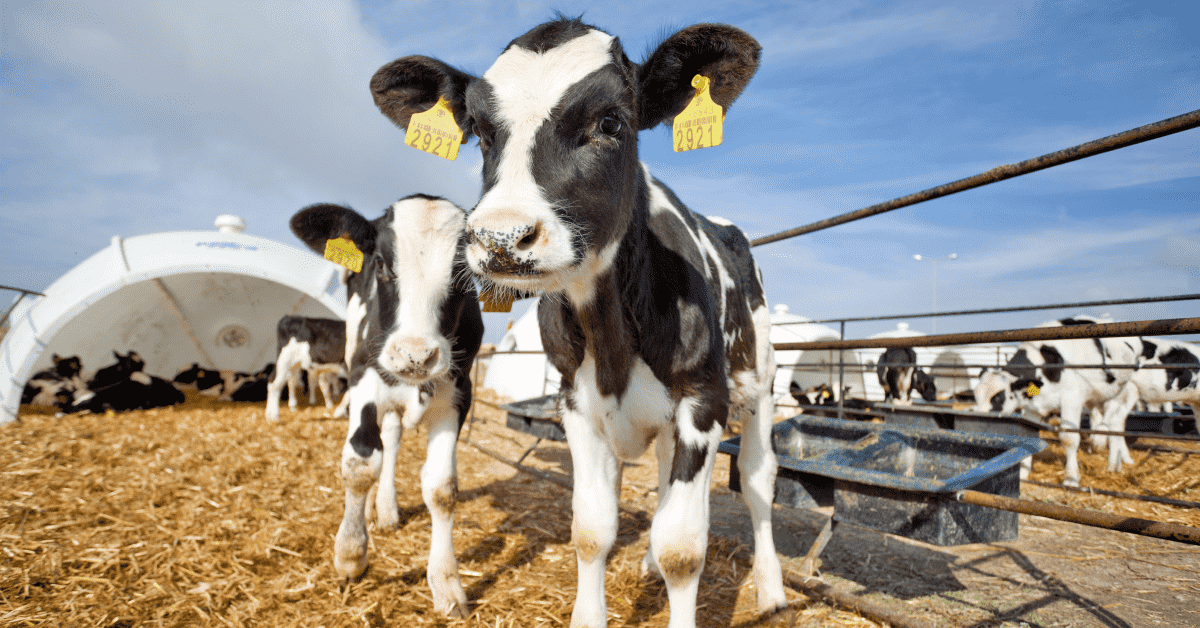

Preconditioning calves is one of the highest-return management decisions a cow-calf producer can make. If you are selling calves at weaning without a health program behind them, you are leaving real money on the table.
Preconditioning of calves is a comprehensive management program designed to prepare nursing calves for the stress of weaning, shipping, and the feedlot. It involves a minimum 45-day post-weaning period combining targeted vaccinations, parasite control, castration, dehorning, and nutritional adaptation to bunk feeding.
Here is the reality. Feedlot buyers are no longer willing to gamble on high-risk, unweaned calves. They have seen the treatment bills and the performance drag. The industry has shifted, and buyers now actively seek out preconditioned lots they can count on.
That shift is your opportunity. Preconditioning is not an added cost. It is a high-margin value-add that captures market premiums, eliminates shrink, and builds your ranch’s reputation for delivering healthy cattle.
The Core Benefits of Preconditioning Calves for Producers and Buyers
Preconditioning benefits both the seller and the buyer. For producers, it means better prices and fewer callbacks. For feedlot buyers, it means predictable cattle that eat, gain, and stay healthy.
Reducing Bovine Respiratory Disease (BRD) and Weaning Stress
When a calf is pulled off its mother, loaded on a truck, and dropped into a feedlot pen the same day, its immune system takes a triple hit. Maternal separation, transport stress, and an abrupt diet change create the perfect storm for bovine respiratory disease (BRD).
BRD is the most expensive disease in the beef cattle industry. It accounts for roughly 75% of all feedlot morbidity and 50% to 70% of finishing mortality. The U.S. cattle industry loses an estimated $1 billion or more annually in treatment costs and production losses tied to BRD.
Preconditioning directly attacks these risk factors. It separates weaning stress from shipping stress, gives vaccines time to build immunity, and teaches calves to eat and drink before they leave your place. Research found that preconditioned calves experienced a 50 to 60% reduction in morbidity and 30 to 35% lower mortality compared to non-preconditioned groups. Understanding how stress impacts your herd reinforces why addressing it early is your strongest play.
Weight Gain, Shrink Reduction, and Feed Efficiency
When calves are preconditioned at home, they recover from weaning shrink on your ranch rather than on the truck or at a sale barn. That matters because shrink that happens away from home is lost revenue.
During a 45-day holding period, well-managed calves will typically put on 30 to 50 pounds of marketable gain. That is what the industry calls “pay weight,” and it goes directly into your check. These calves also arrive at the feedlot with functional rumens and established appetites, which translates to better feed efficiency from day one.
Capturing Market Premiums
Certified preconditioning programs like VAC-45, Oklahoma Quality Beef Network (OQBN), and various state Green Tag programs give buyers a verified guarantee of what they are purchasing.
Data from an analysis of over 851,000 calves sold through Superior Livestock Auction in 2024 showed that VAC-45 calves added $8.46 per cwt compared to calves that received only one round of vaccines and were weaned at shipping. Over the past 12 years, the added value of preconditioning has fluctuated between $8.68 and $23.36 per cwt. Feedlot buyers bid higher on these lots because they know the cattle will perform predictably and cost less to manage.
Essential Preconditioning Vaccines for Calves with Complete Protocol
A vaccine protocol is only as good as the timing behind it. Your calves need a functioning immune system before you put a needle in them, so stress management must come before the injection.
Core Respiratory Vaccines
The “Big Four” viral pathogens behind most BRD cases are Infectious Bovine Rhinotracheitis (IBR), Bovine Viral Diarrhea (BVD), Bovine Respiratory Syncytial Virus (BRSV), and Parainfluenza-3 (PI3).
A standard protocol calls for a 5-way viral vaccine administered 3 to 4 weeks before weaning, with a required booster at weaning. This two-dose approach is critical. A single dose primes the immune system, but the booster is what builds the protective response your calves need before they leave the ranch. If you want a broader look at why beef cattle vaccination protocols matter, understanding the science behind this two-dose window is essential.
Clostridial and Bacterial Protections
Clostridial diseases like blackleg can kill calves fast, and they are entirely preventable with a 7-way or 8-way bacterin. Administer the first dose pre-weaning and the booster at weaning, matching the same schedule as your viral vaccines.
On the bacterial respiratory side, vaccines targeting Mannheimia haemolytica and Pasteurella multocida are widely recommended. These bacteria are opportunistic invaders that move in after viral infections weaken the respiratory tract. A solid clostridial vaccination program paired with bacterial respiratory coverage gives your calves broad-spectrum protection heading into the highest-risk window.
Modified Live vs. Killed Vaccines: Which is Right for Your Herd?
This is a decision you should make with your veterinarian, not from a catalog.
Modified Live Vaccines (MLV) deliver superior, rapid cell-mediated immunity and a longer-lasting response, which is why most preconditioning programs prefer them. However, MLVs require careful handling, cold chain management, and cannot be used around pregnant cows unless the label allows it.
Killed vaccines are safer around pregnant animals and more forgiving to handle. The trade-off is they rely on strict booster timing to reach protective levels. Miss the booster window, and you may not get the immune response you need.
Standard 45-Day Preconditioning Vaccination & Processing Schedule
| Timing Phase | Viral Protection (IBR, BVD, BRSV, PI3) | Bacterial & Clostridial Protection | Management & Parasite Actions |
| Pre-Weaning (3-4 weeks prior) | Dose 1: Modified Live or Killed 5-way viral | Dose 1: 7-way/8-way Clostridial + M. haemolytica | Castrate, dehorn, heal wounds; administer broad-spectrum dewormer |
| Weaning Day (Day 0) | Dose 2 (Booster): Match primary viral vaccine type | Dose 2 (Booster): 7-way/8-way Clostridial | Weigh calves, apply individual EID tags, treat for external parasites |
| Post-Weaning (Days 14-45) | Observe for respiratory signs; no routine vaccines | Monitor bunk intake and rumen adaptation | Keep in clean pens/pastures; prepare health documentation for buyers |
Best Practices for Preconditioning: From Pasture to the Feed Bunk
Getting the details right during the 45-day window is what separates profitable preconditioning from wasted effort. Here is how to set your calves up for success.
Weaning Timeline and Low-Stress Separation Techniques
How you wean matters as much as when you wean. Abrupt truck weaning is the highest-stress method and the worst for calf health.
Fenceline weaning is a proven alternative. Cows and calves can see and hear each other through a shared fence, but nursing stops. Fenceline-weaned calves bawl less, walk less, eat sooner, and maintain stronger immune function than abruptly weaned calves.
Two-step nose-flap weaning is another option. A plastic nose flap prevents nursing while the calf stays with its mother for several days. When you separate them later, the nutritional transition has already happened. Either method preserves energy for growth and immune system integrity during the most vulnerable period.
Nutritional Management and Bunk Breaking
The number one operational failure in preconditioning is calves that do not know how to eat from a bunk or drink from an automatic waterer. If a calf cannot find feed and water in the first 48 hours after weaning, everything else you have invested in starts to unravel.
Start with long-stem grass hay placed over the bunk and near the waterer. Calves are drawn to familiar forage, and once they find the bunk, they keep coming back. Over the first 7 days, gradually introduce a high-fiber starter ration with 14 to 16% crude protein. Avoid high-starch feeds early because calves with undeveloped rumens risk acidosis.
If you already use a creep feeding program before weaning, your calves will have a head start. Providing quality minerals for cattle throughout preconditioning supports both rumen function and immune response.
Castration, Dehorning, and Parasite Control Timing
Complete all surgical procedures, including castration and dehorning, either at branding or at least 3 weeks before weaning. Doing these procedures at the same time as weaning stacks stress on top of stress and suppresses the immune response right when your calves need it most.
Parasite control is equally important. Internal parasites like nematodes and external parasites like lice and grubs compete for the nutrients your calves need to build immunity. Administer a broad-spectrum dewormer pre-weaning and treat for external parasites at weaning. A heavy parasite load blunts vaccine response.
The Economics of Preconditioning: Cost vs. Return on Investment (ROI)
Every rancher wants to know one thing: does preconditioning actually pay? The short answer is yes, and the numbers back it up.
Calculating Feed, Vaccine, and Labor Costs
Here is a realistic cost breakdown per head for a 45-day preconditioning program:
- Vaccines and dewormers: $8 to $12
- Feed and mineral: $35 to $50
- Yardage and labor: $15 to $20
- Total investment per calf: $60 to $85
These numbers will vary by region, feed prices, and the scale of your operation. But they give you a solid framework for penciling out your budget.
Understanding Value-Added Marketing Channels
Your ROI comes through two distinct channels:
Weight gain: Capturing an extra 40 lbs of beef at current market prices can return $100 or more per head in gross gain.
Market premium: Earning an extra $8 to $12 per cwt on a 600 lb preconditioned calf translates to $48 to $72 per head in premium above non-preconditioned calves.
When you combine the weight gain and market premium against your $60 to $85 investment, well-managed preconditioning routinely yields a net profit of $35 to $60 or more per head over conventional sale-day weaning. On a 100-head calf crop, that is $3,500 to $6,000 in additional profit from a management decision you can implement this season.
Step-by-Step 45-Day Preconditioning Action Plan
This checklist gives your ranch team a clear, print-ready timeline. Use a cattle management platform to schedule and track each step digitally so nothing gets missed.
Days -30 to -21 (Pre-Weaning)
- Administer first vaccine doses (5-way viral + 7-way/8-way clostridial + M. haemolytica)
- Apply broad-spectrum dewormer
- Castrate and dehorn if not previously done
- Introduce creep feed if not already in place
Day 0 (Weaning Day)
- Low-stress fenceline or nose-flap separation
- Administer vaccine boosters (match primary vaccine types)
- Weigh each calf and apply individual EID tags
- Treat for external parasites (lice, grubs)
- Ensure clean water access and hay in bunks
Days 1 to 7 (Bunk Adaptation)
- Walk pens calmly twice daily to monitor eating behavior
- Place long-stem hay over bunks and near waterers
- Gradually introduce starter ration (14-16% crude protein)
Days 8 to 30 (Health Monitoring)
- Scale up ration as rumen adapts
- Monitor daily using D.A.R.T.: Depression, Appetite, Respiratory signs, Temperature.
- Pull and treat any calf showing early BRD symptoms
Days 31 to 45 (Certification & Sale Prep)
- Finalize veterinary health paperwork
- Issue VAC-45 certificates or enroll in your state’s value-added program
- Schedule value-added auction listing or direct buyer delivery
Maximizing Your Herd’s Value and Ranch Reputation
Preconditioning calves is a high-return investment, not an expense. It replaces weaning shrink with high-margin pay weight and builds a buyer-preferred brand that commands premium bids year after year. The 45-day program is the modern standard for risk management, animal welfare, and long-term profitability in beef cattle ranching.
Talk to your herd veterinarian and local extension agent this season. Design a custom health protocol, calculate your ROI, and enroll your calves in a certified value-added sale. The buyers are ready. Make sure your cattle are too.
FAQs
How Long Should You Precondition Calves Before Selling?
The industry standard is a minimum of 45 days post-weaning. This gives vaccines enough time to build full protective immunity and allows calves to fully adapt to bunk feeding before entering the marketing channel.
Can You Precondition Calves Without a Feedlot Setup?
Yes. Many cow-calf producers precondition calves using existing pastures, portable panels, and basic bunk feeders. You do not need a feedlot. You need a clean pen, reliable water, and a way to handle cattle safely.
What Happens if You Skip the Vaccine Booster at Weaning?
Skipping the booster leaves your calves with incomplete immune protection. A single vaccine dose primes the system, but without the booster, antibody levels may not reach the threshold needed to fight off BRD pathogens during the high-risk shipping and feedlot entry period.
Is Preconditioning Worth It for Small Herds Under 50 Head?
Absolutely. The per-head economics work at any scale. Smaller producers can also pool preconditioned calves with neighbors to create uniform lots that attract stronger bids at value-added sales.
What Role Does Nutrition Play in Vaccine Effectiveness?
A calf that is nutritionally stressed or carrying a heavy parasite load will not mount a strong immune response to vaccination. Adequate protein, energy, and mineral intake during the preconditioning period directly supports the calf’s ability to convert those vaccine antigens into protective immunity.
How Do You Document Preconditioning for Buyers?
Work with your veterinarian to complete a Veterinary Certificate of Compliance or a program-specific certification form (VAC-45, OQBN, etc.). Buyers want proof of vaccination dates, products used, weaning date, and individual animal identification. A digital livestock management system makes generating this documentation fast and accurate.